ABOUT THIS RECIPEA glaze that lets the salmon speak for itself
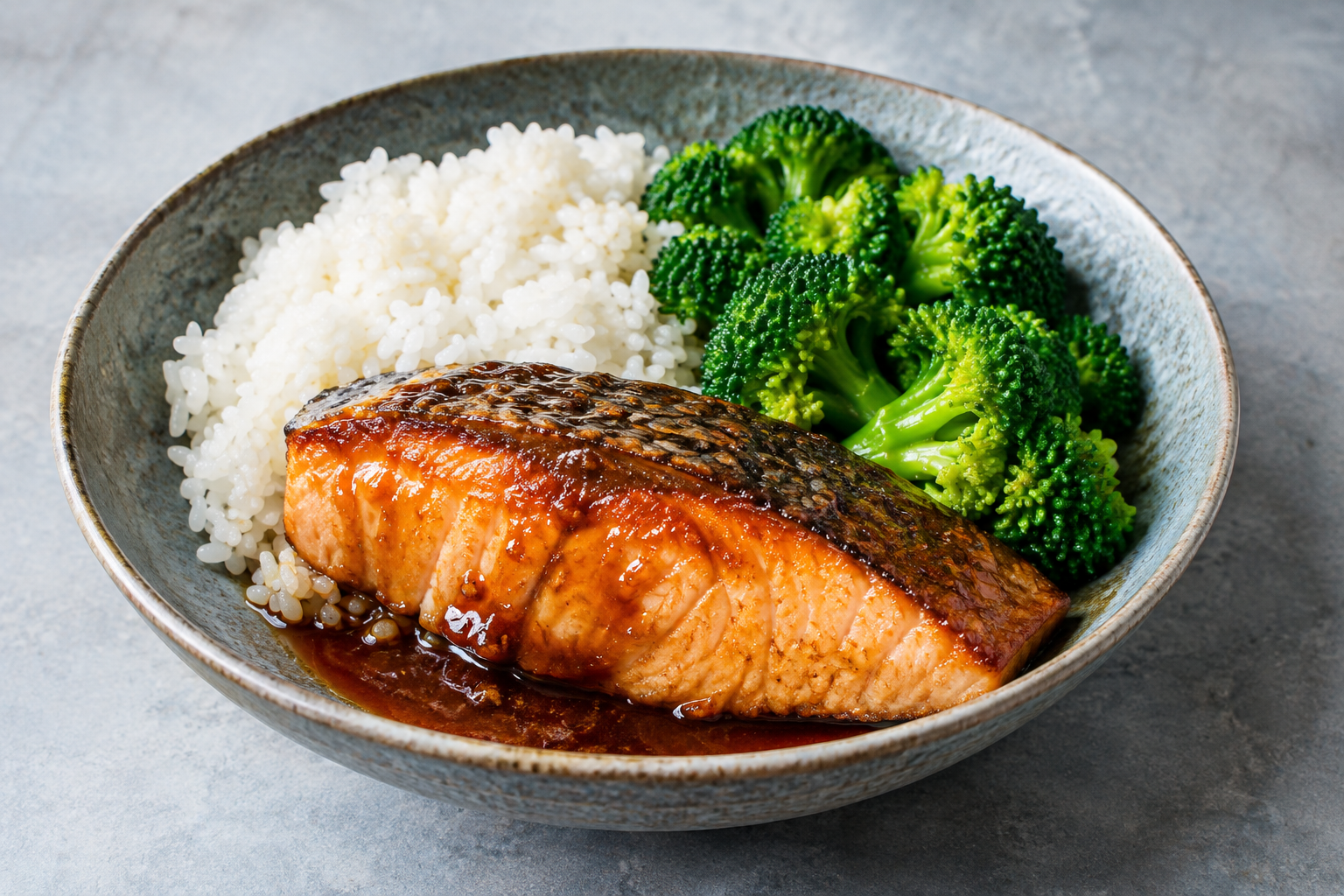
Teriyaki refers to a Japanese cooking method in which ingredients are grilled or fried and coated with a glossy sauce. The name is often associated with the sauce’s sheen and the cooking method, so it isn’t one fixed recipe. Soy sauce, mirin and sake form the base here, with a small amount of sugar for an even shine. The sauce should be sweet-salty and savoury, but not so thick or sweet that it masks the flavour of the salmon.
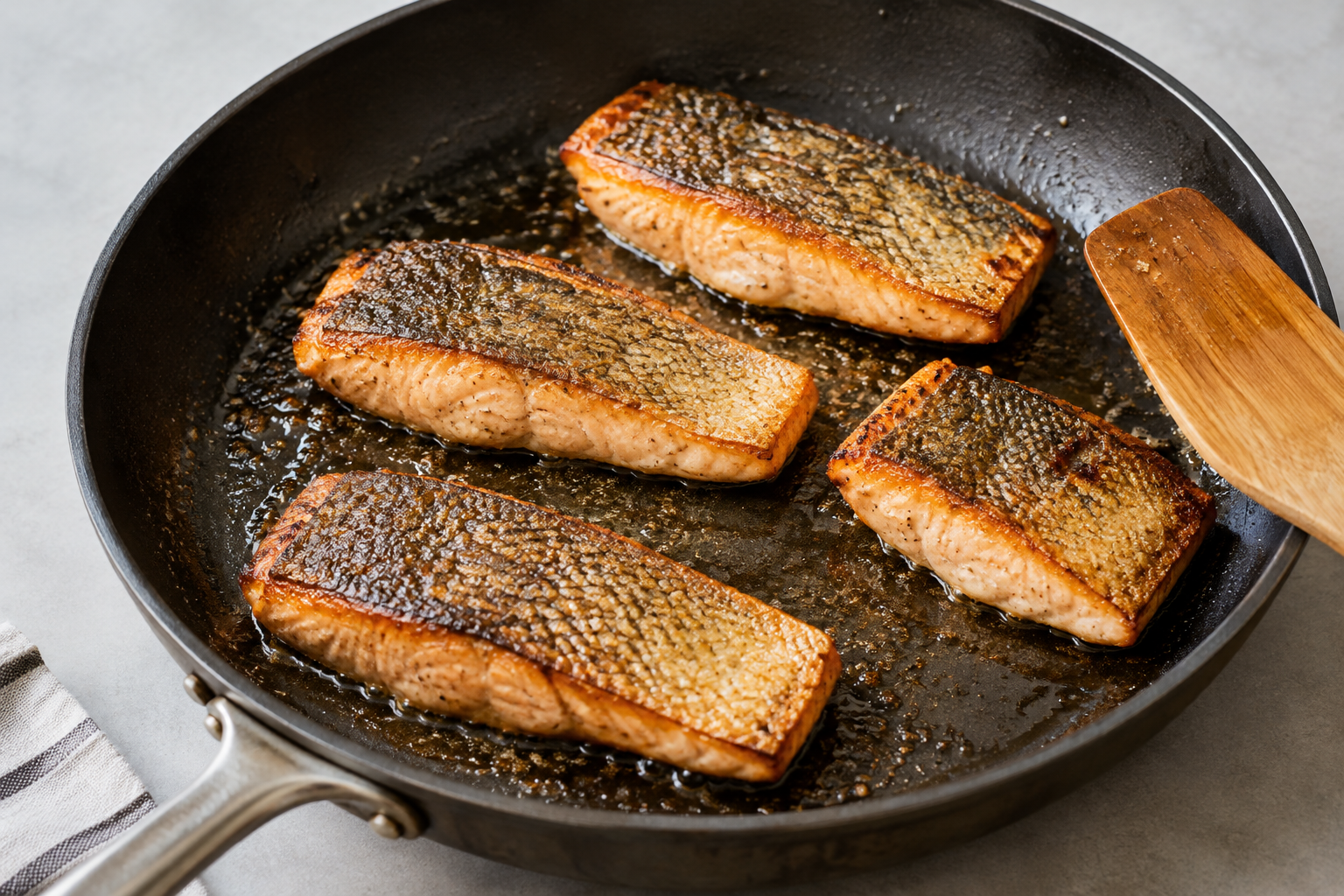
Salmon with the skin on is handy in a pan: the skin protects the flesh and can crisp up as it cooks. Pat the fillets thoroughly dry and place them skin-side down in the pan first. Let them cook undisturbed before moving them; this gives the skin time to brown and release from the pan. Add the sauce to the fish only at the end. Mirin and sugar can darken quickly, so simmer the sauce briefly and keep an eye on the pan. If the sauce is already glossy and slightly syrupy, there’s no need to reduce it further.
Japanese short-grain rice becomes soft and slightly sticky when cooked, making it a lovely match for the sauce. Rinse the rice until the water is less cloudy, and let it rest covered after cooking. Don’t lift the lid while it cooks: the steam helps the grains cook evenly. Japanese rice or another short-grain rice is best; long-grain rice will be drier and give a different result. Broccoli makes a fresh, simple side. A brief blanch keeps the florets firm and their colour bright.
Mirin is a sweet Japanese rice wine and sake is a dry rice wine; both are available at Asian grocery stores and many larger supermarkets. If you don’t have sake, you can replace it with water, though the sauce will be a little less complex. Don’t substitute regular rice vinegar for mirin in equal amounts: it’s acidic, not sweet. A little sugar added to rice vinegar can work in a pinch, but mirin gives a rounder result. Tamari can be used instead of soy sauce, with a similar savoury character.
Serve the salmon straight away, with the rice and broccoli alongside so the skin doesn’t soften in the sauce. Spoon some of the remaining glaze over the rice, if you like. Store leftovers covered in the refrigerator and reheat them thoroughly; the skin will lose its crisp texture. Cool cooked rice quickly and don’t leave it at room temperature for an extended period.
 Main course

