ABOUT THIS RECIPEA gentle base, a sharp contrast
Okayu is Japanese rice porridge: rice cooked in plenty of water until the grains split open and the porridge turns soft. The rice itself has a mild flavor, which is exactly the point here. Umeboshi—salted, pickled ume fruit often called Japanese plums—are distinctly sour and salty. Spring onion adds a fresh, green flavor. Use the umeboshi as a seasoning, then taste before adding any extra salt.
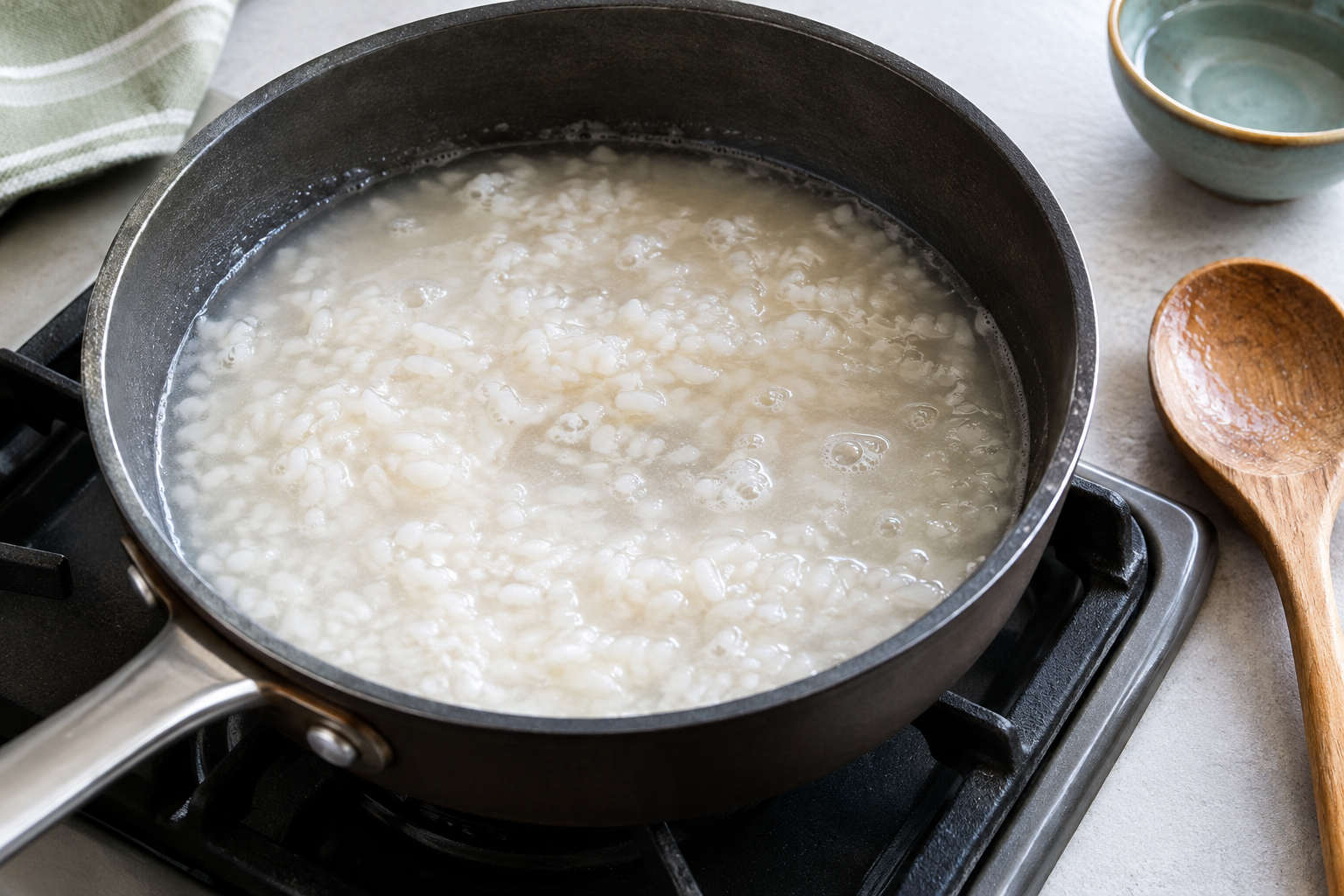
The ratio of rice to water determines how thick the okayu will be. Use 1 part rice to 7 parts water for a soft, spoonable porridge; for a thicker texture, use 1 part rice to 5 parts water. As the rice cooks, it releases starch, which thickens the cooking liquid. A heavy-based pan helps distribute the heat evenly. Keep the heat low and occasionally stir gently along the bottom so the rice doesn’t stick.
Short-grain Japanese rice makes a soft, cohesive porridge. Rinse the grains until the water runs less cloudy: this removes loose starch from the outside without losing all the porridge’s thickness. Long-grain rice works too, but the result will be less creamy. If using it, keep the same amount of water and check toward the end that the grains are soft enough.
Cooking time can vary depending on the rice and the pan. Okayu is ready when the grains are open and soft and the liquid around them looks porridge-like. For a thinner bowl, stir in a splash of hot water when serving; for a thicker porridge, simmer it uncovered for a few more minutes. Add the toppings at the very end so the spring onion stays fresh and the umeboshi keeps its sharp flavor.
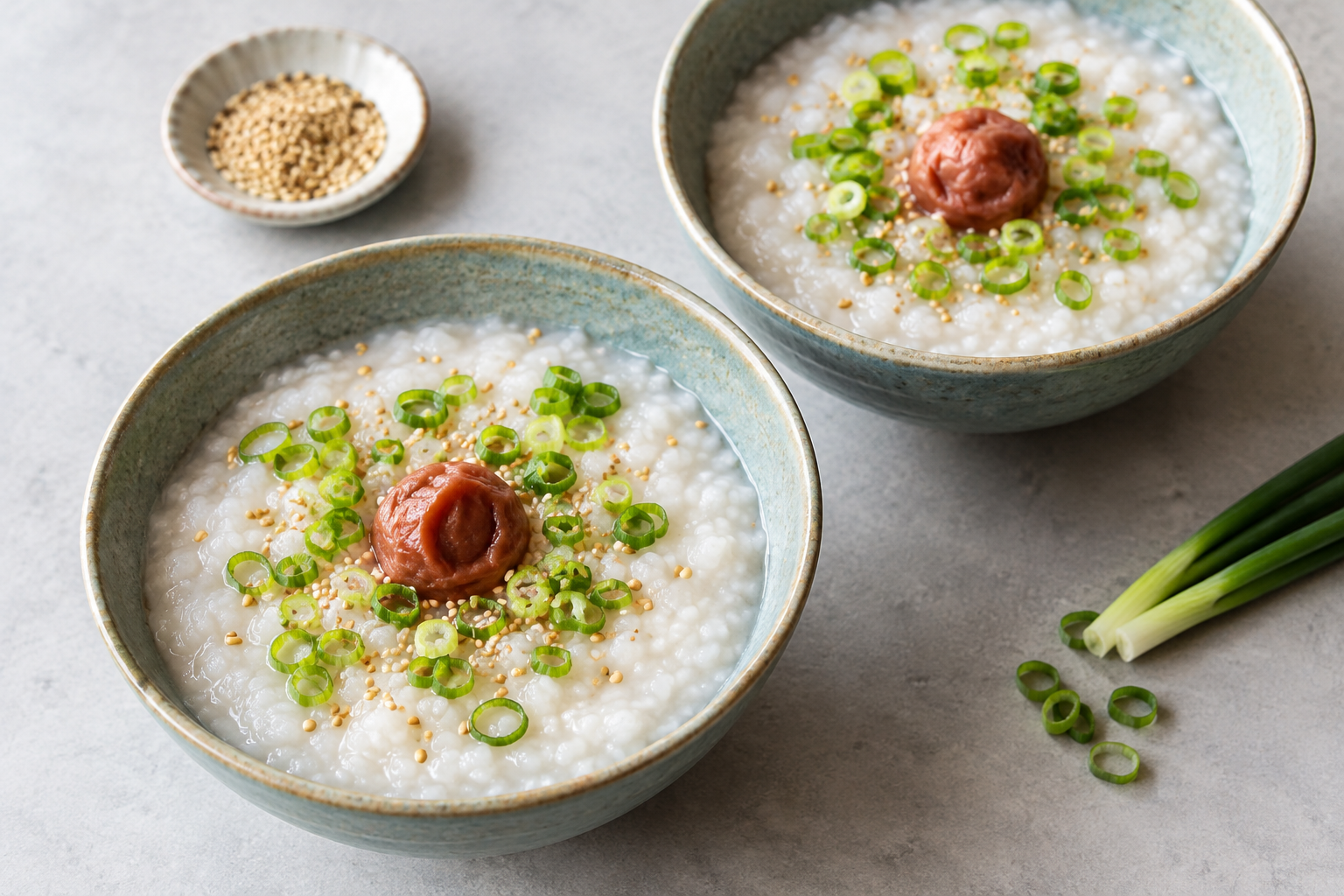
Serve the porridge hot straight away, with one whole umeboshi per bowl and finely sliced spring onion. Crush the fruit with your spoon and mix a little into the rice at a time; that way, you can decide how sour and salty each bite is. A small amount of sesame adds a nutty note, but it isn’t necessary. Okayu can be eaten on its own as a light breakfast; add a soft-boiled egg or a little extra rice if you’d like a more substantial meal.
 Main course

