ABOUT THIS RECIPEThe Art of a Light Crust
Karaage is a Japanese method of preparing fried ingredients, often marinated; chicken is a popular version. The exact marinade and method vary from recipe to recipe. Here, soy sauce, ginger and garlic give the chicken a savory, aromatic base without overpowering the flavor of the meat. Chicken thighs work well for this preparation: they stay juicier than chicken breast during the short cooking time and are easy to cut into evenly sized pieces.
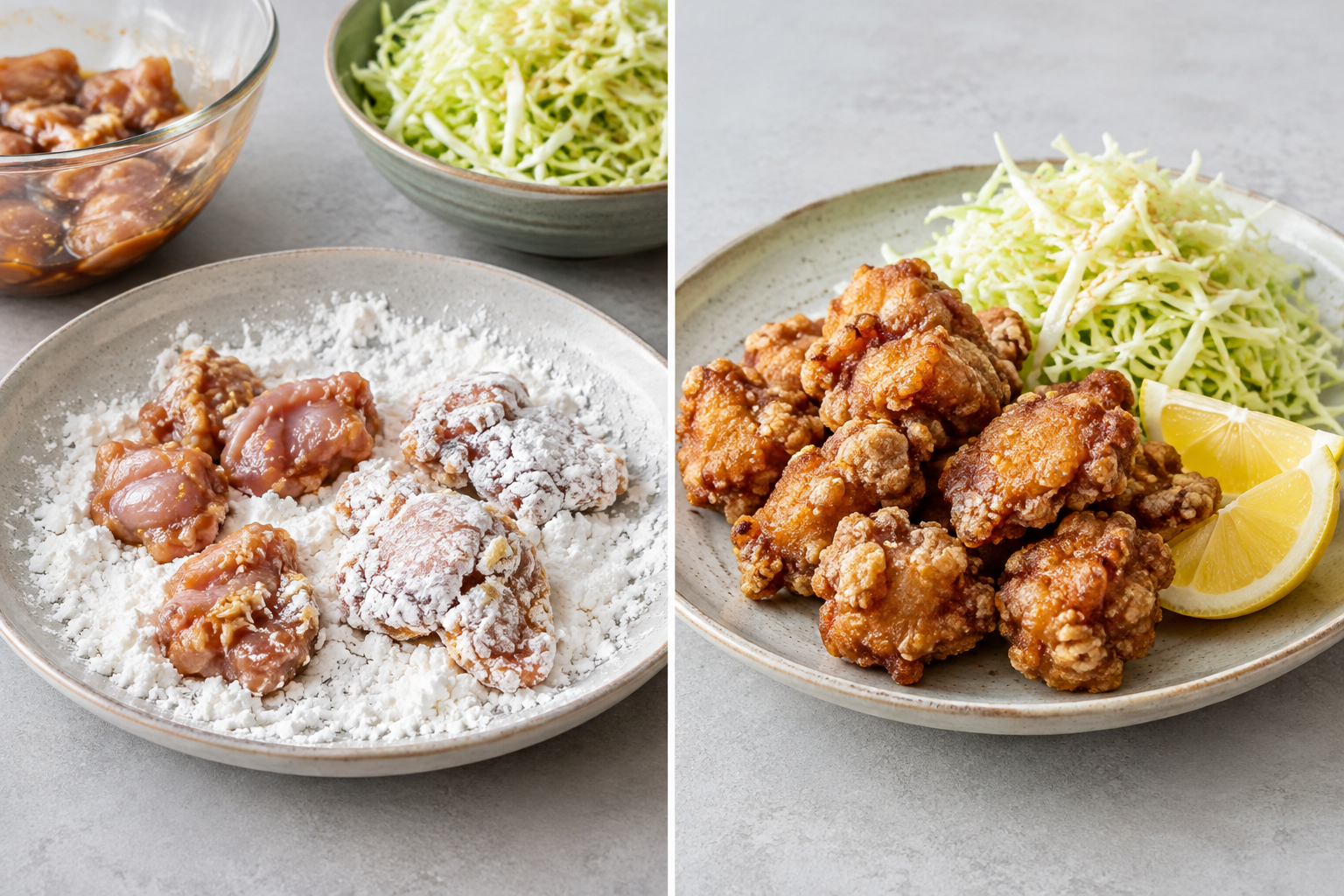
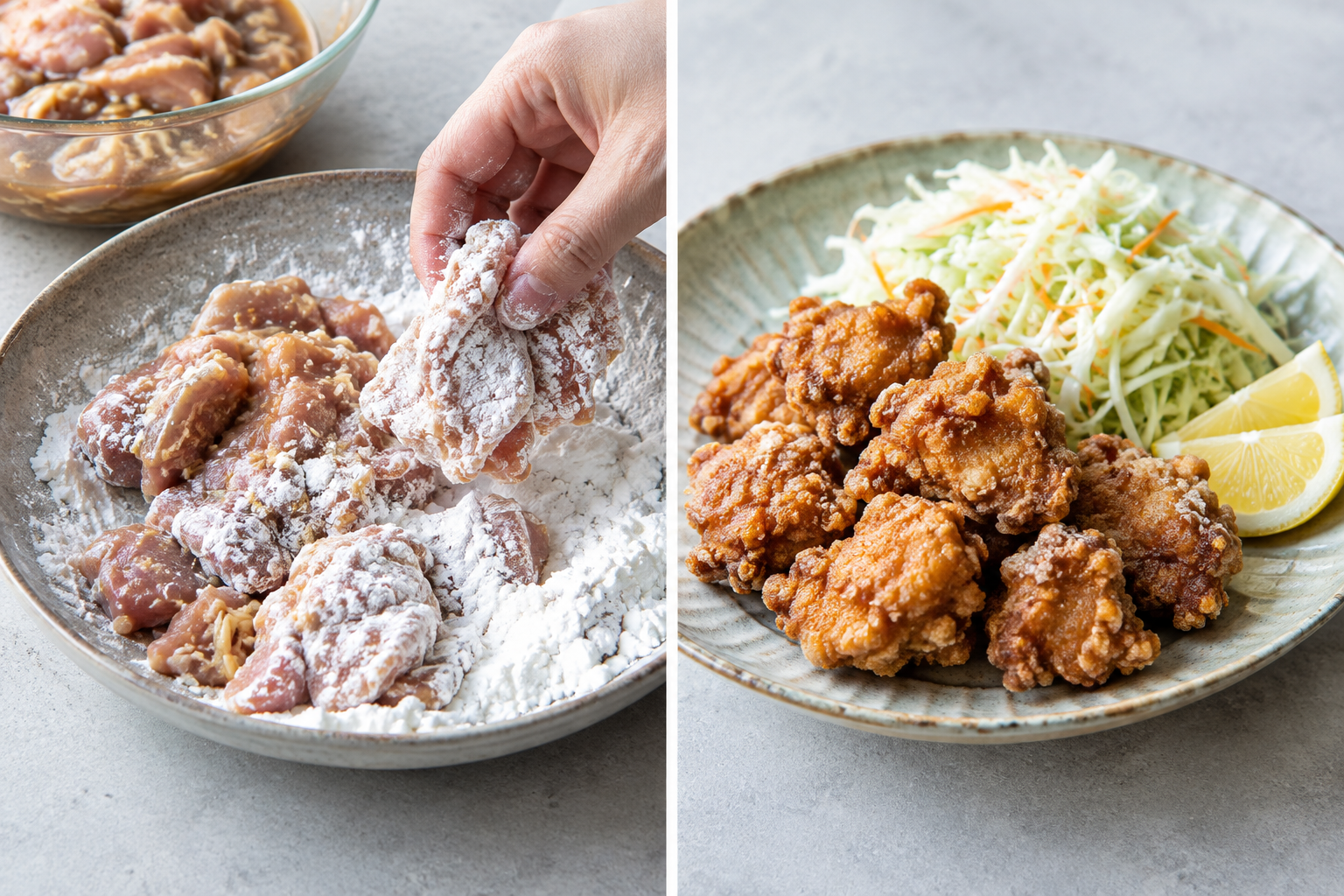
Potato starch, often sold as katakuriko in Japanese shops, forms a light, crisp crust. Regular potato starch from the supermarket works well here. Cornstarch is also an option, but gives a slightly different bite. Don’t wipe off all the excess marinade: a thin coating helps the starch stick. Coat the chicken in starch just before frying, so the coating stays dry and loose instead of turning damp and sticky.
Double-frying is about control, not complicated technique. The first fry cooks the chicken; during a short rest, steam can escape from the crust. A second, shorter fry makes the outside hot and crisp again. Keep the oil at temperature and fry in small batches: adding too much chicken at once cools the oil and makes the crust greasier. A kitchen or deep-fry thermometer makes it easier to check both the oil temperature and whether the chicken is cooked through.
The cabbage salad adds acidity and crunch to balance the warm, savory chicken. White cabbage is available all year; slice it thinly so the dressing softens the strips slightly without making them limp. Don’t have rice vinegar? Use mild cider vinegar and add it a little at a time, since it can taste sharper. The sesame oil is there as an accent; leave it out if you prefer a more neutral salad. Serve with the lemon wedges and squeeze them over the chicken just before eating.
Karaage goes well with steamed rice or as part of a meal with, for example, cucumber and miso soup. It’s best to make the cabbage salad shortly before serving; it softens if left for too long. Refrigerate leftover chicken, covered, within two hours and eat it within two days. Reheat it on a rack in a 200 °C oven until hot all the way through; the crust will usually crisp up again better than it would in the microwave.
 Main course

