ABOUT THIS RECIPEThe beauty of a quick stir-fry
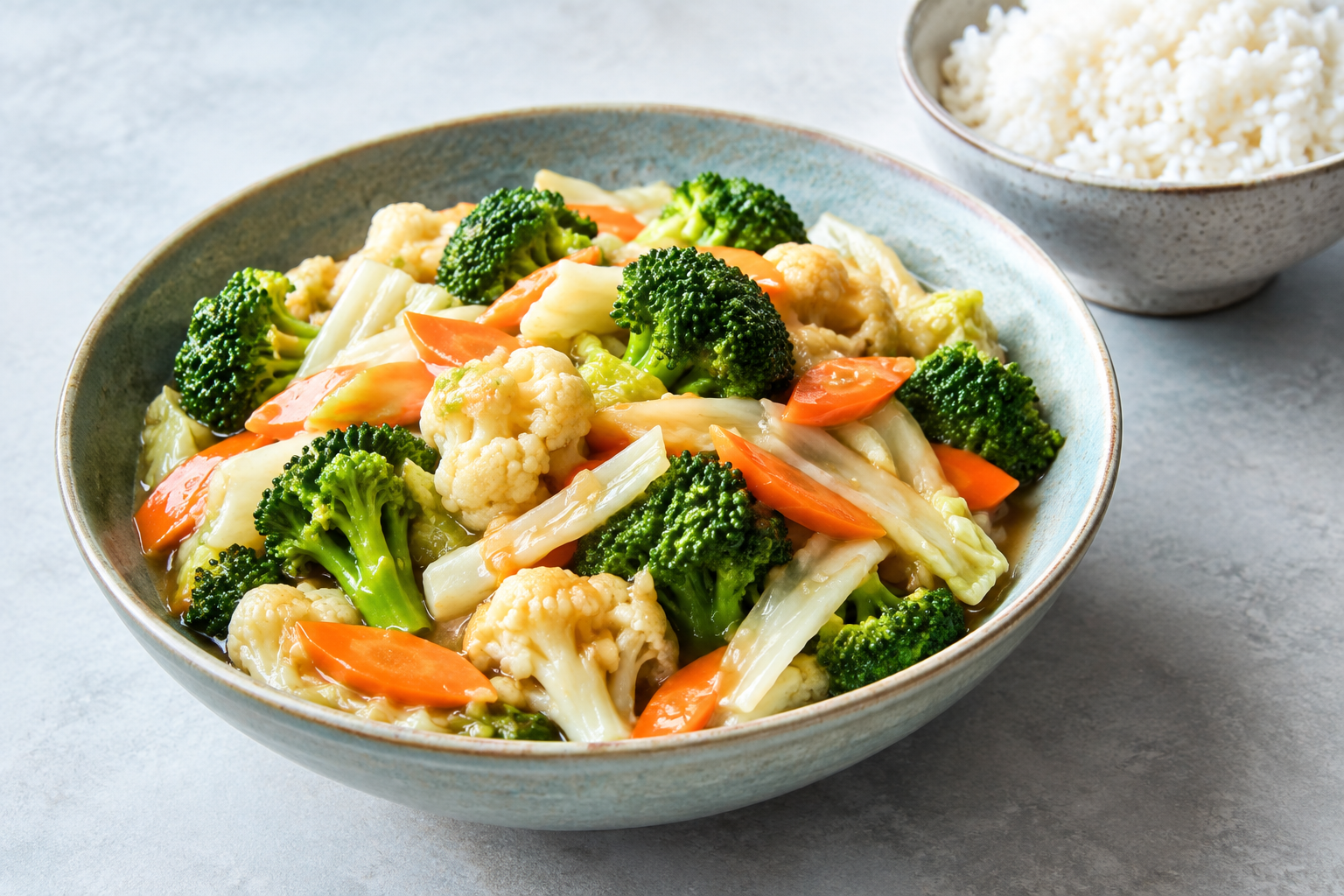
Cap cai is an Indonesian-Chinese vegetable dish whose name refers to a colorful mix. There’s no set combination: the vegetables are chosen according to what’s available and can be supplemented with, for example, chicken, shrimp or tofu. In this version, broccoli, cauliflower, carrot and white cabbage form the base. Broccoli deliberately takes the leading role, but the variety of shapes and textures makes this more than a pan of just one vegetable.
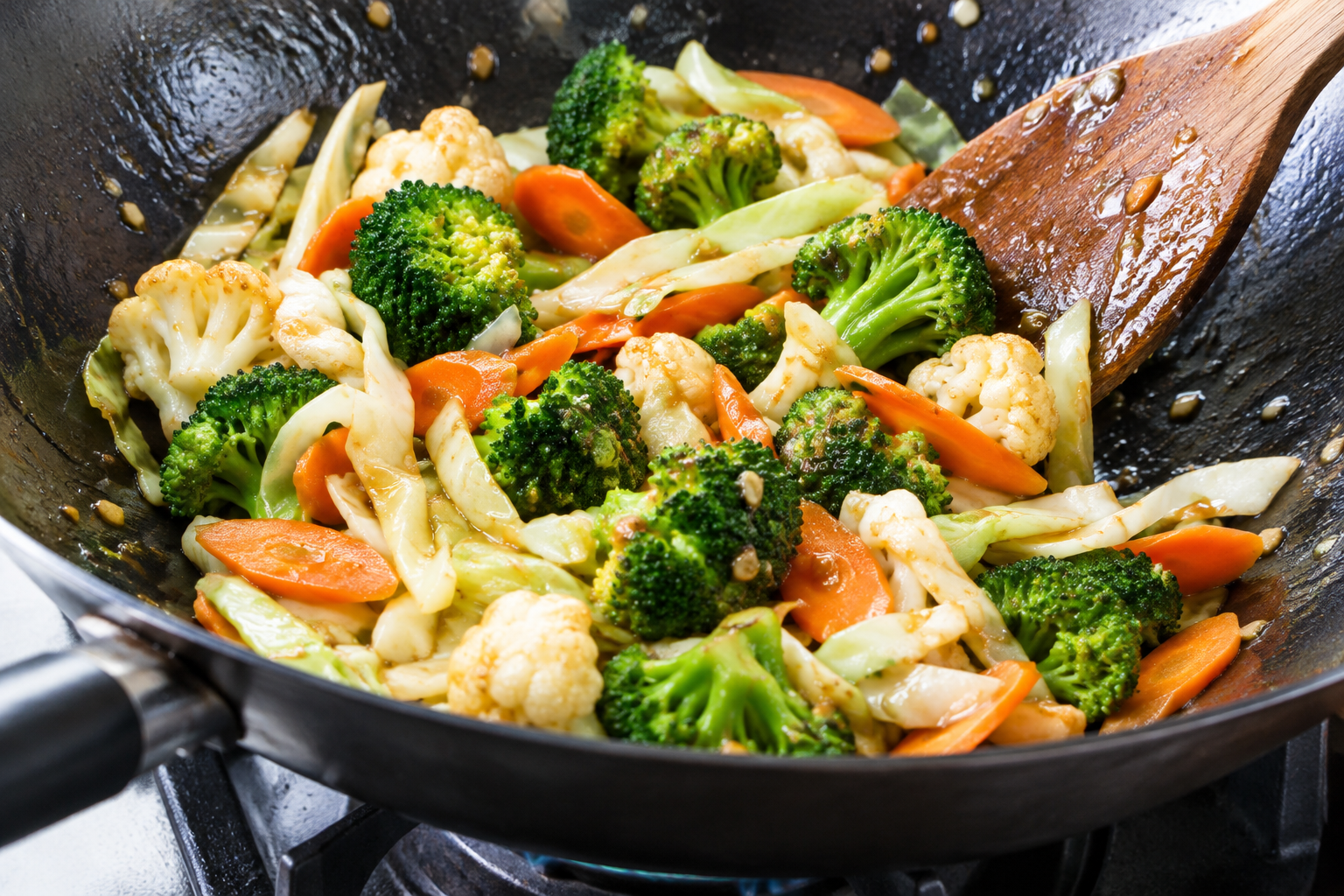
The vegetables are best when tender but still firm. Cut them into pieces that cook in roughly the same amount of time: thin slices of carrot, small florets of cauliflower and broccoli, and strips of cabbage. Stir-fry in batches if your wok or skillet isn’t large enough. An overcrowded pan cools down quickly; the vegetables will then steam rather than fry and lose their fresh bite. A wide pan and high heat help cook them quickly.
The sauce is savory and lightly thickened, not thick or syrupy. Garlic adds aroma, while soy sauce and oyster sauce bring saltiness and depth. A small amount of sugar rounds out the flavors; cornstarch thickens the broth into a thin coating that clings to the vegetables. First stir the cornstarch until smooth with cold water, otherwise lumps may form. If you don’t have oyster sauce, use a vegetarian mushroom sauce. That also adds a savory flavor, but doesn’t necessarily make this dish more traditional or authentic.
The vegetables you have on hand make cap cai easy to adapt. You can replace the white cabbage with bok choy; add the leaves at the very end, as they wilt quickly. Green beans or baby corn work well too, as long as you cut them into small pieces and add them to the pan a little earlier if needed. It’s better to choose a few vegetables that complement each other than so many varieties that they all need to cook for too long. Broccoli and cauliflower are available year-round; you can choose the rest of the vegetable mix based on what looks good.
Serve the cap cai right away with warm rice, spooning the sauce from the pan over it too. For a meal with extra protein, you can add separately cooked tofu, chicken or shrimp; cook it through first and set it aside while you stir-fry the vegetables. Leftovers can be quickly reheated in a pan until piping hot throughout. The vegetables will become softer, though, so serving it fresh is best if you want them to keep their bite.
 Main course

