Kitchen classics, vegetables, and bold flavors.
All recipes
MAIN COURSE · NOORS KITCHEN

Gujarati undhiyu with winter vegetables and methi muthiya

A slow-cooked Gujarati vegetable dish with eggplant, potatoes, yam and spiced fenugreek dumplings. Coconut, sesame, peanuts and spices give the vegetables a rich, fragrant flavor, while lemon keeps everything fresh.

100 minutes4 servings
Jump to recipe
Gujarati undhiyu with eggplant, potatoes, yam, winter vegetables and golden-brown methi muthiya in a spiced coconut-sesame paste.
ABOUT THIS RECIPE

Vegetables, spices and tender muthiya

Undhiyu is a Gujarati vegetable dish whose ingredients vary by region, household and season. In many versions, seasonal vegetables, aromatic spices and methi muthiya play an important role. This recipe brings together baby eggplants, potatoes, sweet potato, yam, beans, carrots and peas. The vegetables keep their shape and individual flavors; they aren’t cooked down into a smooth curry. The mix of different vegetables makes every bite a little different, from tender eggplant to firm beans.

Yam, also sold as suran or elephant foot yam, isn’t always easy to find in a regular Dutch supermarket. You’re more likely to find it at an Asian grocery store or a shop specializing in South Asian produce. Peel the tuber carefully and cut it into cubes; wear gloves if your skin is sensitive to the sap. If you can’t find yam, replace it with extra sweet potato or potato. Flat beans have a distinctive texture, but green beans work too. In winter, firm root vegetables and cabbage are widely available; peas and the exact mix of vegetables can vary with the season.

The coconut, sesame, peanut, coriander, ginger and chili paste binds the vegetables together and gives them a nutty, slightly sweet base. A little jaggery rounds out the spices, while lemon juice added at the end brings acidity and freshness. Don’t brown the vegetables too much: undhiyu cooks gently with very little liquid, allowing the flavors to mingle without the tender vegetables falling apart. A heavy pan with a lid helps distribute the heat evenly. Turn the vegetables carefully from time to time, and add extra water only if the bottom of the pan starts to dry out.

Methi muthiya are spiced dumplings made with fenugreek leaves and flour. Frying them until golden first gives them a firmer outside, so they hold their shape as they finish cooking in the vegetable dish. Fresh fenugreek has a slightly bitter, herbal aroma; if you can’t find it, use a smaller amount of finely chopped spinach and add a pinch of dried fenugreek if you have some. This is a practical substitute, not an exact match for the flavor. The dumplings soak up some of the sauce as they cook.

Serve undhiyu as a main course, for example with rotli or another flatbread, or with steamed rice. The dish is rich enough to serve without another curry. Once cooled, store leftovers in a covered container in the refrigerator and eat them within three days. Reheat in a pan over low heat until piping hot throughout; add a splash of water if the sauce has become too thick. The muthiya will be a little softer, but they’ll keep their spiced flavor.
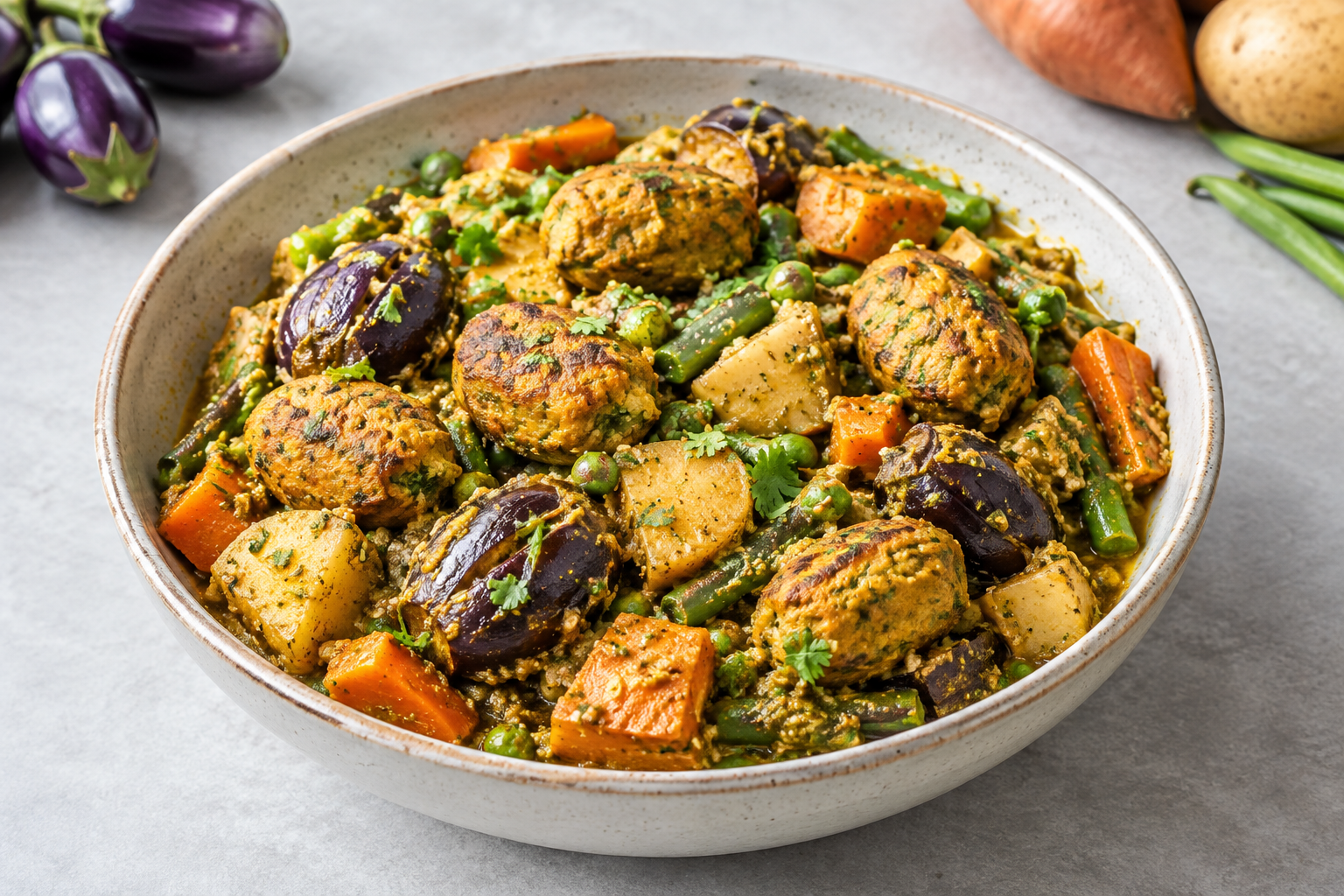
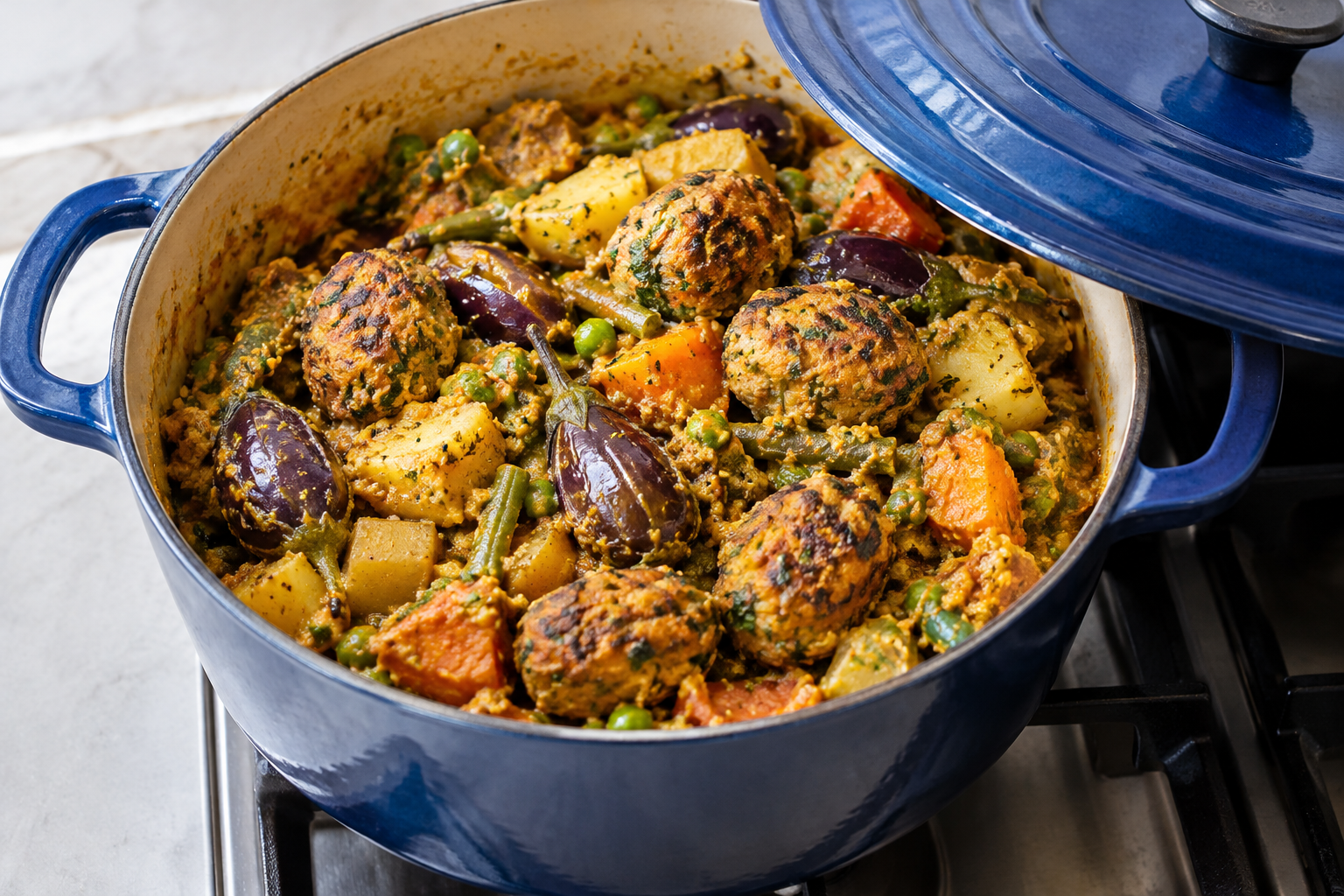
Undhiyu with eggplant, potatoes, yam and beans gently cooking with methi muthiya in a heavy pan.
GET STARTED

Gujarati undhiyu with winter vegetables and methi muthiya

Prep 40 minCooking 60 minTotal 100 min

Ingredients

4 servings
Quantities scale with servings; adjust cooking times as needed.

How to make it

  1. 1

    Mix the fenugreek, chickpea flour, whole-wheat flour, ajwain, turmeric, chili powder, ginger, sugar, lemon juice and ½ teaspoon salt in a bowl. Knead into a firm dough, adding water a little at a time if needed. Shape into 12 small oval dumplings.

  2. 2

    Heat the oil for the muthiya in a frying pan over medium heat. Fry the dumplings in batches until golden all over, about 6–8 minutes per batch. Drain on paper towels.

  3. 3

    Toast the sesame seeds and peanuts in a dry frying pan over medium-low heat until lightly colored. Grind them with the coconut, cilantro, ginger, chili, ground coriander, cumin, turmeric and chili powder into a coarse, cohesive paste. If needed, add a tablespoon of water to make grinding easier.

  4. 4

    Make two cuts in the base of each baby eggplant, almost reaching the stem, so the eggplant stays whole. Rub a little of the spice paste into the cuts.

  5. 5

    Heat 2 tablespoons oil in a heavy pan with a lid. Add the potatoes, yam, carrots, sweet potato, beans, peas and the remaining eggplants. Spread the spice paste over them and turn everything carefully to coat.

  6. 6

    Add 150 ml water and 1 teaspoon salt. Bring to a boil, cover the pan and simmer over low heat for 30 minutes. Carefully turn everything halfway through; add a small splash of water if the bottom of the pan is drying out.

  7. 7

    Nestle the muthiya among the vegetables and cook everything, covered, for another 15–20 minutes, until the potatoes and yam are tender but the vegetables still hold their shape. Stir as little as possible so the eggplants and dumplings stay whole.

  8. 8

    Gently stir in the jaggery and 2 tablespoons lemon juice. Taste and add salt or extra lemon juice if needed. Serve warm.


