ABOUT THIS RECIPEBriny, fresh, and creamy
Taramosalata is a Greek mezze whose flavor and color come from salted fish roe. Tarama is usually made from carp or cod roe; its color can range from light beige to pink, depending on the roe and any coloring agents. Check the label and taste a little before you start: the saltiness varies from one product to another. That way, you’ll know whether you need to add any salt later.
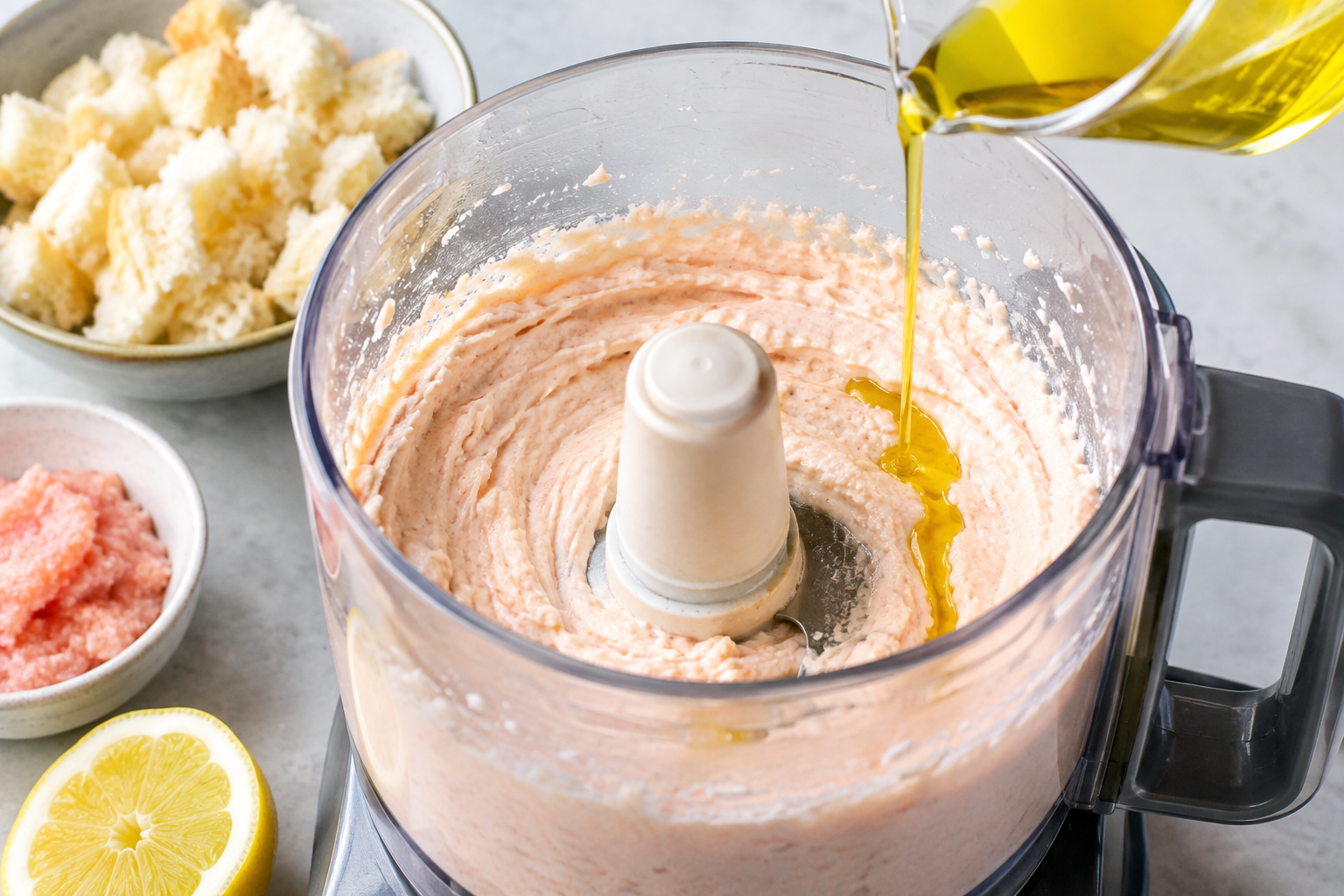
In this version, stale white bread thickens the dip. Remove the crust and briefly soak the bread in cold water. Then squeeze it out well; too much water left in the bread can make the dip runny and the oil emulsion less stable. Potato is another common base in taramosalata recipes. Cooked, floury potato makes a fuller, softer dip, while bread gives it a light, smooth texture. These are options for different versions, not a reason to use both thickeners at once.
The key technique is to add the oil slowly while the food processor is running. The roe and squeezed-out bread form the base with the lemon juice; drizzling in the oil gives the mixture time to turn creamy. If you add the oil all at once, the dip may remain greasy or uneven. If it’s very thick, mix in a teaspoon of cold water. Add extra lemon juice a little at a time, so its fresh flavor complements the roe rather than overpowering it.
Olive oil with a mild, fruity flavor lets the roe shine. A very peppery oil can overpower the lemon and briny character. Taste for salt only at the end: the tarama is already salted, so you often won’t need any extra. Chill the dip briefly after blending; it will be firmer when cold, and the flavors will be better balanced.
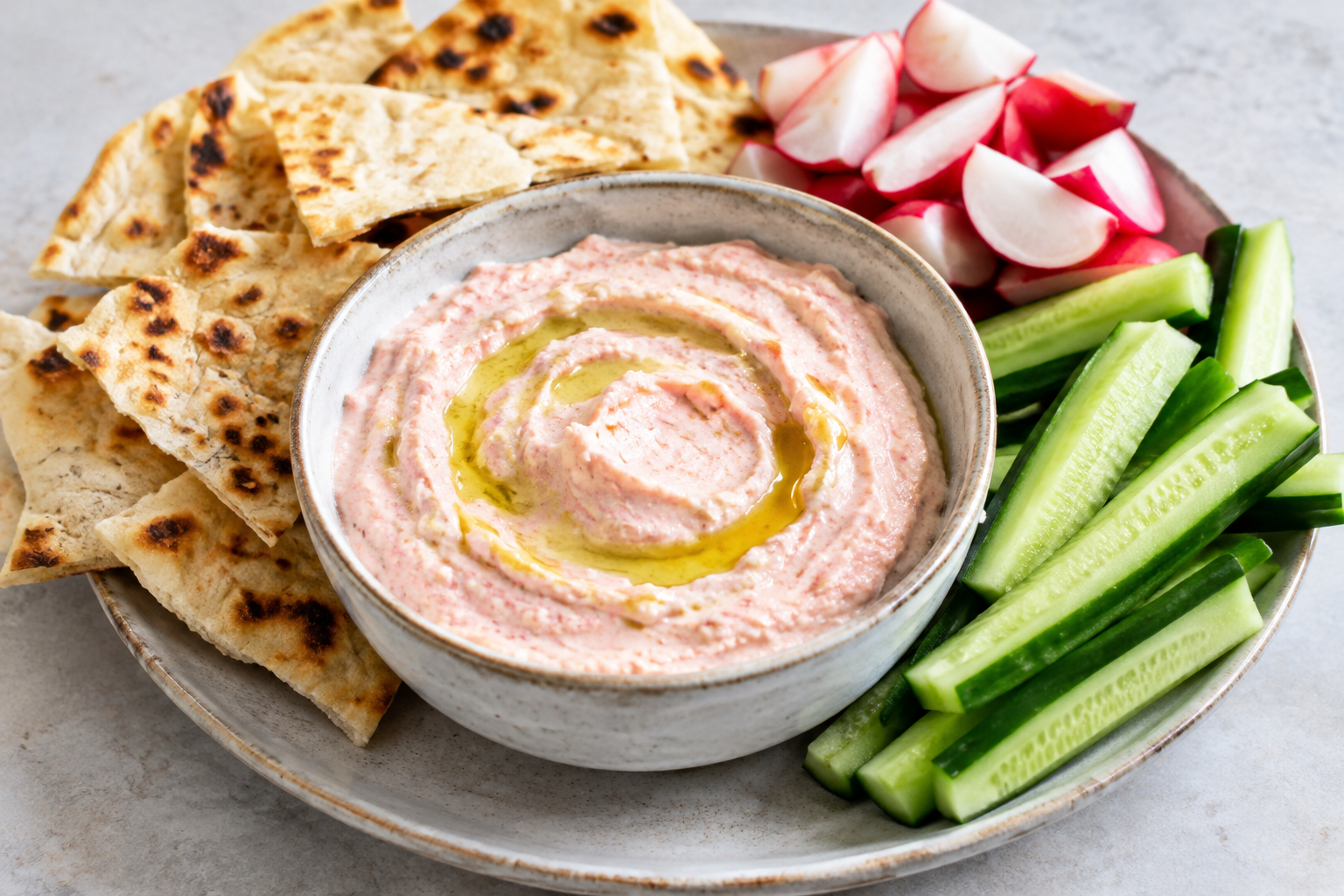
Serve taramosalata as a starter or as part of a mezze spread, with flatbread for scooping and crisp radishes and cucumber for a fresh contrast. Store leftovers covered in the refrigerator and serve well chilled; don’t leave the dip at room temperature for a long time. If some oil has risen to the surface, give it a quick stir before serving.
 Main course

