ABOUT THIS RECIPERice that soaks up the tomato juices
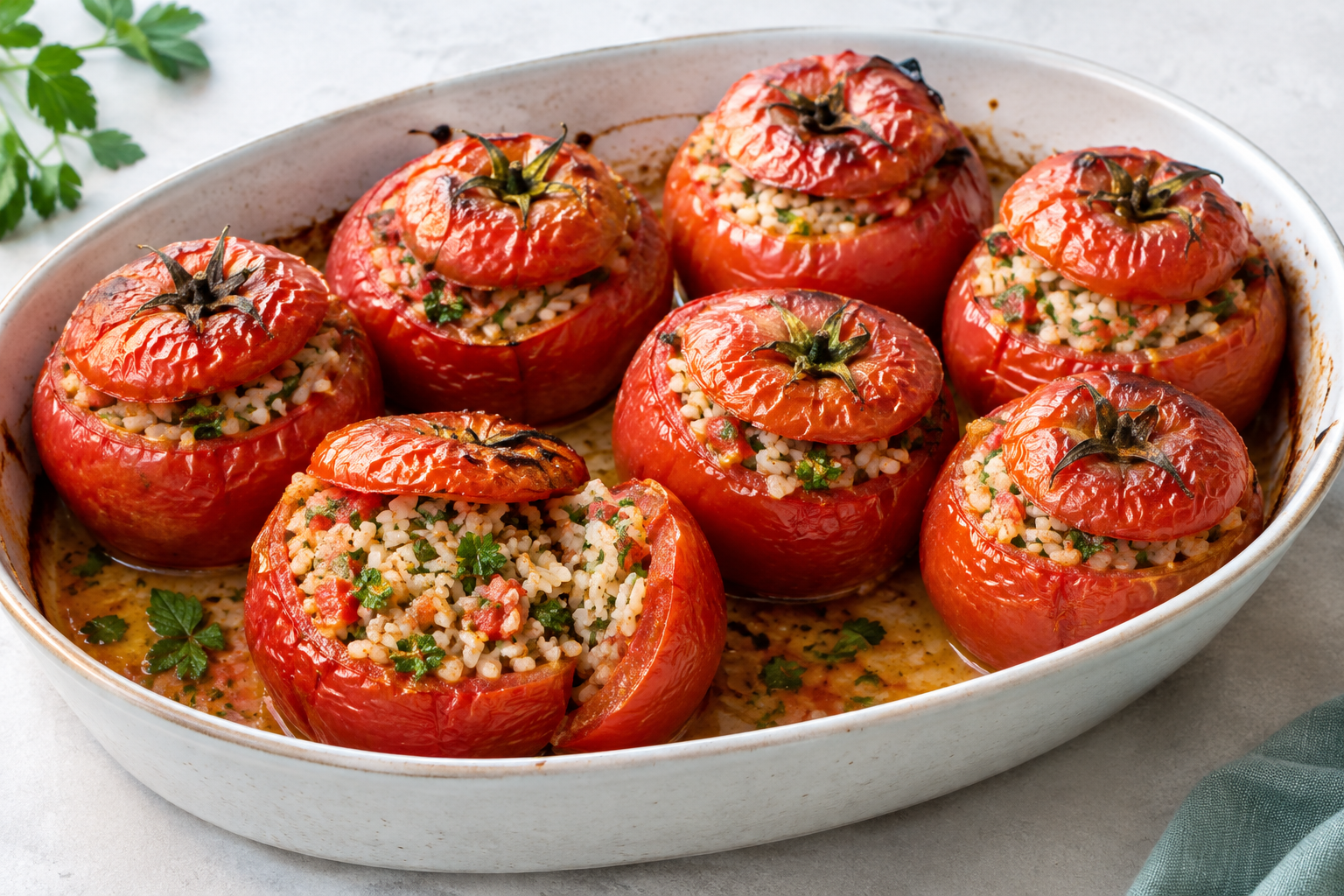
Gemista means stuffed, and in Greece the name can refer to a variety of stuffed vegetables. This version uses tomatoes as both an edible container and a flavoring: the flesh is mixed into the rice filling, releasing moisture and a fresh, tangy tomato flavor as it bakes. Ripe tomatoes are important, but they should still be firm enough to stand upright in the baking dish. In summer, when tomatoes are at their sweetest and juiciest, the contrast between the soft flesh and the herb-filled rice really comes into its own.
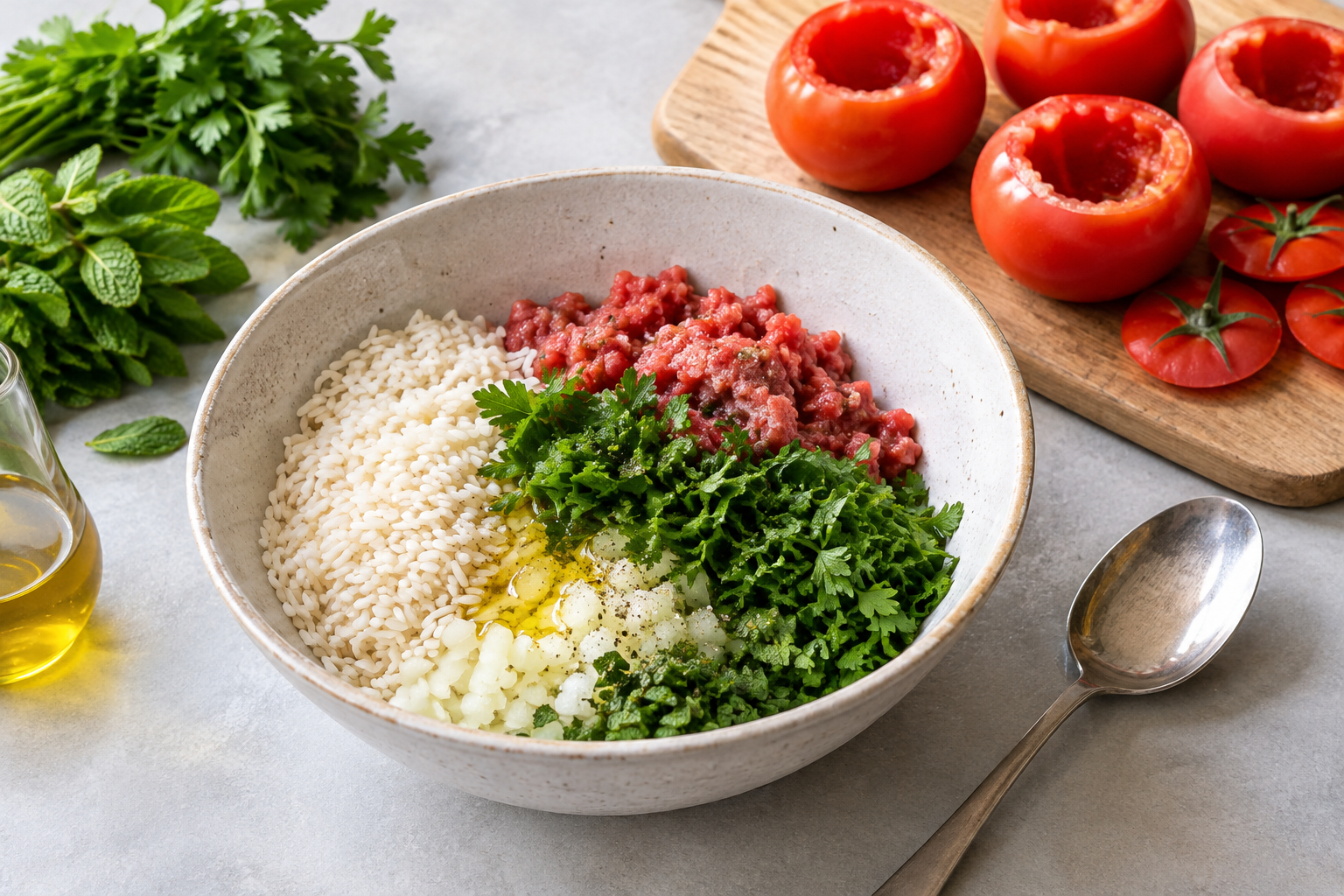
The rice goes into the tomatoes uncooked. As it bakes, it absorbs moisture from the finely chopped tomato flesh and a little water. The amount of juice varies from tomato to tomato, so keep the filling moist and don’t fill the tomatoes to the brim: the rice expands. The tops protect the filling from drying out and keep the steam close to the rice. A roomy baking dish helps the tomatoes stand upright; you can tuck a few potatoes in between if you like, but they’re not needed for this version.
Parsley and mint give the filling a fresh, green flavor that balances the sweeter, gently roasted tomatoes. Short-grain rice works best, as it absorbs the juices well; regular white rice will also work, but check toward the end to make sure the grains are cooked through. If the tomato flesh is very watery, leave out the extra water. If the tomatoes are particularly firm and dry, add a splash of water to the dish while they bake. The rice should be tender and cooked through, not dry or mushy.
Serve the tomatoes warm or at room temperature, perhaps with bread to soak up the juices and a simple salad. They can be served as a vegetarian main course or as part of a meal with other vegetable dishes. After eating, cool any leftovers promptly, cover and refrigerate, and eat within three to four days. Reheat thoroughly in an oven at 160 °C; add a small splash of water if needed to keep the rice from drying out.
 Main course

