SIDE DISH · NOORS KITCHENGreek Dolmades Yalantzi with Rice and Herbs
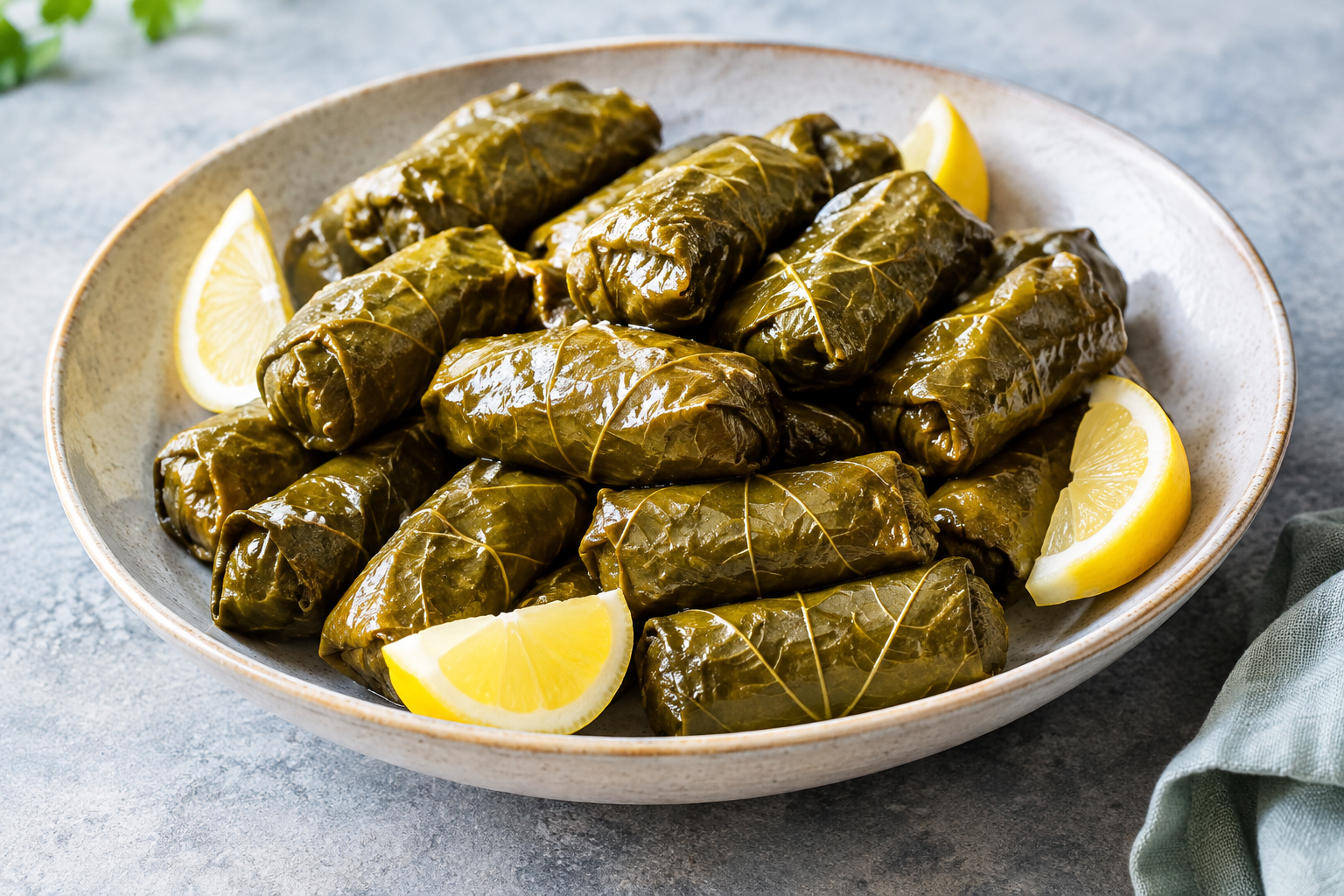
Tender vine leaves wrap a fresh filling of rice, onion, dill, mint and parsley. With lemon and olive oil, these dolmades are delicious at room temperature, as a starter or part of a mezze spread.
ABOUT THIS RECIPEA little roll that cooks gently
Dolmades are stuffed vine leaves found in various cuisines around the eastern Mediterranean. This yalantzi version is meat-free: rice and fresh herbs are at the heart of the filling. The leaves bring a lightly salty, tangy flavour, while lemon and olive oil complement that freshness. The herbs are more than just colour on the plate; dill, mint and parsley give the rice a distinctive, green flavour that holds up well after cooking.
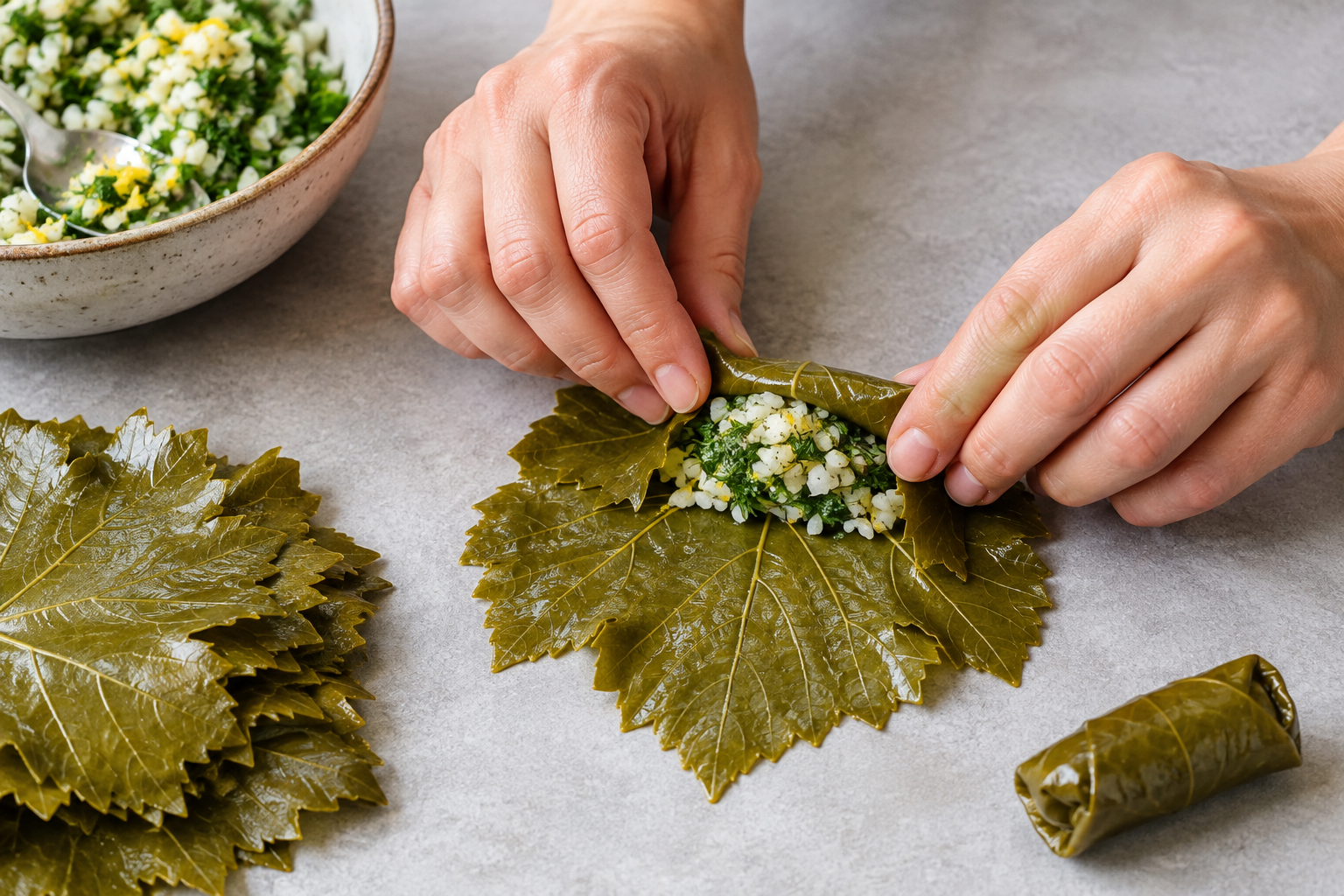
Jarred vine leaves are practical and available year-round. Rinse them and taste a small piece if needed: some varieties are quite salty or sour. Soak them briefly in cold water if the flavour is very intense, then pat them dry. Fresh vine leaves are mostly available in late spring and early summer, but vary in size and firmness. Either way, use a few torn leaves to line the bottom of the pan; this prevents the rolls from sitting directly against the pan.
The rice goes into the leaves uncooked and cooks slowly in the pan. This gives the filling time to absorb moisture and flavour, but it needs room: roll the leaves firmly without squeezing them tightly, because the rice expands. A plate placed on top of the rolls while they simmer keeps them in place. Keep the heat low and let the pan simmer gently; a vigorous boil can loosen and tear the leaves. Short-grain rice works well because the grains become soft and hold together. If you don't have any, regular white rice works too, though the filling will be a little looser.
Dolmades are handy to make ahead: after cooking, let them cool in their cooking liquid so the rice doesn't dry out, then serve them at room temperature with lemon wedges. Once cooled, cover and refrigerate them and eat within three days; for this dish, it's best not to reheat them, as the leaves will soften and become fragile more quickly. Serve them as a starter, or alongside olives, bread and other small dishes. Arranging the rolls close together on a platter keeps them neatly in place and makes them easy to serve.
 Main course

