ABOUT THIS RECIPEPumpkin that holds the dough together
Gnocchi di zucca are pumpkin gnocchi from Northern Italian cooking, where several local variations exist. Pumpkin gives the dough its colour and a soft, gently sweet flavour; there’s no need for potato. Since pumpkin can contain a lot of moisture, the result varies from one variety and specimen to another. A firm pumpkin with dry flesh is easier to shape than a watery, fibrous one. Butternut is a practical choice, but other firm pumpkins can work too.
Pumpkin is widely available in the Netherlands, especially in autumn and winter. Roasting rather than boiling is important here: the oven lets moisture evaporate while concentrating the flavour. Let the pumpkin steam off for a little while after roasting, and weigh out the flesh before mixing it with flour. If the purée is still very wet, let it steam off for longer or drain it in a fine-mesh sieve for a few minutes. Extra flour can help, but too much will make the gnocchi heavy.
The dough should be soft and a little sticky. Gradually mix in the flour and stop as soon as you can gently shape the dough into ropes on a lightly floured work surface. Don’t knead it for long: that develops gluten and can make the texture tough. Gnocchi are cooked once they float to the surface; don’t leave them in the water after that, or they may turn mushy. Cook them in batches so the water comes back to the boil quickly.
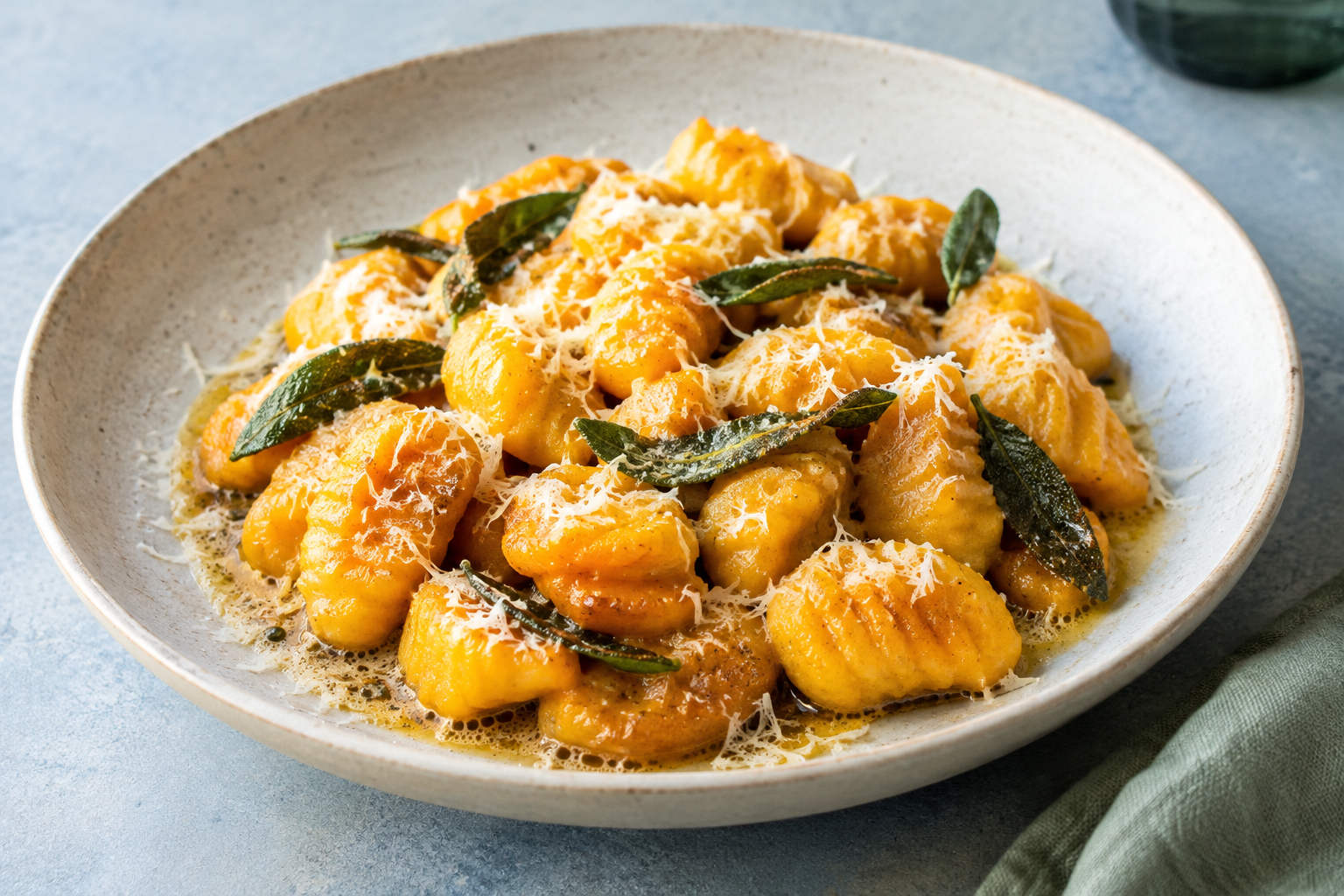
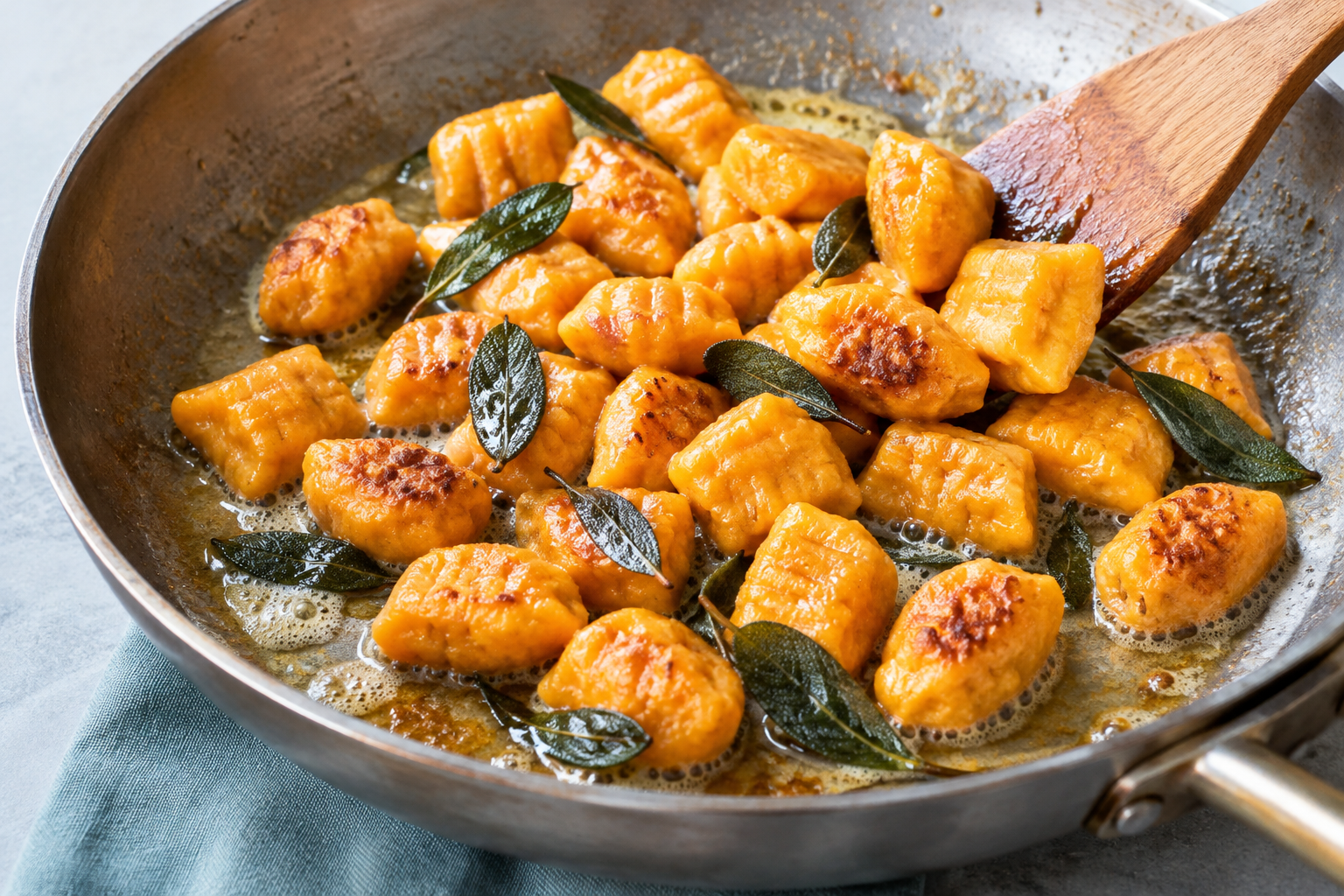
Butter and sage make a simple, fitting sauce: the butter takes on a nutty aroma, while the sage adds a herby note to the sweet pumpkin. Take the pan off the heat as soon as the butter is golden brown, as its colour can change quickly. A splash of cooking water helps the sauce cling to the gnocchi. Parmesan adds a salty, savoury finish; if you like, use another hard Italian cheese with a similar flavour.
Serve the gnocchi straight away, perhaps with a green salad or sautéed bitter leafy greens for contrast. If you’re making them ahead, arrange the shaped, uncooked gnocchi on a floured tray and freeze them; cook them straight from frozen in batches, allowing a little extra cooking time. Refrigerate cooked leftovers promptly and eat them within two days. Reheat them gently in a frying pan with a knob of butter; boiling them again is more likely to make them soft.
 Main course

