ABOUT THIS RECIPEFinely chopped, full of contrast
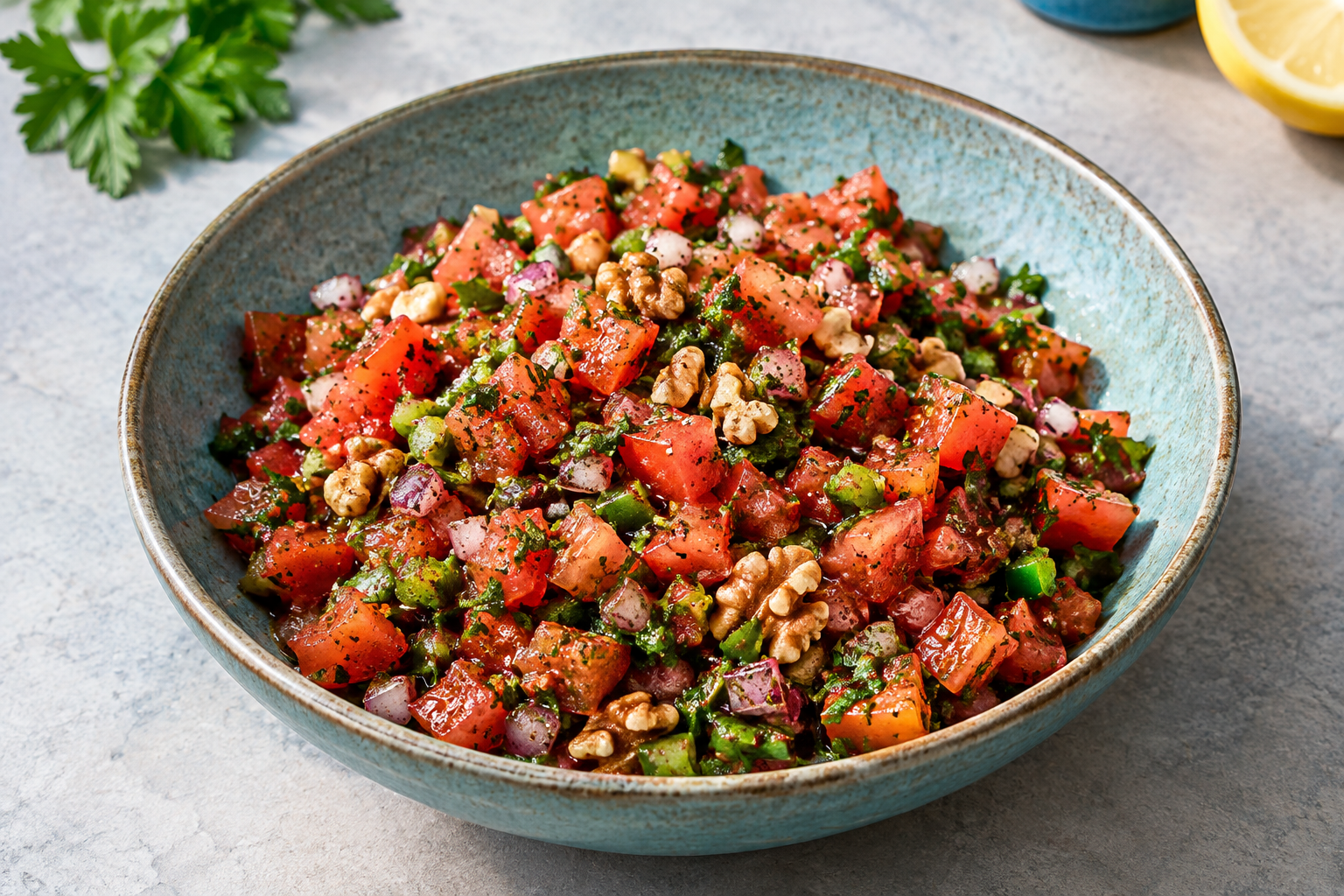
Gavurdağı salad is a Turkish salad often associated with the cuisine of Gaziantep. The combination of tomato, green pepper, onion and walnuts sets it apart from a Greek village salad with cucumber, olives and feta. In this version, the ingredients stay distinct, but are chopped finely so the flavours mingle without turning the salad into a purée. Ripe tomatoes are the base; walnuts add an earthy, slightly bitter note and a satisfying bite.
The salad is at its best when tomatoes are in season: ripe, fragrant and juicy, usually in summer and early autumn. Outside that season, you can use firm vine tomatoes, but let watery tomatoes drain for a little while after chopping them. A sharp chef’s knife helps you cut small, even dice without squashing the flesh. Finely chop the onion and green pepper too, so their sharpness doesn’t overpower the tomato.
The dressing is all about balancing pomegranate molasses, lemon and olive oil. Pomegranate molasses is thick and concentrated, with a fruity tartness; start with the stated amount and taste before adding extra lemon. Sumac adds a dry, citrusy freshness. If you can’t find molasses, use a mixture of lemon juice and a little honey. It’s a practical substitute, but gives a lighter, less complex flavour. A mild green pepper works well if you can’t get Turkish sivri biber.
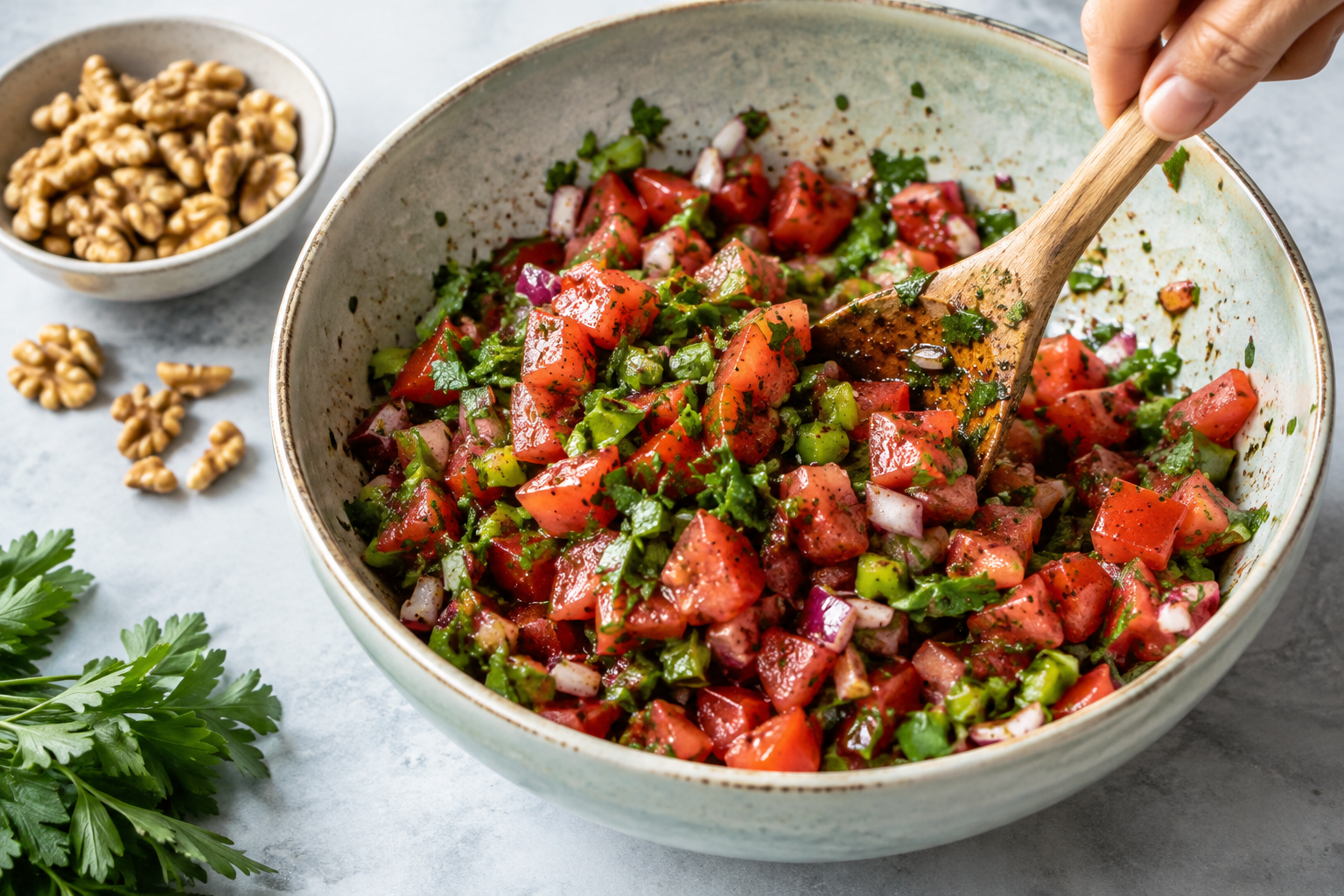
There’s no need to toast the walnuts: chopped raw, they add a distinct, gentle crunch alongside the juicy vegetables. Don’t chop them too finely, or they’ll disappear among the tomatoes. Toss the salad with the dressing shortly before serving, and add the salt then; salt draws moisture out of the tomatoes, making the salad wetter over time. Serve it as a side with grilled meat, fish or vegetables, or alongside flatbread and other mezze. Cover and refrigerate leftovers, and preferably eat them within a day; the flavour holds up, but the tomatoes soften and release liquid.
 Main course

