ABOUT THIS RECIPEA platter full of contrasts
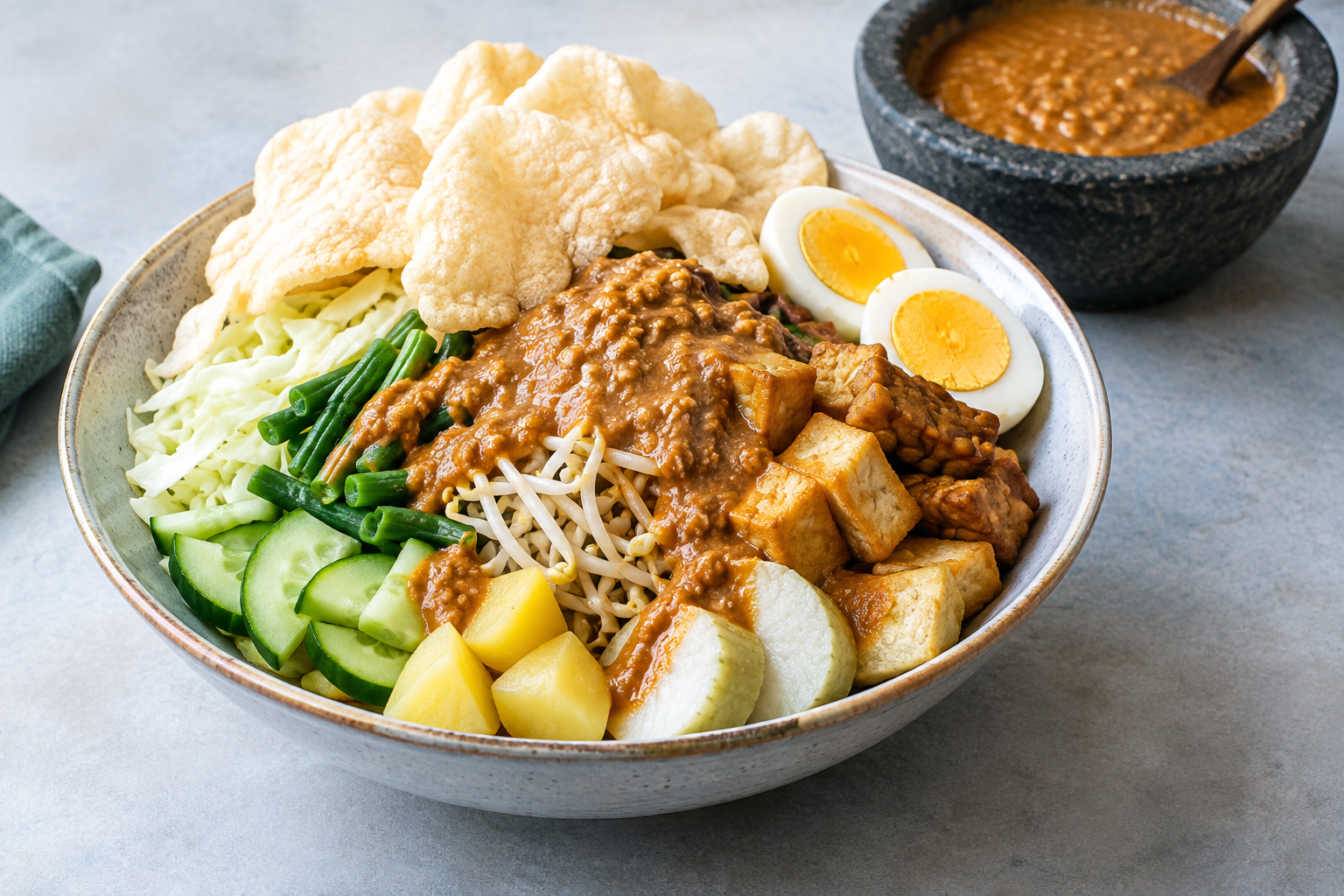
Gado-gado brings together different textures: crisp-tender vegetables, soft lontong, firm tofu and tempeh, egg and a rich peanut sauce. The name is often translated as “a bit of everything,” but the ingredients vary from cook to cook and from region to region. This version follows the requested Jakarta style, with lontong, egg, and both tofu and tempeh. Think of that combination as a practical take, not a single fixed standard: the vegetables and the way the dish is served can vary too.
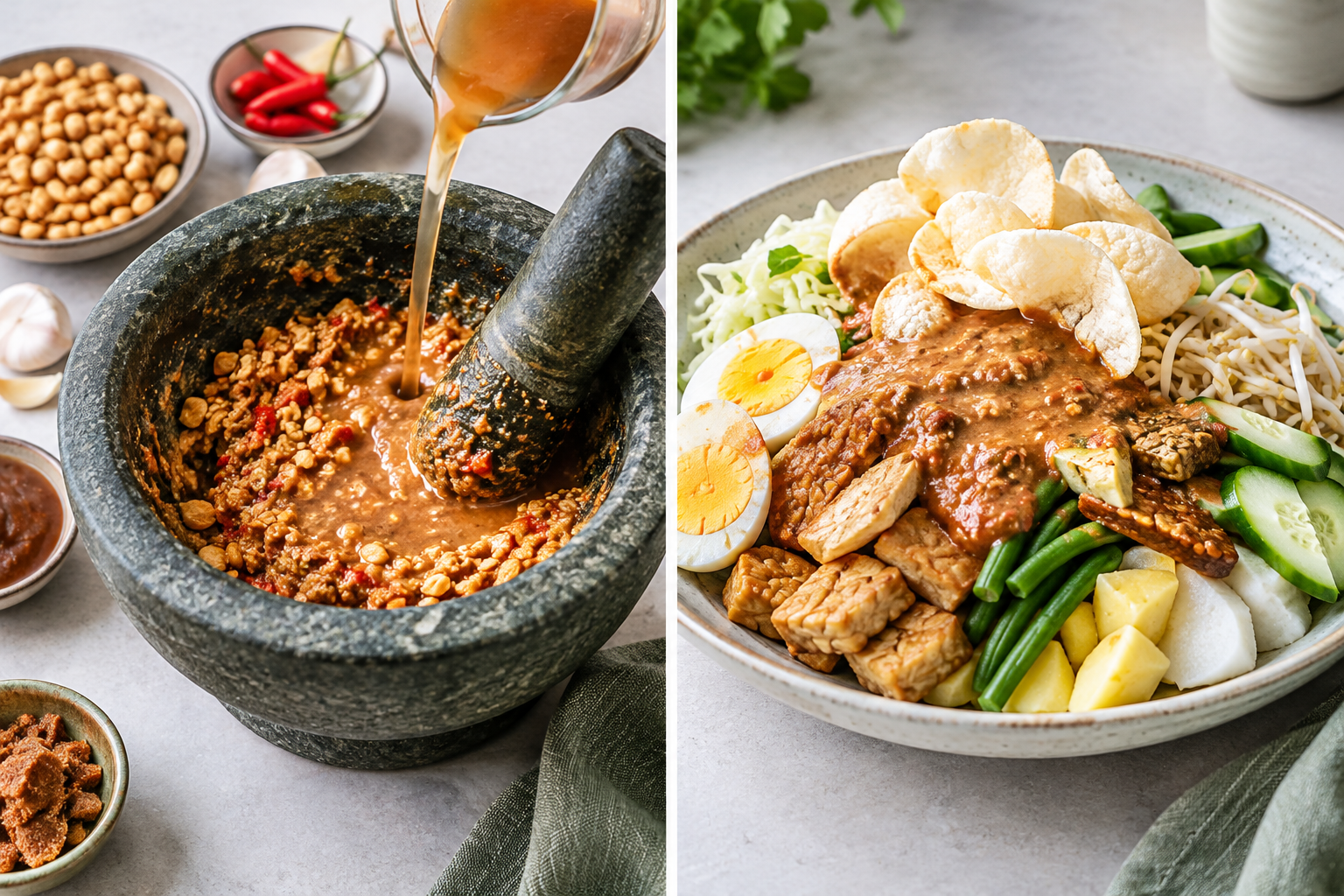
The peanut sauce is the flavor anchor. Roasted peanuts give it a nutty base; chili brings heat, palm sugar rounds it out, and tamarind adds a fruity tang. Pound the ingredients in a mortar until they form a coarse paste, then add the water a little at a time. This lets you control the texture: the sauce should be thick enough to cling to the vegetables, but still slide off a spoon. A food processor works too, but pulse briefly and scrape down the bowl as you go for a less-smooth result.
The vegetables are briefly blanched, not boiled for long. This keeps the green beans and cabbage firm to the bite, while the bean sprouts and cucumber retain their fresh character. The exact cooking time depends on the vegetables’ thickness and freshness, so taste as they cook. Cucumbers and fresh herbs are often plentiful in spring and summer; outside those months, the platter works just as well with vegetables such as carrots or cauliflower. Cut any substitutes into similar-sized pieces and cook them separately so you can control their texture.
Lontong is compressed rice served in slices, and makes the platter a complete meal. Ready-made lontong is a practical choice; follow the package directions for reheating. No lontong available? Cooked rice can be served alongside, though it won’t have the same compact, soft bite. You can also adjust the vegetables or leave out the tempeh, but ideally keep a mix of fresh and firmer components. Serve the sauce on the side if diners want to choose how much they have, and scatter the kroepoek over the dish at the last moment so it stays crisp.
For easier planning, prepare the eggs, vegetables and sauce in advance. Cover the prepared components and refrigerate them within two hours of cooking; keep the kroepoek dry and separate. Heat the lontong, tofu and tempeh thoroughly before serving. The vegetables often taste best cool or at room temperature, with the sauce not ice-cold. Refrigerate leftovers and use them within two days; keep the kroepoek separate until it’s time to eat.
 Main course

