ABOUT THIS RECIPEA thin batter, a hot pan
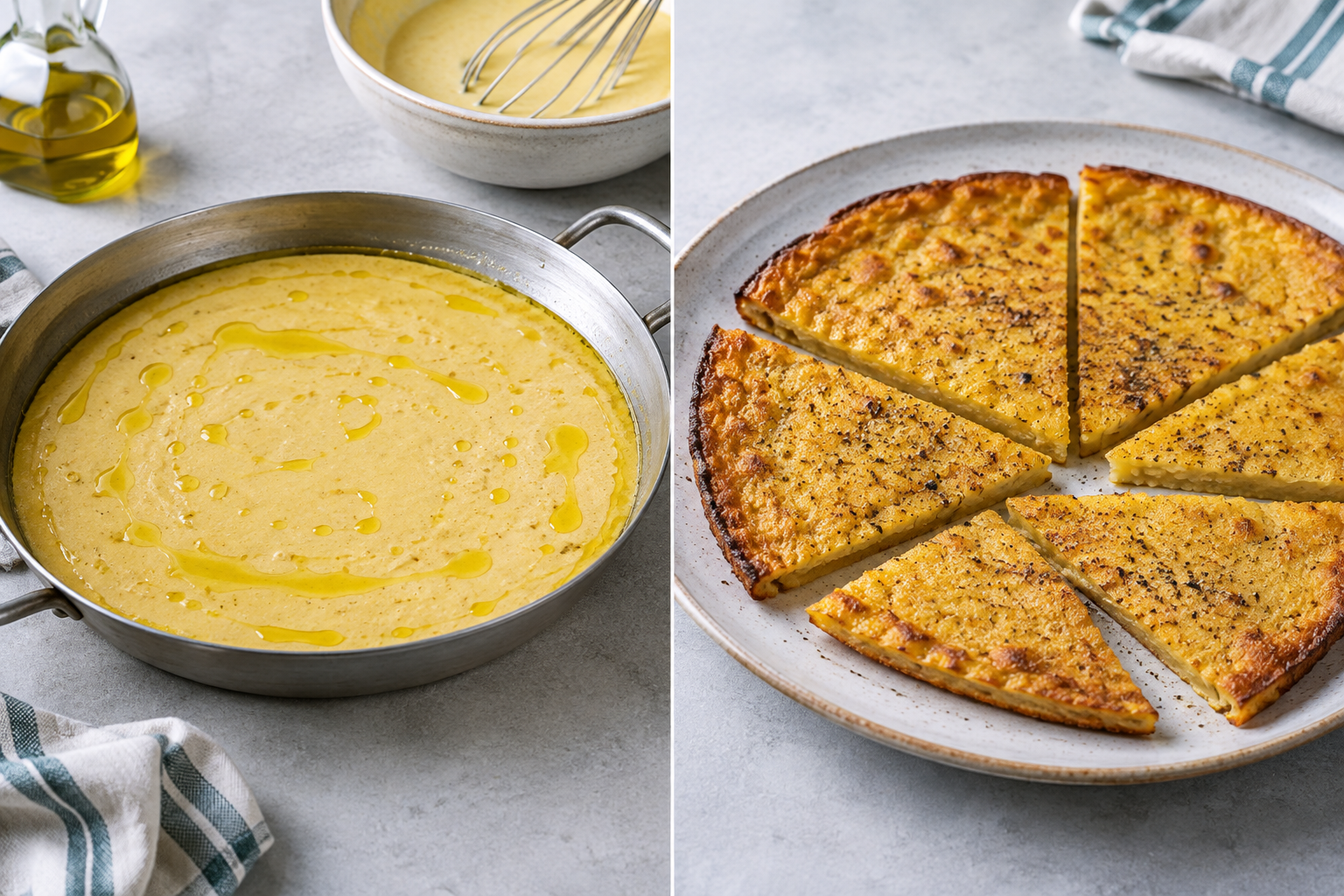
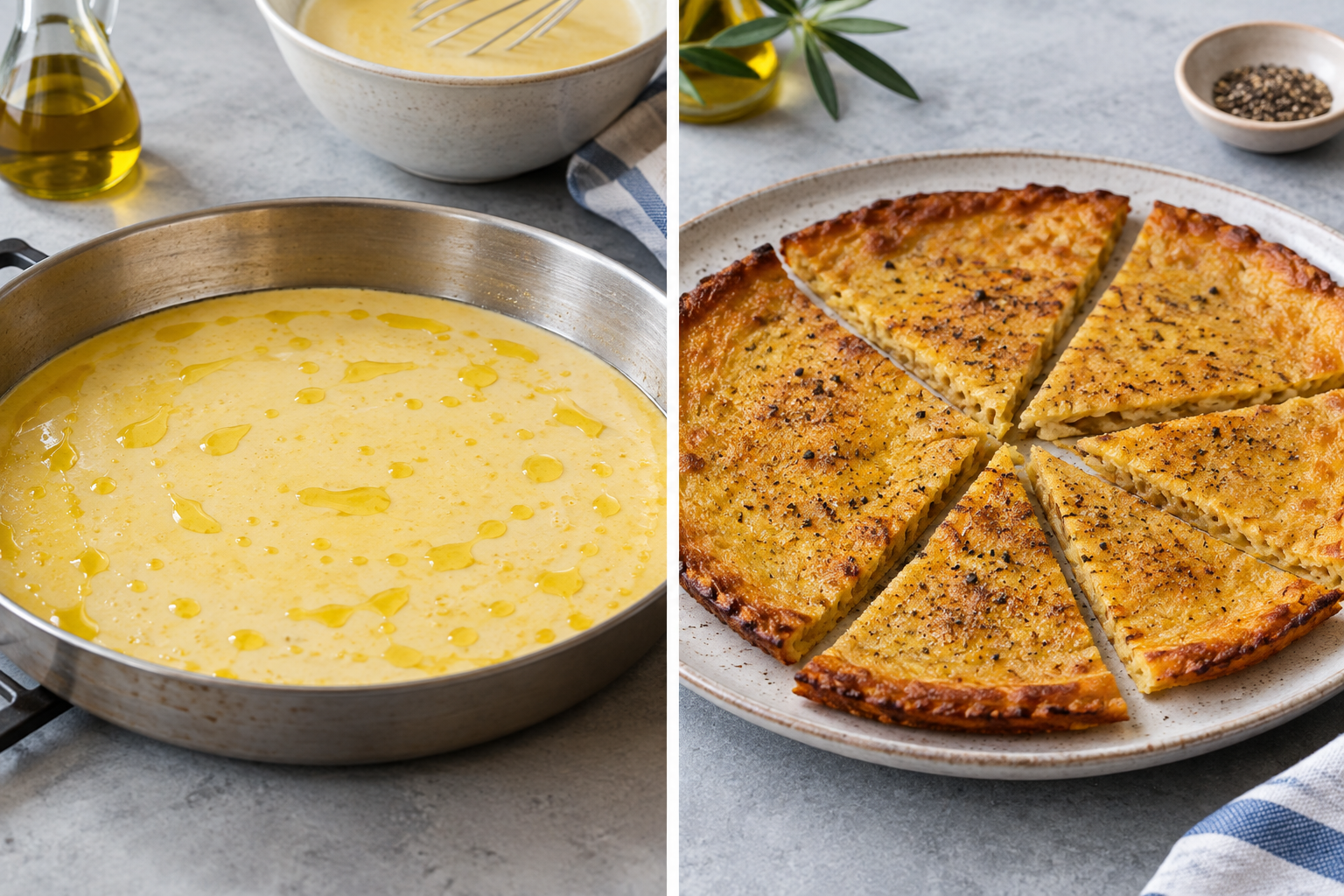
Farinata is a well-known specialty from Liguria, the coastal region in northwestern Italy. The ingredients are remarkably simple: chickpea flour, water, olive oil and salt. These few ingredients come together to make a thin, savory pancake with a golden-brown, crisp in places top and a soft center. Chickpea flour lends a mild, nutty flavor; olive oil adds a rich aroma and helps the edges brown. Black pepper is a common seasoning at the table, but it doesn’t need to go into the batter.
The resting time matters more than any complicated technique. Chickpea flour absorbs water gradually; after a few hours, the batter is smoother and cooks more evenly. Whisk it thoroughly at first so no dry lumps remain. Some foam may form on the surface as it rests. Skim it off for a more even result. A resting time of about two hours is practical, but the batter can also rest longer if you’re planning ahead. In that case, cover and refrigerate it, then stir it again before baking.
A hot oven and a wide, shallow metal pan help the farinata bake thinly and give the outside some color. Ideally, use a pan about 30 centimeters across, so the batter spreads into an even layer. A heavy ovenproof skillet or a shallow baking pan works well at home. The oil in the preheated pan needs to be hot before you add the batter: that way, the underside starts cooking right away. Keep the pan steady and pour carefully, since hot oil can splatter. Ovens vary, so look at the color and firmness of the top rather than relying only on the clock.
Chickpea flour is essential for its distinctive flavor and texture; regular wheat flour is not an equivalent substitute. It’s available in many supermarkets and Asian grocery stores, often also under the name gram flour. Note: some products with that name are made from roasted chickpeas and behave differently in batter. Serve the farinata right away, cut into wedges, as a snack with drinks, for lunch or alongside a meal with salad and grilled vegetables. A little freshly ground black pepper goes well with its warm, savory flavor. Leftovers can be covered and refrigerated, then reheated in a hot oven; the edges will generally be less crisp than when freshly baked.
 Main course

