ABOUT THIS RECIPEA soft exterior, a rich bean filling
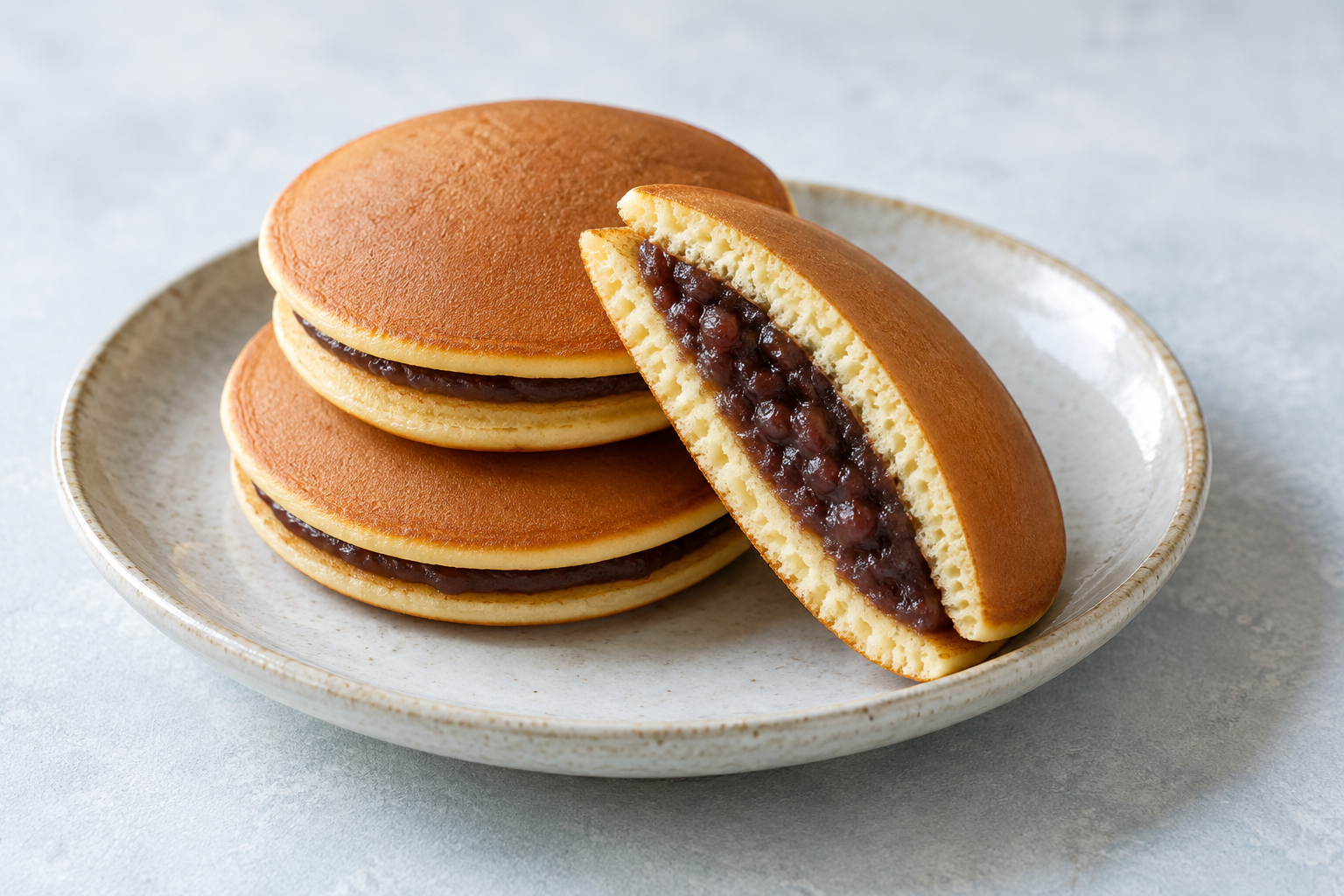
Dorayaki are part of Japan’s wagashi confectionery tradition. Their distinctive shape consists of two small, round pancakes with anko in between: a sweet paste made from red azuki beans. The outside is soft with a subtle honey flavor, while the filling is firmer and richer in taste. In Japan, you’ll find both smooth anko and a coarser version with noticeable pieces of bean. Both work well; the choice mainly affects the texture of the center.
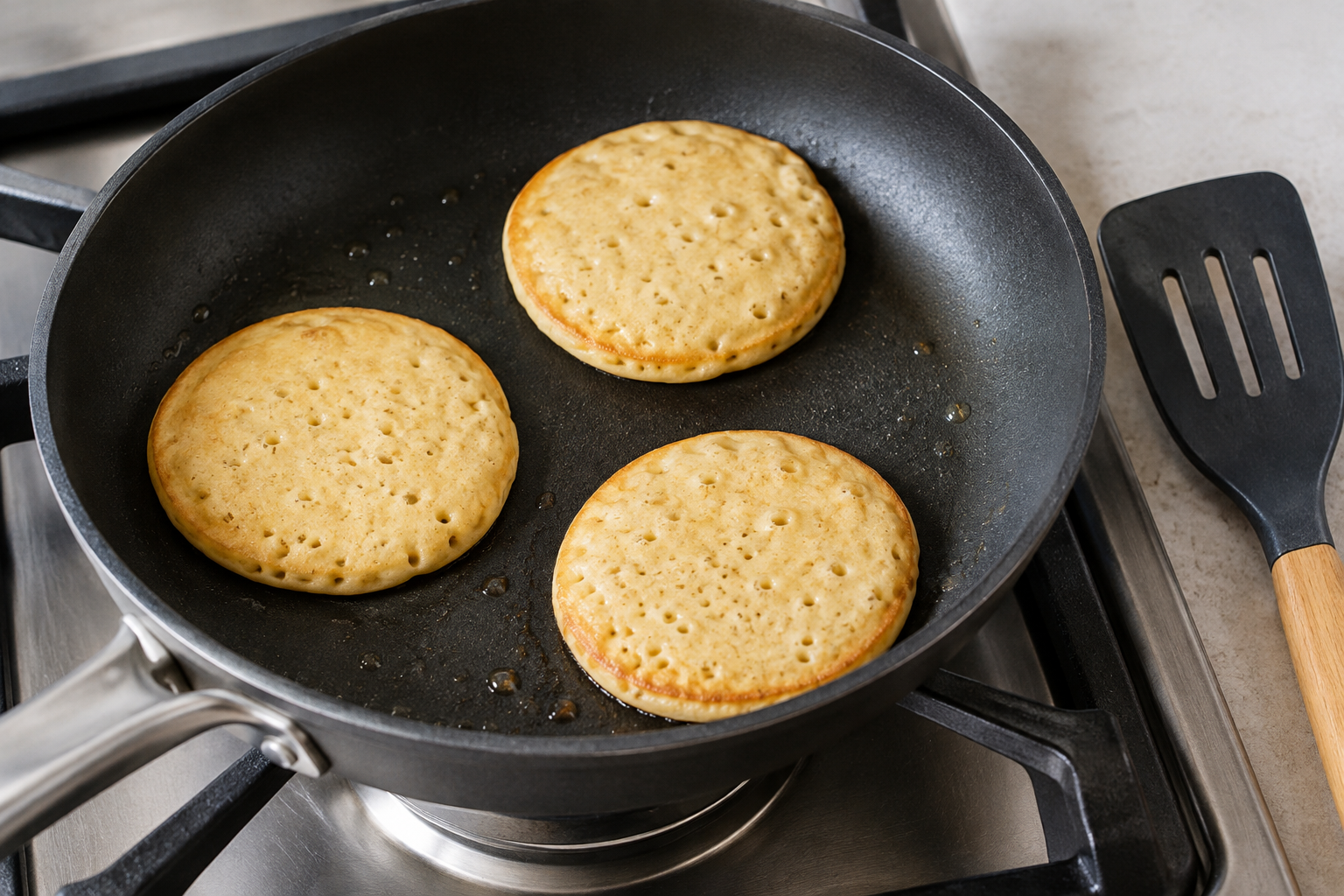
The batter seems simple, but the pan’s temperature makes a big difference. If the heat is too high, the honey in the batter browns quickly before the center is cooked through. A frying pan over medium-low heat gives the pancakes time to cook evenly and turn golden brown. A good nonstick pan helps you cook them without a thick layer of fat. If you like, wipe the pan with a little oil using paper towel: there should be no visible layer left behind, or the pancakes will develop mottled spots.
Eggs give the batter structure and flour forms the base; sugar and honey add sweetness and contribute to the color. Baking powder helps keep the pancakes light and fluffy. Let the mixed batter rest briefly so it cooks a little more evenly. Anko is available from Japanese and other Asian grocery stores, often in cans, vacuum packs, or jars. Choose smooth koshian for an even filling or tsubuan for more bite. If the paste is very firm, first loosen it with a spoon; don’t add liquid without a good reason, as the filling needs to stay between the pancakes.
Make the pancakes roughly the same size and spread anko on the less even side of each one. Gently press the top pancake so the filling comes close to the edge without spilling out. Serve dorayaki as a dessert or with green tea, at room temperature so you can fully enjoy their soft texture. Cover any leftovers and store them in the refrigerator; eat them within two days and let them come to room temperature before serving. The refrigerator can make the pancakes firmer, so it’s best not to reheat them for long or at a high temperature.
 Main course

