ABOUT THIS RECIPEA fresh filling with a sharp edge
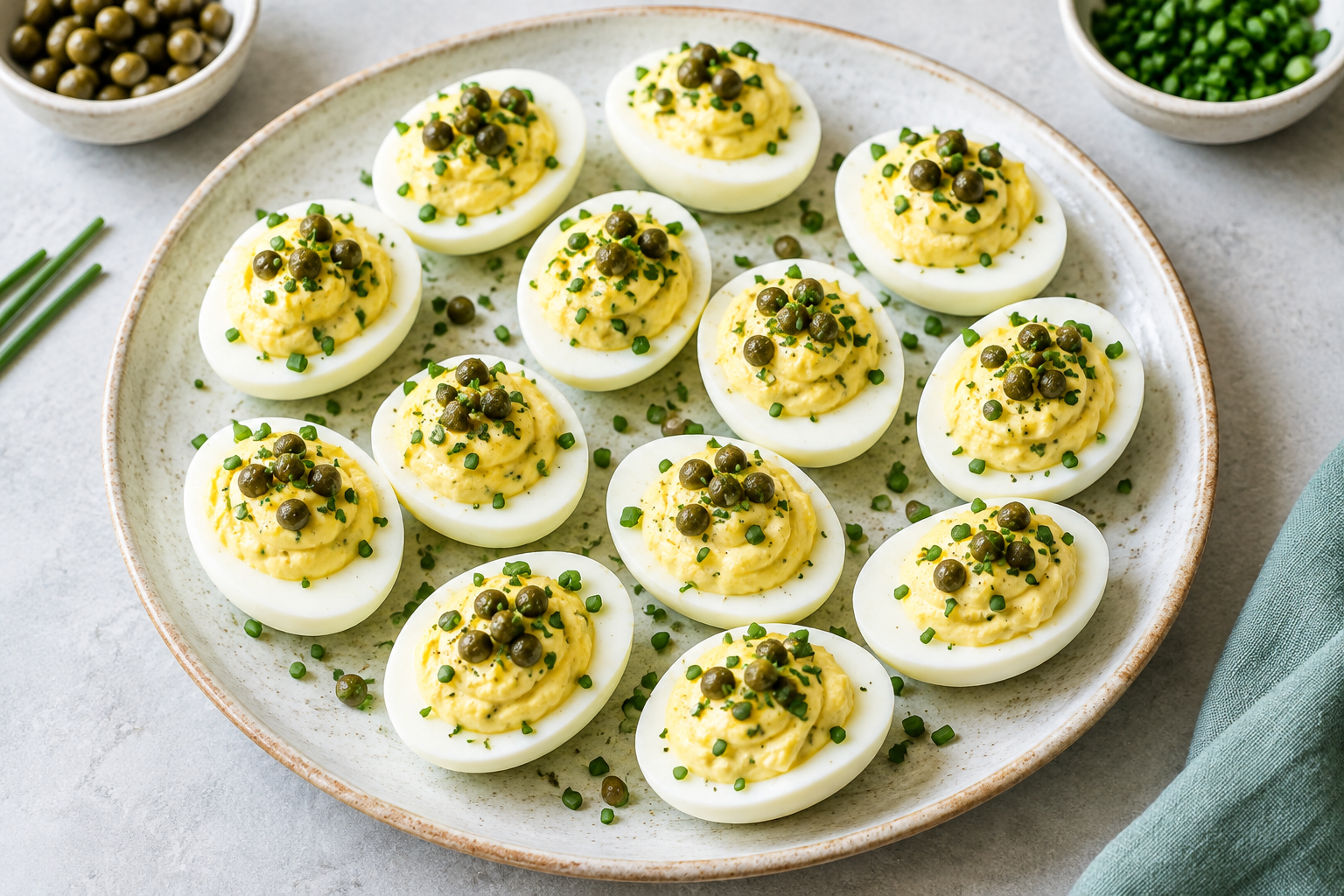
Œufs mimosa are hard-boiled eggs whose yolks are mashed and seasoned, then returned to the halved egg whites. The name refers to the yellow, crumbly yolk that calls mimosa blossoms to mind; in this version, the filling is smooth and creamy instead. It’s a familiar French dish that works well on a lunch table or buffet. Capers and chives add a salty, fresh-green note to the soft base without overpowering the egg.
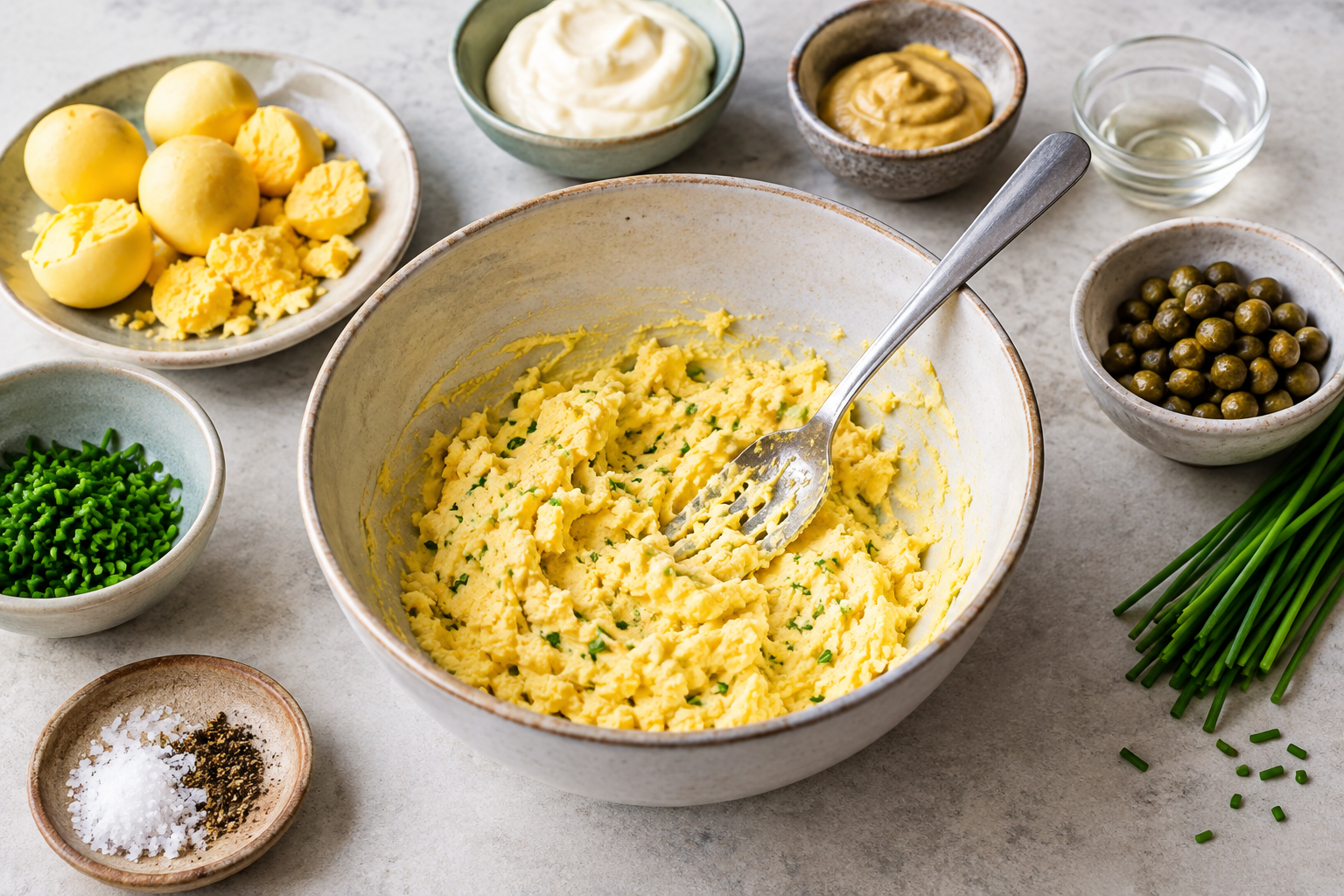
Getting the right doneness starts with cooking the eggs. Let them boil for about nine minutes from the moment the water begins to simmer gently; this sets the yolks completely while usually keeping them yellow rather than dry and chalky. Cool them immediately in cold water. This stops the cooking and makes them easier to peel. Halve the eggs lengthwise with a sharp knife, wiping it clean between cuts if needed for neat edges. Mash the yolks finely before adding the mayonnaise so no hard pieces remain in the filling.
Mayonnaise makes the yolk soft and cohesive, while Dijon mustard and a small splash of vinegar sharpen the rich flavor. Start with a little mustard: it should stay in the background. If the filling is still firm after mixing, stir in a teaspoon of water; don’t add extra mayonnaise straight away. For an even, neat filling, use a piping bag with a wide opening, or spoon it back into the egg whites with two teaspoons. A few larger pieces of yolk are fine, but a smooth filling is easier to distribute.
Capers bring a concentrated salty, slightly sour flavor, and chives add a fresh onion note. Briefly rinse very salty capers and pat them dry. No Dijon on hand? A mild mustard works too, though the flavor will be less sharp. Finely chopped parsley is an alternative to chives; it’s best not to use a large amount of raw onion, which can quickly overpower the dish. Leave the capers whole or roughly chop them, depending on the bite you want, and add them to the filling at the very end.
Serve the eggs cold or lightly chilled, for example alongside a green salad, radishes and bread, or as part of a buffet with other small dishes. You can boil and peel the eggs ahead of time, but for a fresh appearance it’s best to add the filling and garnish on the day of serving. Store filled eggs covered in the refrigerator and return them to the fridge until serving. Don’t leave them at room temperature for longer than two hours; refrigerate any leftovers afterward.
 Main course

