ABOUT THIS RECIPEThin layers, deep flavor
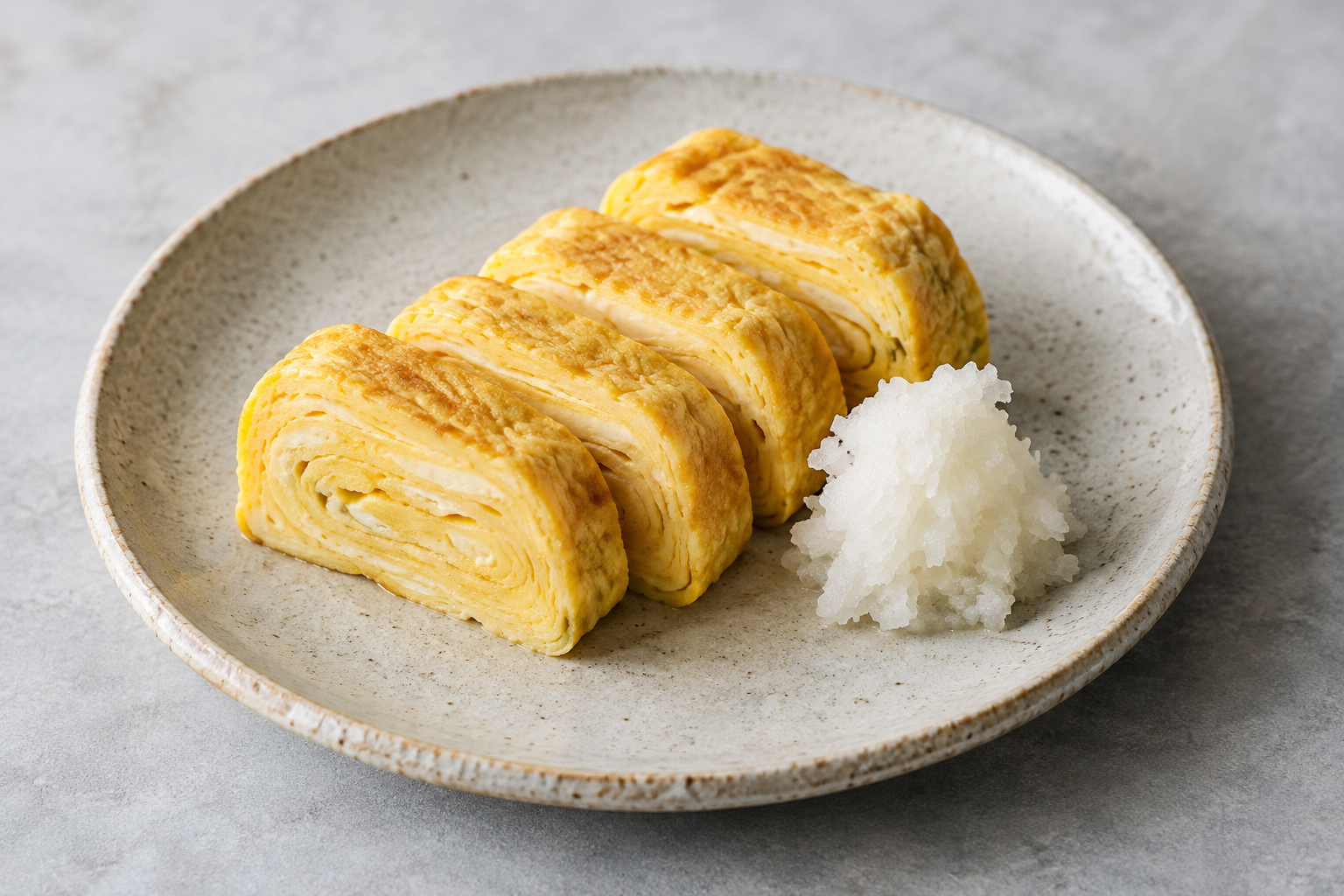
Dashimaki tamago is a Japanese omelet in which dashi plays a leading role. The broth makes the egg savory and moist, while mirin adds a gentle sweetness and soy sauce brings extra depth. The flavor remains subtle: this isn’t a heavily seasoned omelet, but a softly layered dish where egg and broth take center stage. Serve the slices as a starter or as part of a Japanese meal with several small dishes.
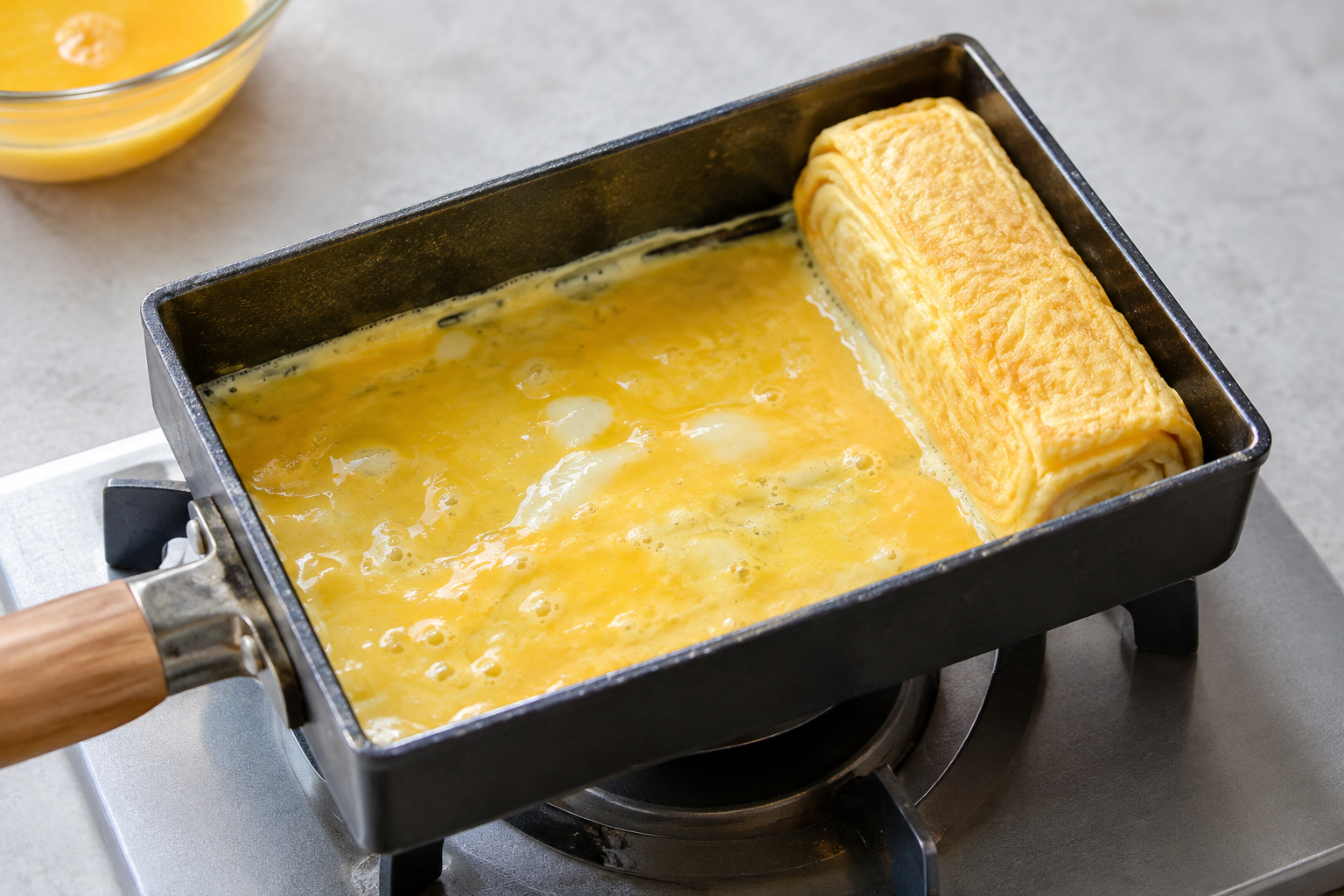
The technique calls for thin layers and controlled heat. A rectangular omelet pan makes rolling and shaping easy, but a small, good-quality frying pan works too. Heat the pan over medium-low heat; too much heat makes the egg brown quickly and harder to roll up smoothly. The layer doesn’t need to be completely dry on top when you roll it: a slightly glossy surface helps the next layer stick to it. Keep the pan greased, but don’t use so much oil that the omelet fries in a pool of it.
Beat the eggs gently, without whipping in much air. A few streaks of egg white are fine, but an even mixture distributes the dashi better. Let the dashi cool before adding it, so the egg doesn’t cook in spots. If possible, use a mild, unsalted dashi, or check the salt content if you’re using instant dashi; soy sauce adds salt too. Mirin is not the same as rice wine vinegar. If you don’t have mirin, you can use a small amount of sake with a little sugar, but briefly boil it and let it cool first. The flavor will be a little different.
Grate the daikon just before serving and gently squeeze out any excess moisture so the plate doesn’t get watery. The fresh, mild radish cuts nicely through the rich omelet; serve it alongside or in a small mound on the plate. You can add a little soy sauce, but it usually isn’t necessary. Cut the omelet into even slices with a sharp knife and serve lukewarm or at room temperature. Cover leftovers and store them in the refrigerator, and eat them within two days; don’t leave cooked egg out of the refrigerator for more than two hours.
 Main course

