ABOUT THIS RECIPETomatoes with a Clear Broth Finish
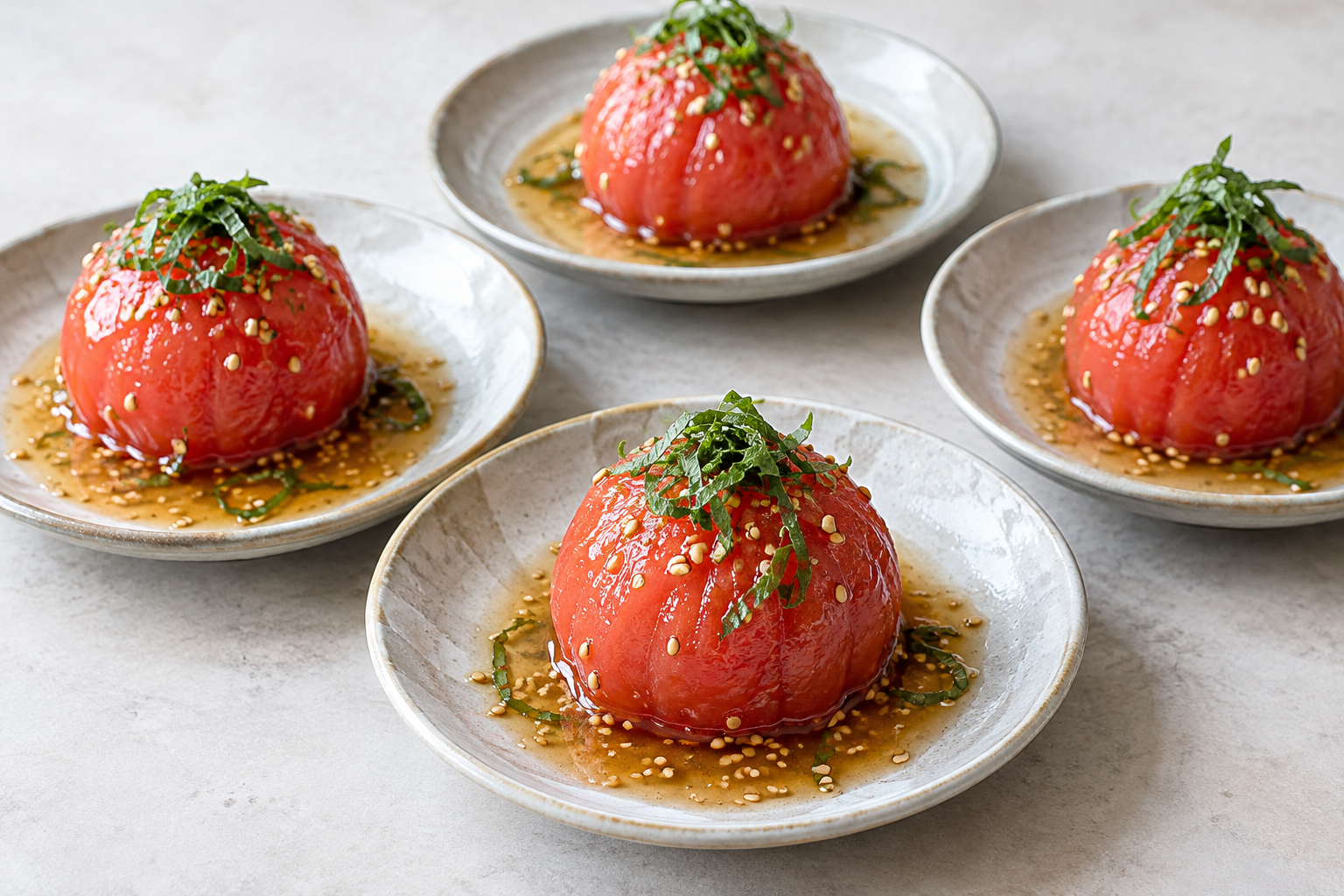
Dashi tomatoes are a light, modern way to give a vegetable flavor without overpowering it. The base is dashi: in this version, a broth made with kombu and katsuobushi, or dried bonito. Kombu brings a soft, rounded umami; the bonito gives the broth a more savory, lightly smoky character. Together, they remain subtle enough for tomatoes, which are already juicy and aromatic. Use ripe but firm tomatoes so they hold their shape after peeling and poaching.
This dish really comes into its own when tomatoes are fully ripe, usually in summer and early fall. Out of season, you can use firm vine tomatoes; avoid overripe, watery ones, which fall apart more easily. Brief poaching warms the tomatoes and lets the outside take on the broth. Then, resting them in the dashi gives the flavors time to come together. Don’t expect the tomatoes to taste completely like broth all the way through: it’s the contrast between juicy, fresh flesh and a savory outer layer that makes this dish interesting.
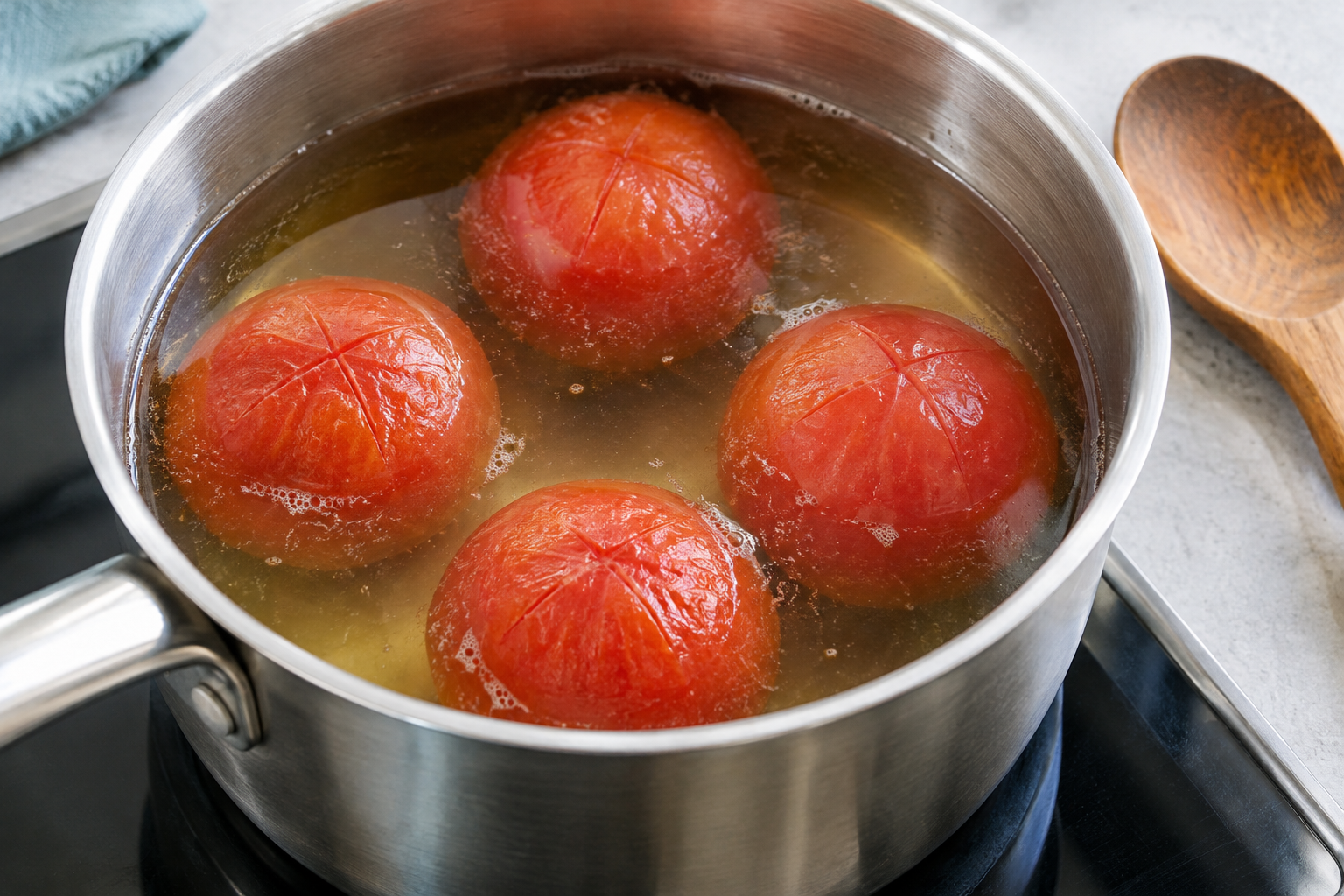
Removing the skin is more than a neat finishing touch. Without it, the surface absorbs a little dashi more easily, and the tomatoes are nicer to eat with a spoon or fork. A quick blanch makes peeling easy; then poach them gently and avoid a hard boil, which can split the tomatoes. If you have time, let them cool completely in the broth. Serve them chilled on a warm day or at room temperature alongside rice, grilled fish, or tofu.
Rice vinegar and soy sauce make a small, sharp dressing: the vinegar brightens the tomatoes, while the soy deepens the umami. Taste before adding extra salt; the dashi and soy sauce already bring plenty of savoriness. Toasted sesame seeds add a nutty, dry crunch. Shiso has a distinct green aroma; if you can’t find it, thinly sliced Thai basil is a useful alternative, though it changes the character of the dish. For a vegetarian version, you can replace the katsuobushi with dried shiitake and steep them with the kombu to make the broth. Store leftovers covered in the refrigerator and eat them within two days.
 Main course

