ABOUT THIS RECIPEQuick on the heat, fresh to finish
Snow peas have a mild, slightly sweet flavor and are at their best when they still have a little bite. They’re freshest in spring and early summer; you can usually find them outside that season too, but look for pods that are firm and bright green. Avoid any that feel limp or have brown spots. Remove any strings along the seams and dry the snow peas well: wet vegetables cool the pan and steam rather than fry.
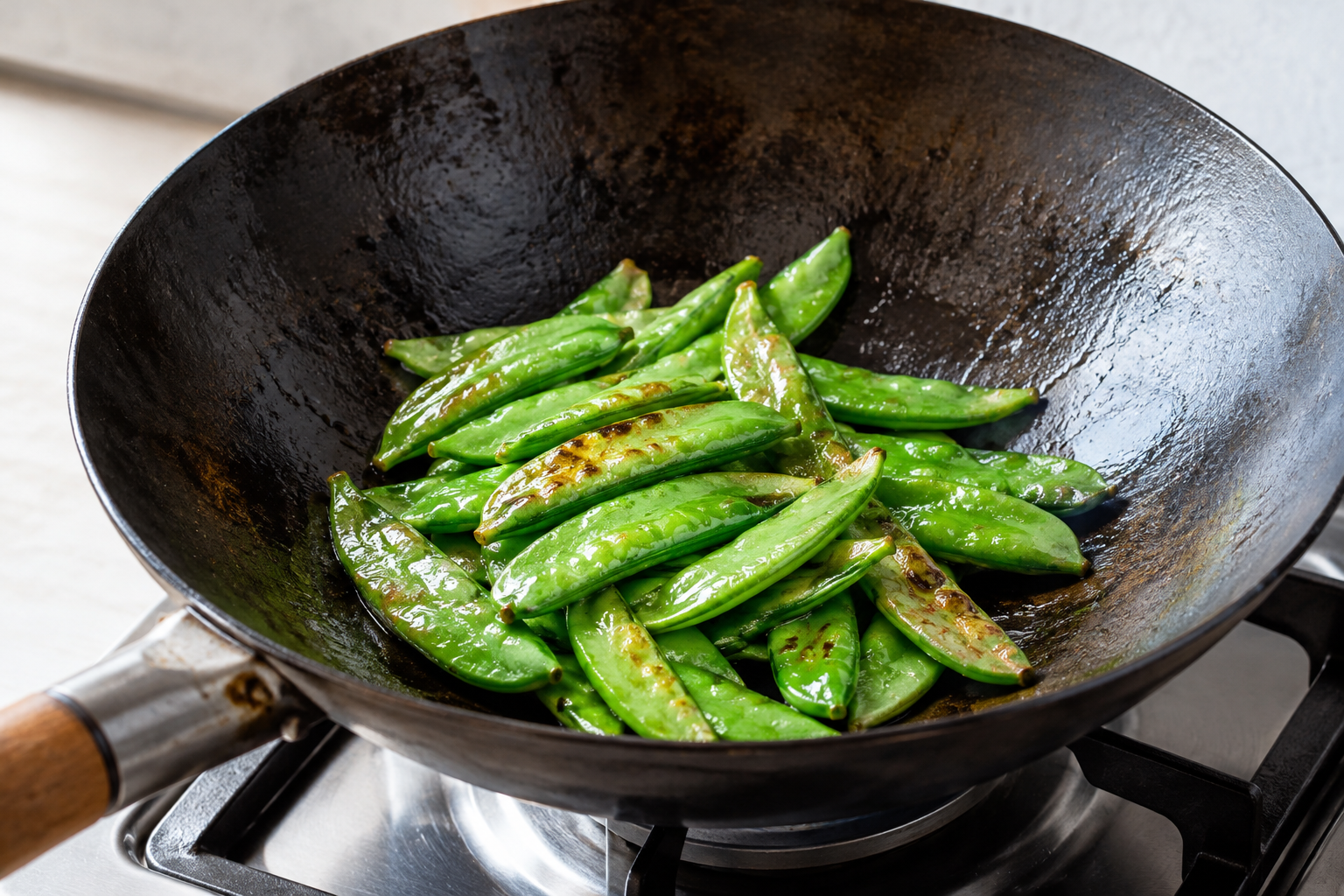
A large frying pan or wok and a properly hot stovetop matter more here than a long cooking time. Stir-fry the snow peas in small batches so they make contact with the pan and heat up quickly. That way, they keep their color and crisp bite, while developing a few lightly charred edges. Don’t overcrowd the pan; it’s better to cook in two batches and add the first batch back in afterward. Add the lime only after frying, so the juice stays fresh and the snow peas don’t cook in liquid.
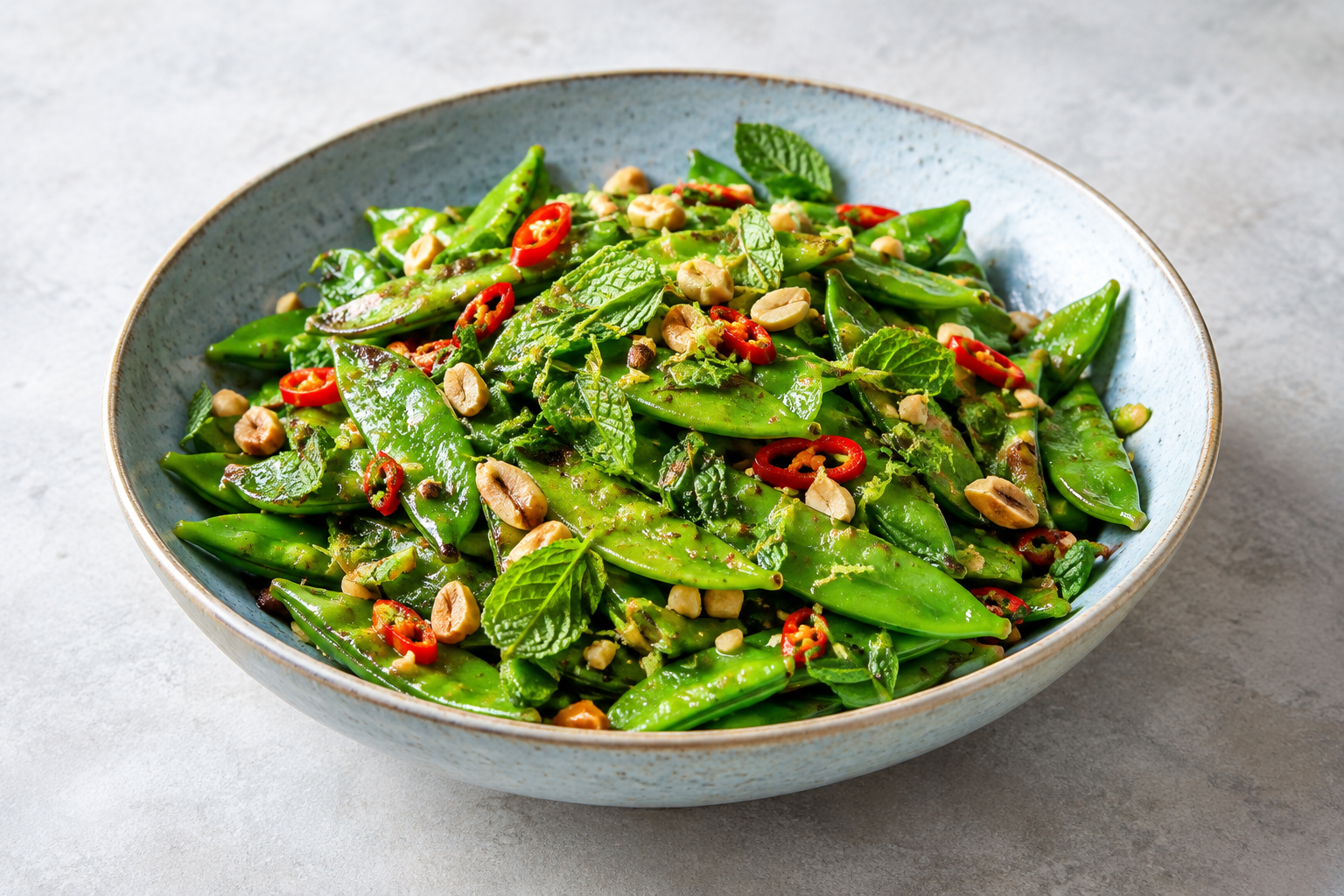
Lime, mint, chili and peanuts each play a distinct part. The tart juice brightens the sweet vegetable, mint adds a cool aroma, and chili brings a little warmth. Peanuts contribute a roasted, savory flavor and a satisfying crunch. Unsalted peanuts are best, so you can adjust the salt yourself. No fresh mint on hand? A smaller amount of cilantro works too, though the flavor will be more pronounced. Sugar snap peas are a good alternative to snow peas; cut them in half diagonally if you like, so the dressing coats them well.
Serve this side dish right away, while the snow peas are still warm and the peanuts are crisp. It goes well with steamed rice or noodles and makes a fresh counterpoint to grilled fish. If serving it as part of a spread, toss it with the lime and mint just before serving. Once cooled, leftovers can be stored covered in the refrigerator; the flavor will still be good, but the snow peas will lose their crunch. For that reason, it’s best to eat them within two days and warm them briefly in a hot pan rather than heating them for a long time.
 Main course

