ABOUT THIS RECIPEThree flavors, three textures
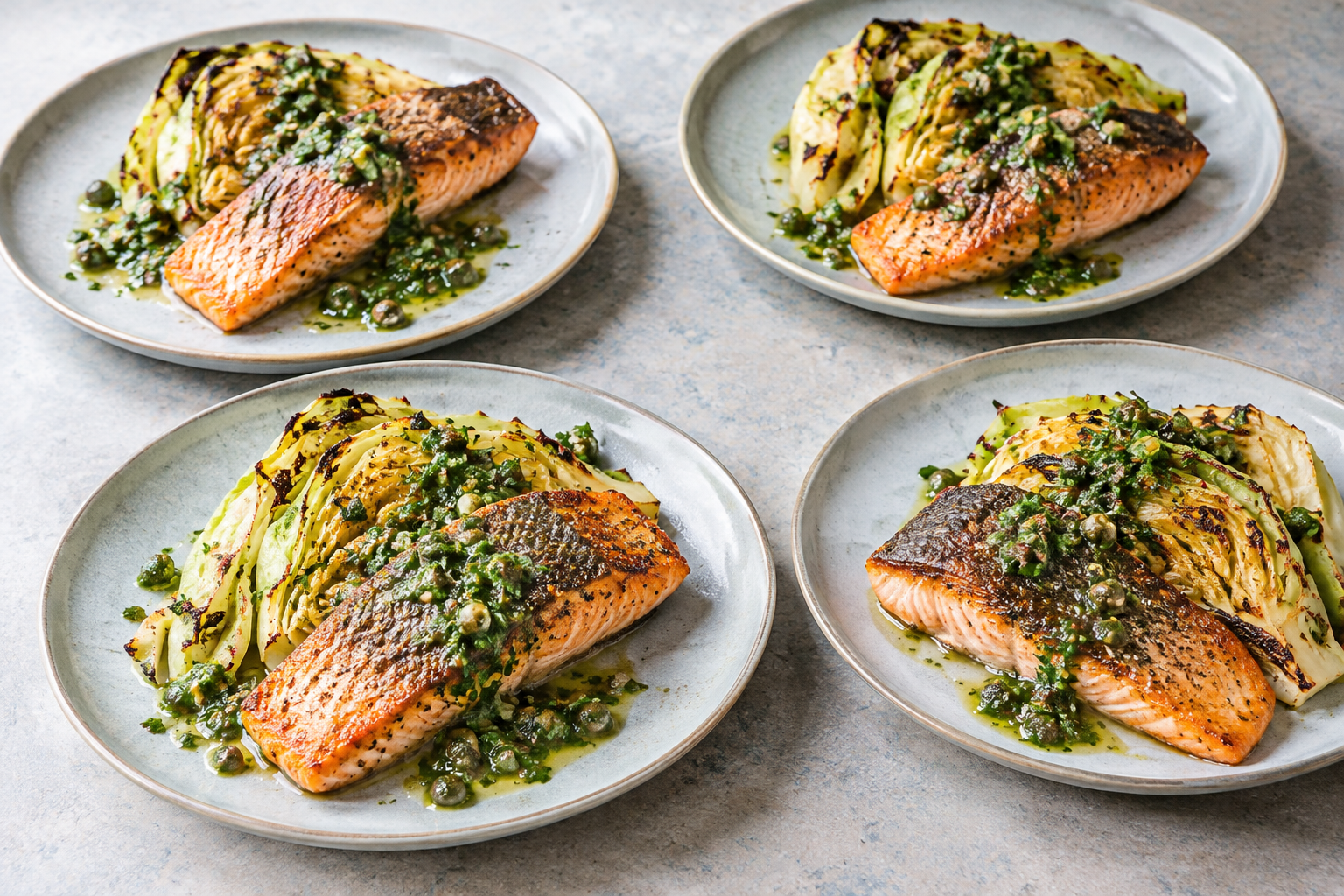
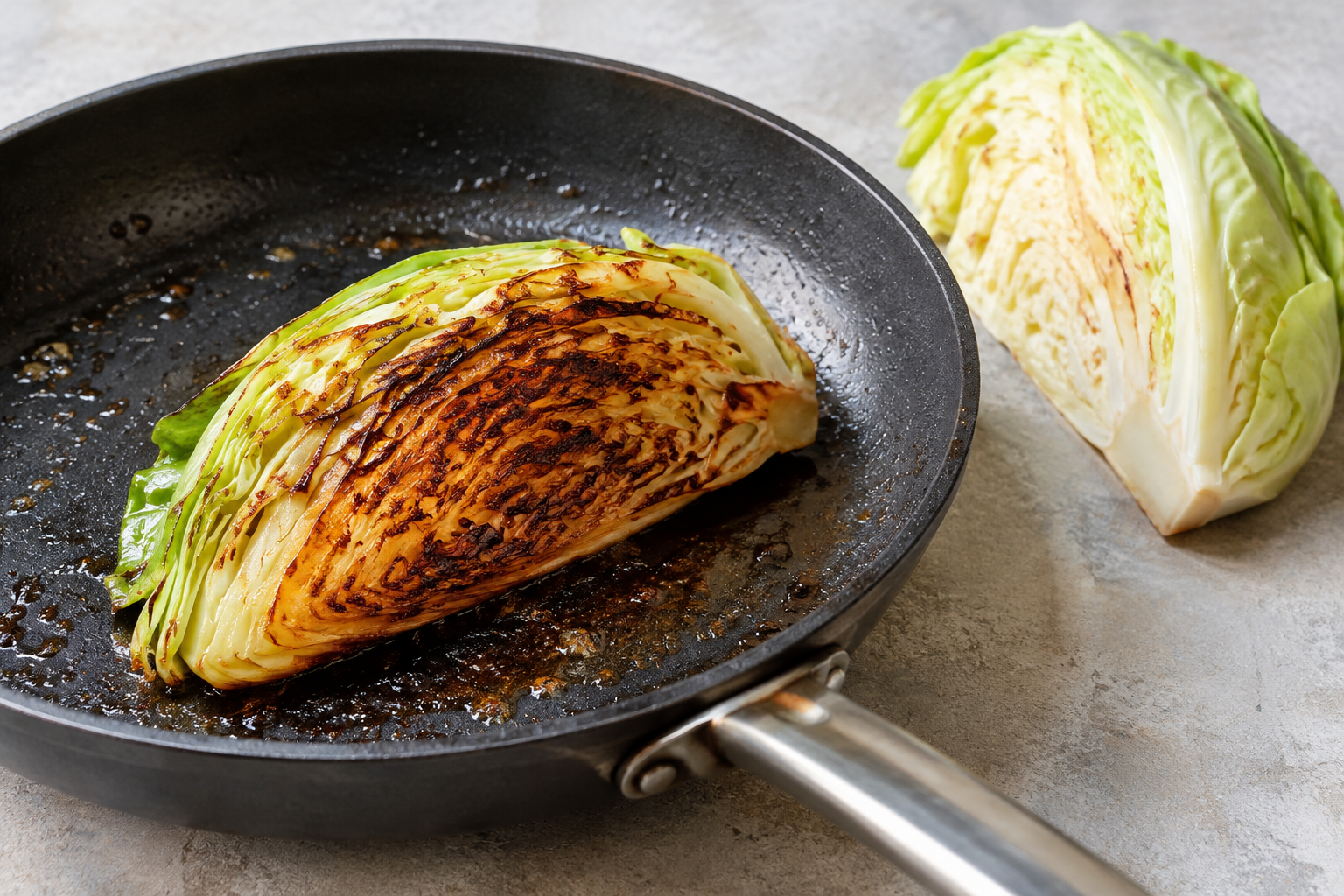
This dish is all about contrast, not a long list of ingredients. Salmon is rich and tender inside; the skin turns crispy if you pat it thoroughly dry first and cook the fish skin-side down over moderate heat. Pointed cabbage develops dark spots in a hot pan, making it sweeter while the inside still has a little bite. The herb sauce brings parsley, lemon and capers together: fresh, tangy and salty enough to complement the richer fish without overpowering the cabbage.
Moisture is the biggest enemy of crispy skin. So pat the salmon carefully dry just before cooking, and leave enough room between the fillets in the pan. Press them down gently with a spatula for the first few seconds; this helps more of the skin stay in contact with the hot surface. Then leave the fish alone until the skin is firm and golden brown. A nonstick pan is forgiving, but a well-heated stainless-steel pan works too. Turn the fillets only when they release easily.
Pointed cabbage is mild and cooks faster than firm white cabbage. Cut the wedges so that each piece keeps part of the core; it holds the leaves together as they cook. Work in batches if your pan is small, because a crowded pan will steam the cabbage rather than char it. No pointed cabbage on hand? Use wedges of savoy cabbage or white cabbage and give them a little extra time. The sauce is deliberately coarsely chopped, so you can taste the parsley and capers separately. A little water makes it spoonable without adding extra oil.
Serve the salmon straight away, skin-side up so it stays crispy, and spoon the sauce over the cabbage or serve it alongside. Boiled baby potatoes or bread go well if you want a heartier meal; they aren't needed to complete the dish. You can prepare the cabbage and sauce ahead of time, but cook the fish at the last minute. Once cooled, store leftovers in a covered container in the refrigerator and eat them within two days. Reheat the salmon gently until piping hot all the way through; the skin will be less crispy than when freshly cooked.
 Main course

