ABOUT THIS RECIPECrisp at the edges, fresh in the dip
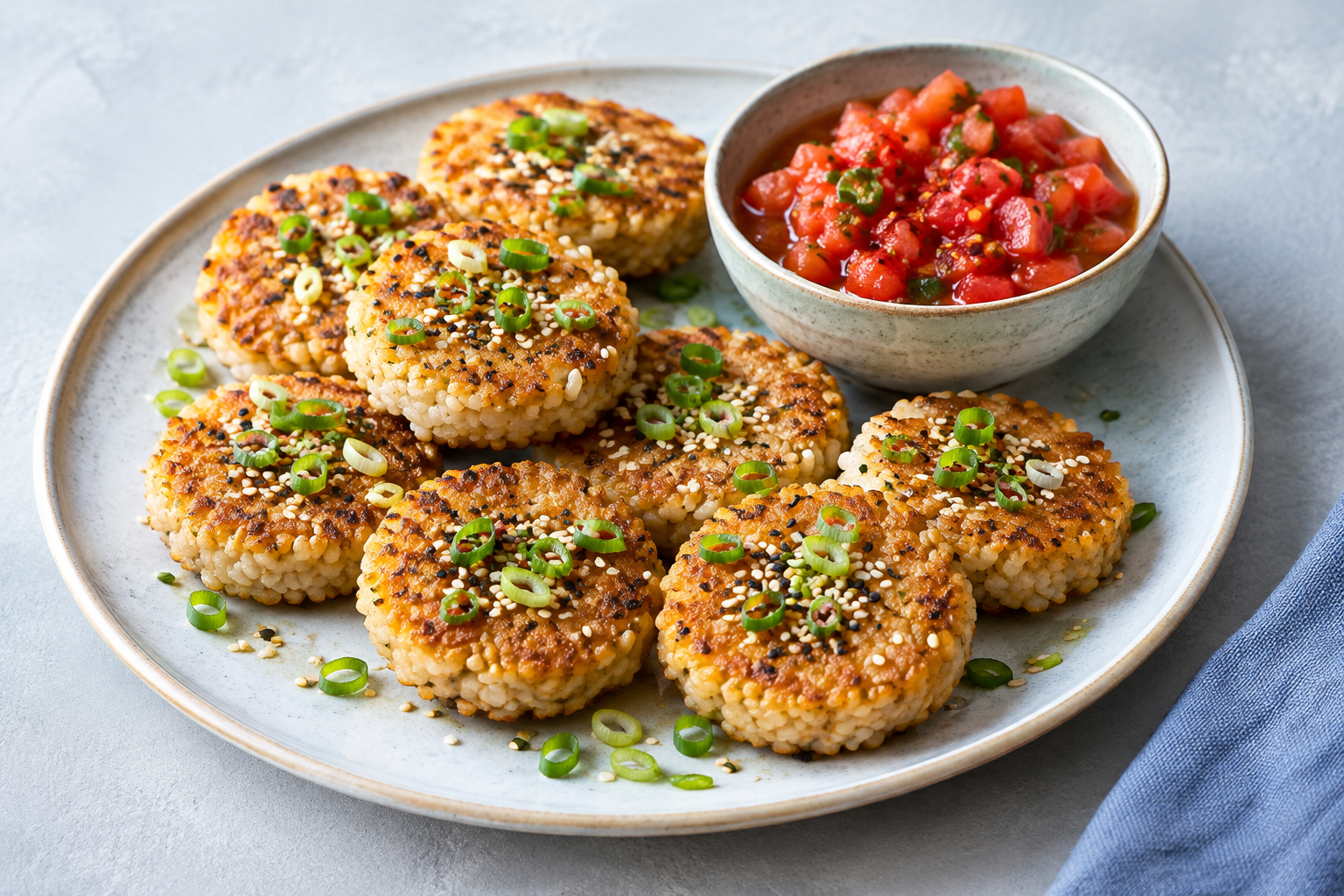
These rice cakes are Japanese-inspired, but they’re not a classic Japanese dish. The combination is intentionally simple: short-grain rice is fried until crisp on the outside, while the inside stays soft and compact. The tomato dip adds juiciness and acidity. Soy sauce brings savory depth, rice vinegar keeps the flavor bright, and a little chili adds a gentle warmth.
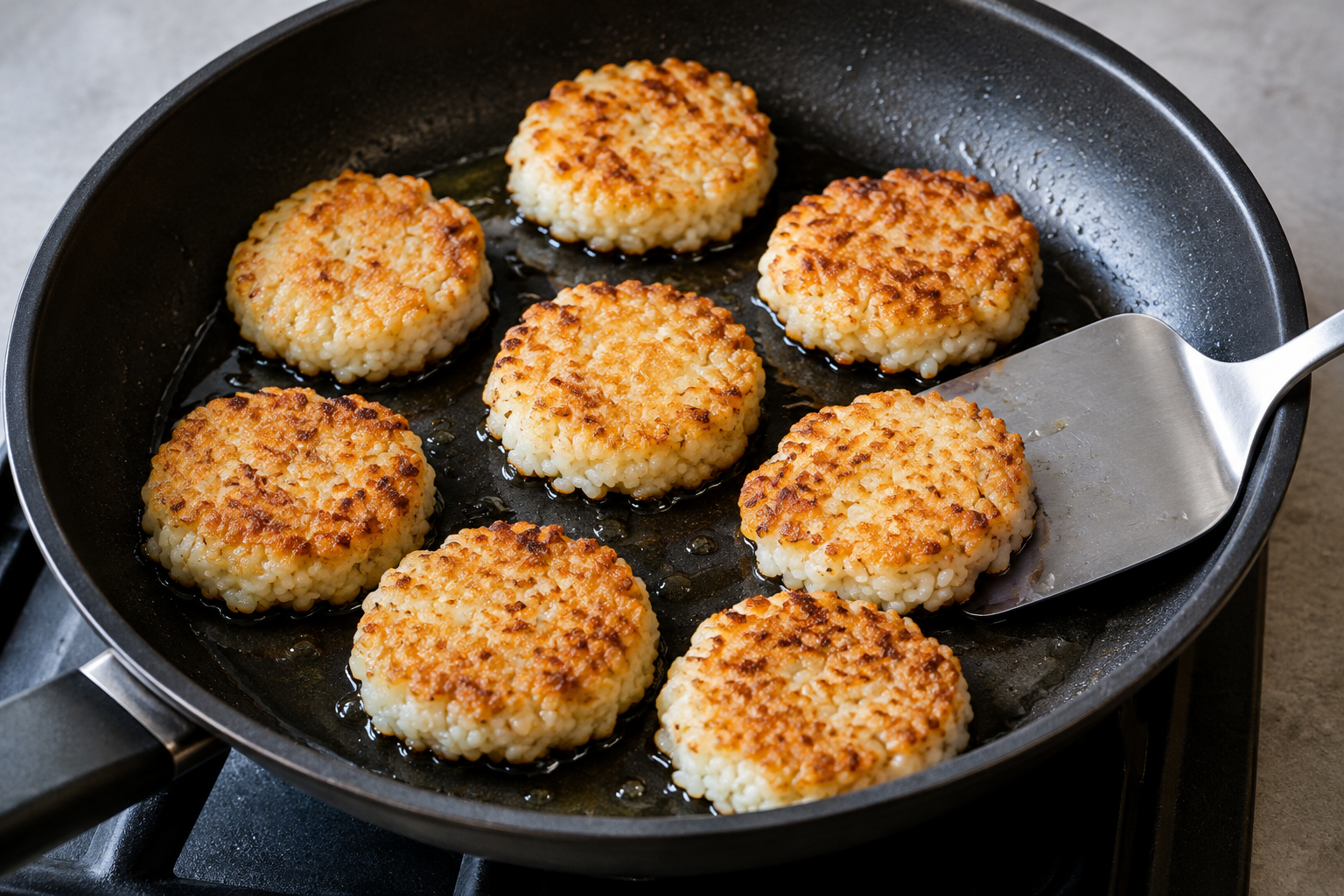
Short-grain rice works well because the grains become sticky enough to press together after cooking. Use rice that has already cooled; warm rice is hard to shape and cools the pan more quickly. Press the cakes firmly and don’t make them too thick, so they heat evenly. Let them form a crust in the pan before turning them: if you move them too soon, they can fall apart. A wide spatula makes them easier to flip.
Ripe, firm tomatoes give the dip the best balance of juiciness and freshness. Tomatoes are often at their most flavorful in summer, but good vine tomatoes work well out of season, too. Dice them small so the dip clings to the cakes. If the tomato is very watery, spoon off some of the liquid. Rice vinegar has a gentle acidity; regular white wine vinegar works, too, but start with a little less and taste as you go. Adjust the amount of chili to taste.
Sesame adds a nutty note, while finely sliced spring onion makes the topping fresh and mildly sharp. Sprinkle them over the cakes and dip just before serving so the sesame doesn’t get damp. Serve the cakes as a starter, or pair them with a cucumber salad or a simple green salad for a light lunch. The dip can be mixed ahead and stored covered in the fridge; serve it chilled or let it come to room temperature briefly.
If you’re cooking the rice yourself, spread it in a shallow dish to cool quickly, then transfer it to the fridge promptly. Keep cooked rice chilled and use it within one day. Fry the cakes just before serving: that’s when the contrast between the crisp outside and soft center is at its best. Leftover cakes can be reheated in a dry frying pan, though they’ll usually be a little less crisp.
 Main course

