ABOUT THIS RECIPERice with a Crispy Bottom
The base of this bowl is cold, cooked rice. Rice that has been in the fridge overnight is drier and less sticky than freshly cooked rice, so it’s easier to get a crispy layer in the pan. If you only have freshly cooked rice, spread it out on a tray so the steam can escape, and let it cool before frying. Don’t leave cooked rice at room temperature for long: cool leftovers promptly and store them covered in the fridge.
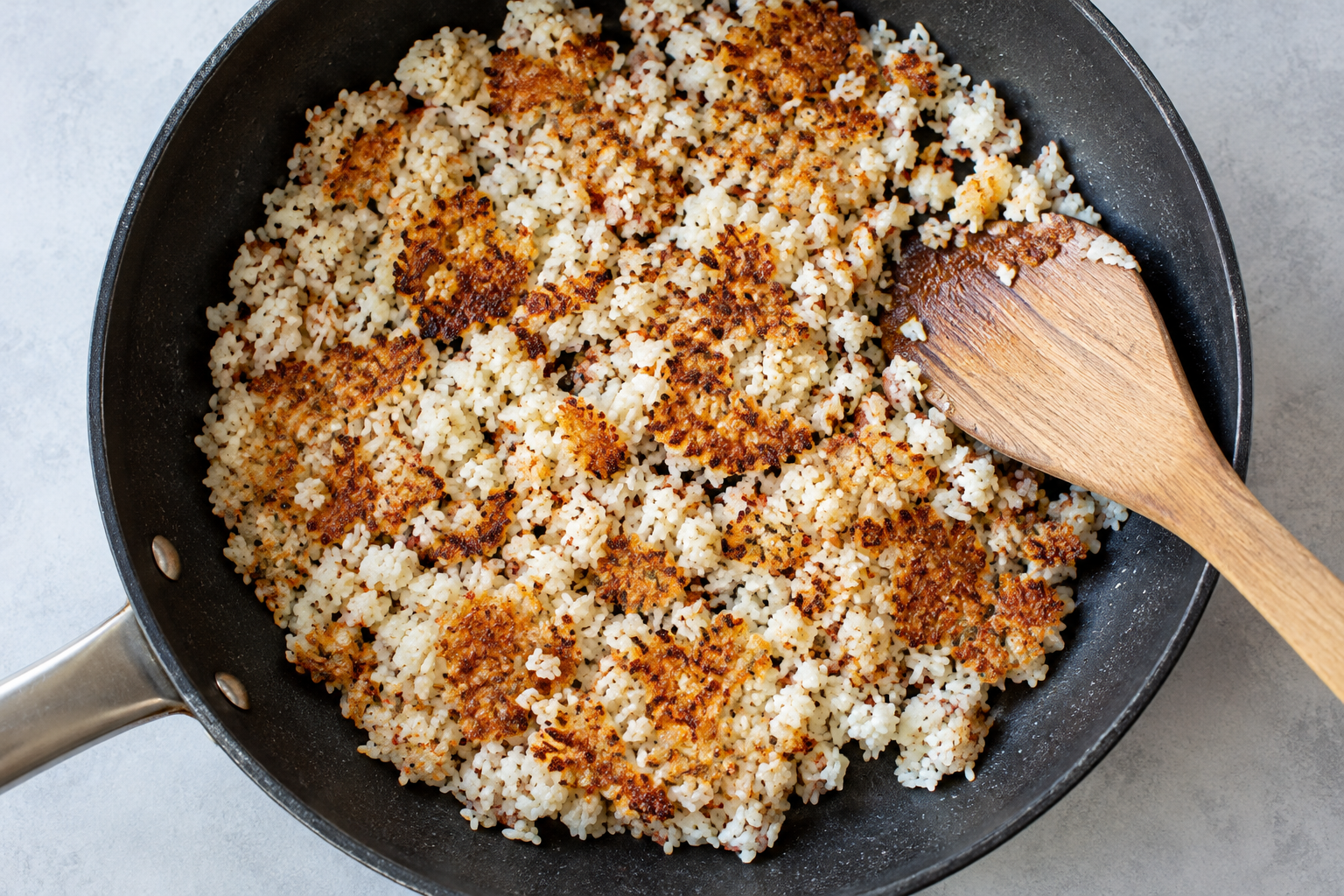
A roomy frying pan matters more than high heat. If the pan is too crowded, the rice will steam instead of fry. So first let it sit in a thin layer and don’t stir it right away; this gives the grains a chance to make contact with the hot pan. A little oil helps the bottom brown, but the rice doesn’t need to be swimming in it. Toss it only when you see golden-brown, crispy patches. A few softer grains in between make a nice contrast.
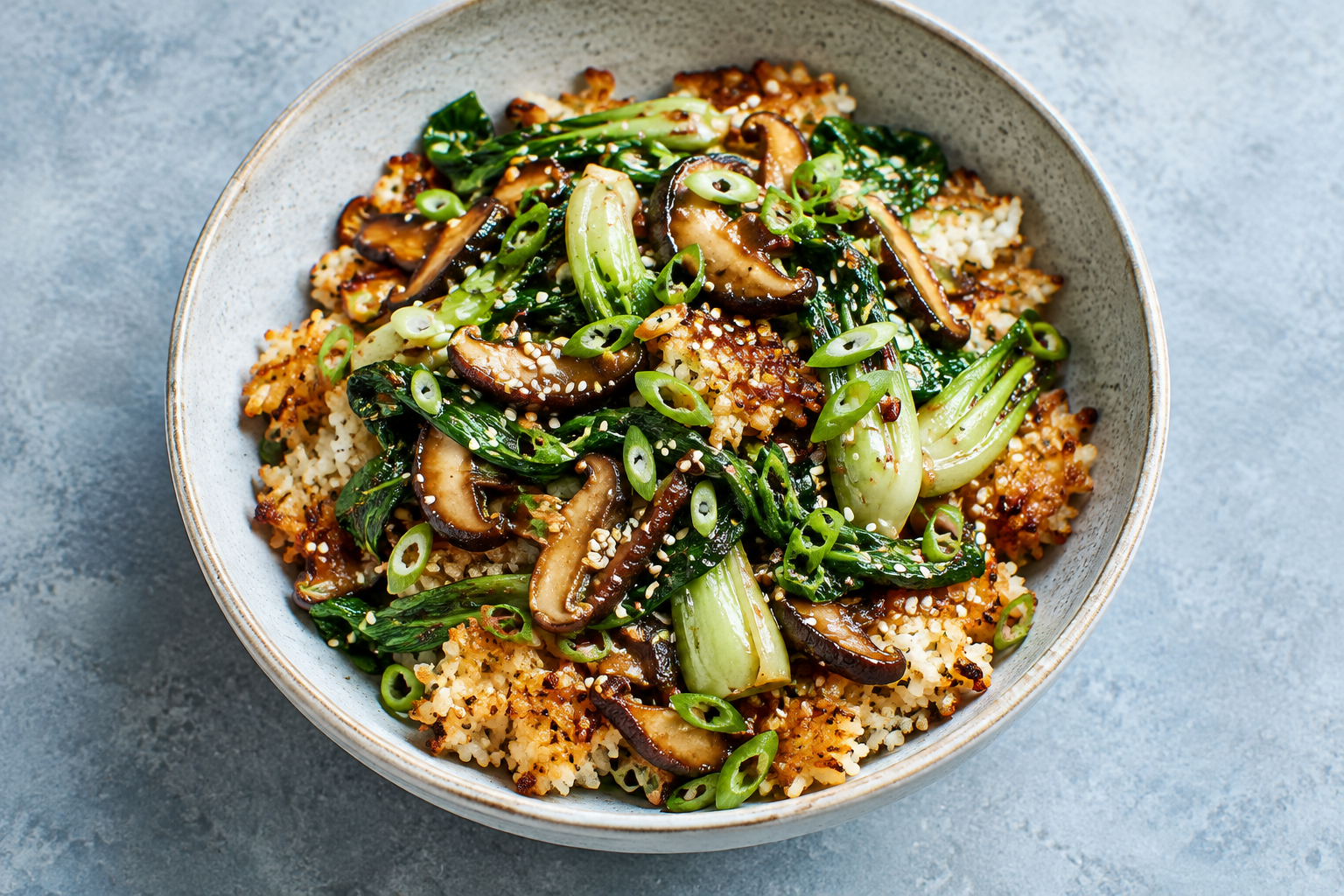
Shiitake brings a deep, savory flavor and turns tender and juicy when the slices are cooked well. Give the mushrooms plenty of room and let their moisture evaporate before taking them out of the pan. The bok choy goes in next, briefly: cook the firm stems a little longer than the leaves, so the stems stay crisp and the leaves just wilt. The sauce of soy sauce, ginger, rice vinegar and a little sugar coats the vegetables without making the rice soggy. Rice vinegar adds a mild, clean acidity; regular distilled vinegar is sharper, so use a little less.
Serve the vegetables on or alongside the rice, spooning most of the sauce over the shiitake and bok choy. That way, some of the crispy rice stays crunchy until it reaches the table. Sesame seeds and spring onion add a nutty, fresh finish. For a little more heat, serve chili sauce on the side; it isn’t needed to make the dish’s flavors work. No shiitake on hand? Chestnut mushrooms work too, though they’re a little milder. Eat the bowl straight after cooking: cooled rice loses its crispy edges.
 Main course

