ABOUT THIS RECIPEThe art of a firm, crispy cake
A one-pan potato cake is simple to make, but the result depends above all on how much moisture you squeeze out of the grated potatoes. Coarsely grate the potatoes for a cake with distinct shreds and a soft center. Then squeeze them firmly over the sink or in a clean tea towel. Too much moisture makes it difficult to fry the cake until it holds together and turns crispy. If needed, pat the squeezed potato shreds dry before adding the egg and flour.
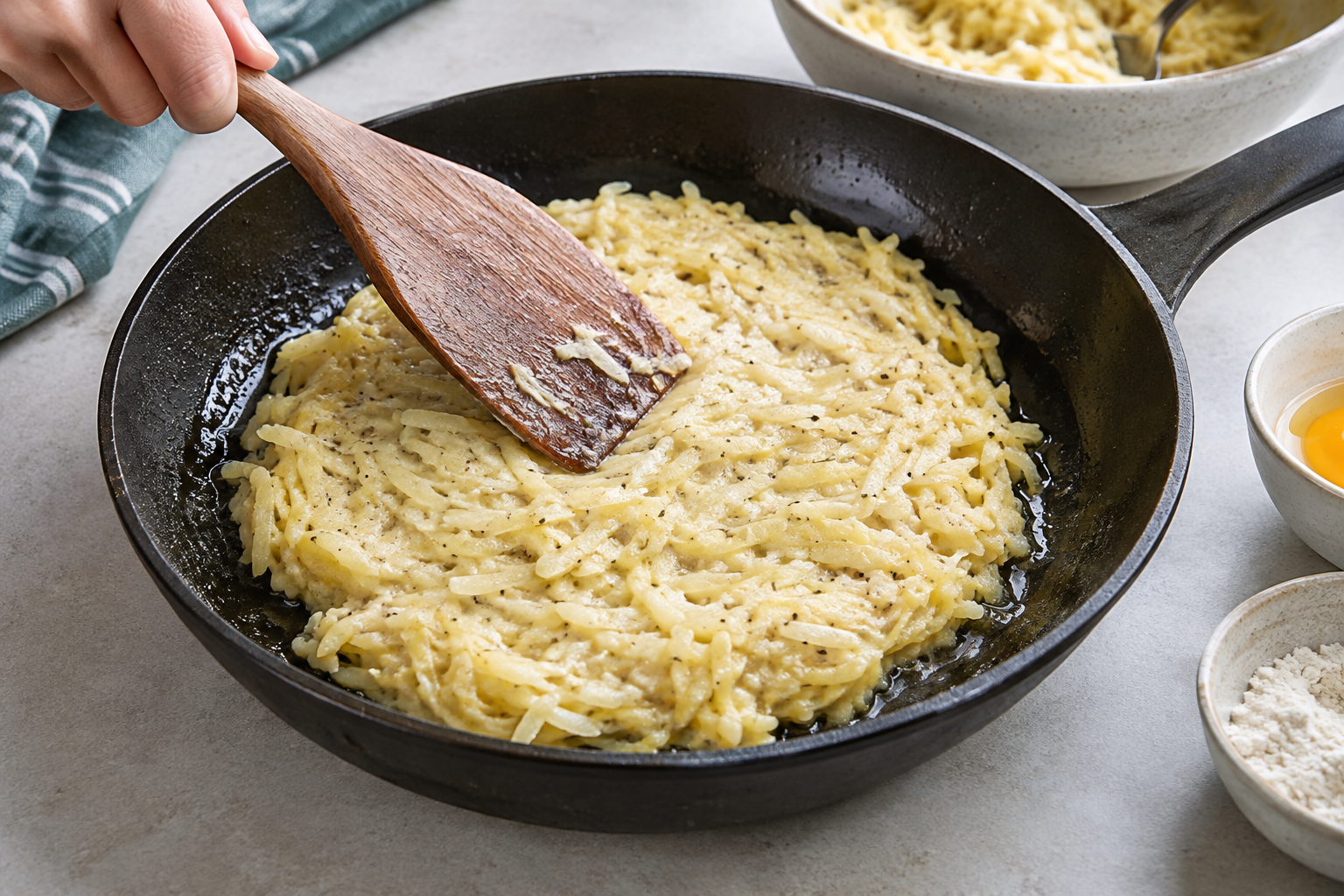
The egg and a small amount of flour help hold the shreds together when you turn the cake over. They’re no substitute for squeezing well: wet potatoes are more likely to turn soft than crispy. A heavy skillet holds the heat evenly, so the bottom can brown slowly without the center staying raw. Cook over medium-low to medium-high heat and give the first side plenty of time. A large plate makes flipping safer: slide the cake onto it, hold the plate firmly against the pan and turn everything over in one motion.
The toppings bring contrast. Thick yogurt cools the chili oil, while lemon juice gives the potato and creamy sauce a bright counterpoint. Dill and parsley are both herbaceous, but complement each other: dill is aromatic and delicate, while parsley is greener and more robust. Use Greek yogurt or another thick, unsweetened yogurt. If it’s very thick, stir in a teaspoon of water or lemon juice. Chili oil varies in heat from brand to brand, so start with a little and serve extra at the table.
Potatoes are available year-round; for this dish, choose a firm, floury or all-purpose potato that grates well. A floury variety gives a somewhat softer center, while waxy potatoes hold their shape better. You can replace the parsley with extra dill, or vice versa, but don’t leave out the lemon: the acidity brightens the yogurt. Serve the cake straight away, cut into wedges, with the toppings on top or alongside. A green salad with a tart dressing makes a good addition if you want to turn it into a more substantial meal.
Leftovers can be covered and refrigerated within two hours, then eaten within two days. Reheat the wedges in a dry skillet over medium heat; the outside will turn firmer again than it would in the microwave. Store the yogurt and herbs separately if you know there will be leftovers. The cake is best fresh from the pan, but reheats well for lunch the next day.

 Main course

