ABOUT THIS RECIPEFrom Firm Polenta to Crispy Sticks
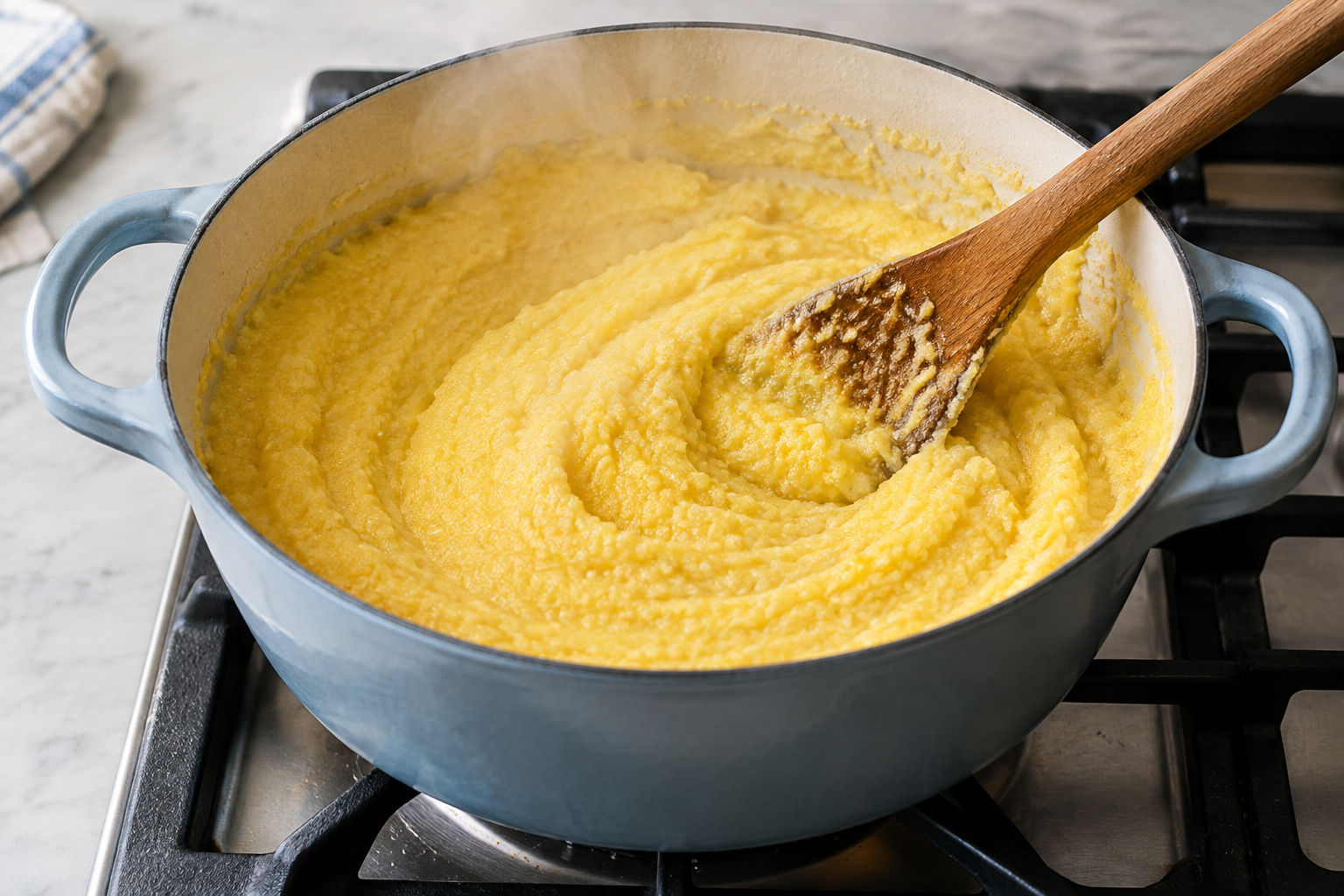
Polenta is cornmeal cooked in water or stock until it becomes a soft porridge. For this dish, we let it set until firm first, then cut it into sticks. That way, the outside can turn crisp in the oven while the inside stays soft. Use regular, non-instant polenta for this method; instant polenta has a different cooking time and may not set into a firm slab. Stir regularly across the bottom of the pan as it cooks, especially once the porridge thickens, so it doesn’t burn.
The lemon labneh brings freshness and creaminess alongside the warm corn. Labneh is strained yogurt with a firm, spoonable texture. If you can’t find it, thick Greek yogurt works well; stir in lemon zest, lemon juice, and salt, and taste to see if the flavor is bright enough. Regular, thin yogurt isn’t as suitable because it will run off the plate. Spoon the labneh onto the platter at room temperature so it doesn’t cool the warm polenta too much right away.
Grapes are especially plentiful in late summer and fall, but this dish can be made year-round with good table grapes. In the oven, their skins burst and their juices turn syrupy. A small splash of balsamic gives that sweet juice a gentle tang; don’t roast the grapes for so long that they dry out completely. Red grapes add color, but green grapes are fine too. Seedless grapes are best so they’re easy to eat with the polenta.
Let the cooked polenta set completely before cutting it. A shallow dish helps: an even layer gives you sticks that are roughly the same thickness throughout. Cooling takes at least two hours, and you can also do it a day ahead in the fridge. If needed, dab any condensation off the surface before brushing the sticks with oil. In the oven, you’ll need to turn them less often than in a skillet; still, give them plenty of space on the baking sheet, or they’ll steam rather than brown.
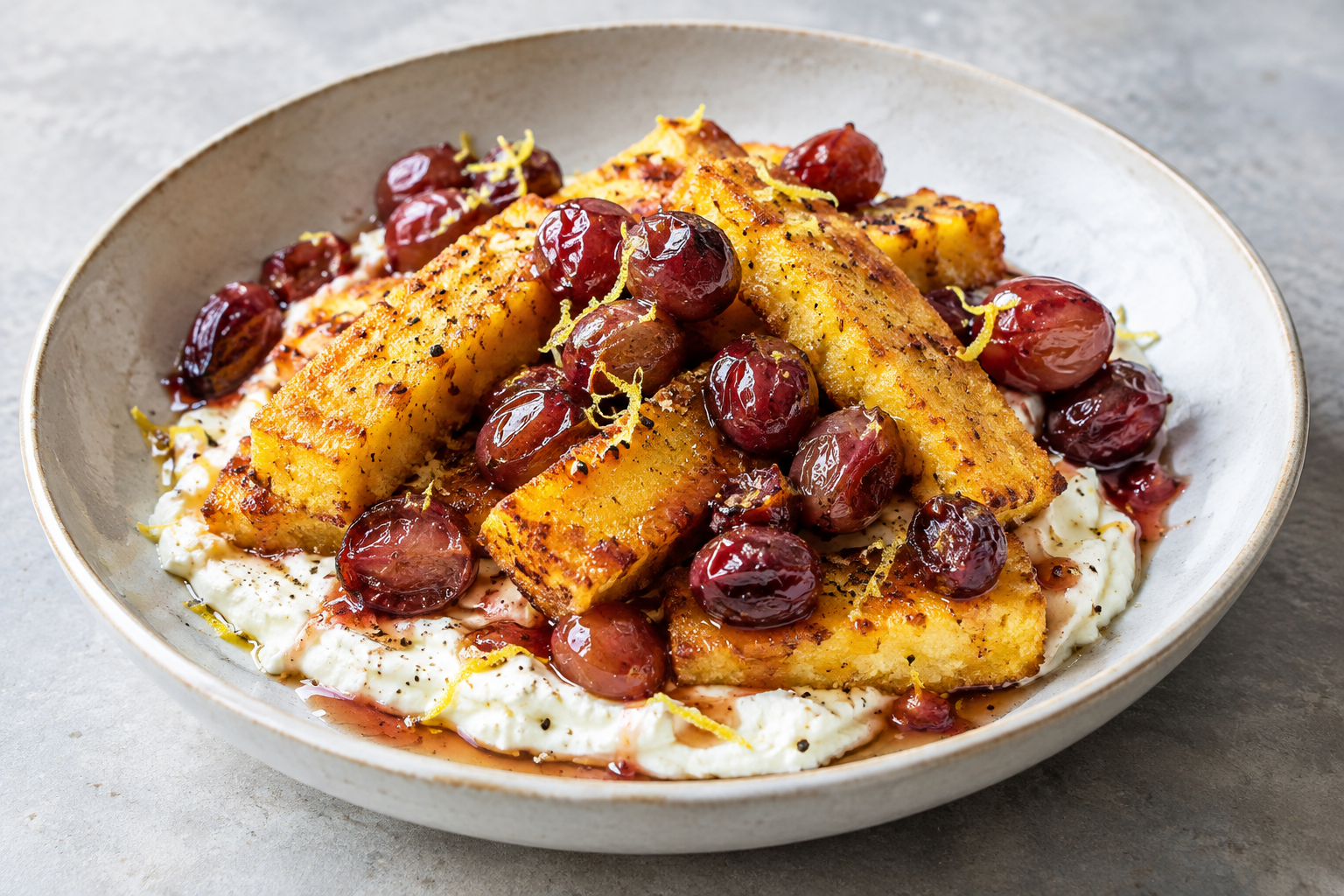
Serve the sticks straight from the oven on or alongside the labneh, with the roasted grapes and their juices spooned over the top. They go well with roasted vegetables, a green salad, or a main dish with legumes. If you’d rather serve the components separately, keep the polenta warm and add the grapes and labneh just before serving. Leftovers can be covered and stored in the fridge for up to two days; reheat the polenta in an oven or skillet until piping hot all the way through. The outside will be less crisp after storage.
 Main course

