ABOUT THIS RECIPEThe appeal of crisp and fresh
Polenta is cornmeal that absorbs liquid as it cooks and turns into a soft, firm mixture. For squares that hold their shape, the ratio matters: 200 grams of quick-cooking polenta to 850 milliliters of water makes a thick base that’s easy to cut once cooled. Stir regularly with a whisk or wooden spoon as it cooks, especially along the bottom and corners of the pan; polenta can stick there quickly. A wide, shallow dish lets the mixture cool evenly and makes it easier to cut neat squares later.
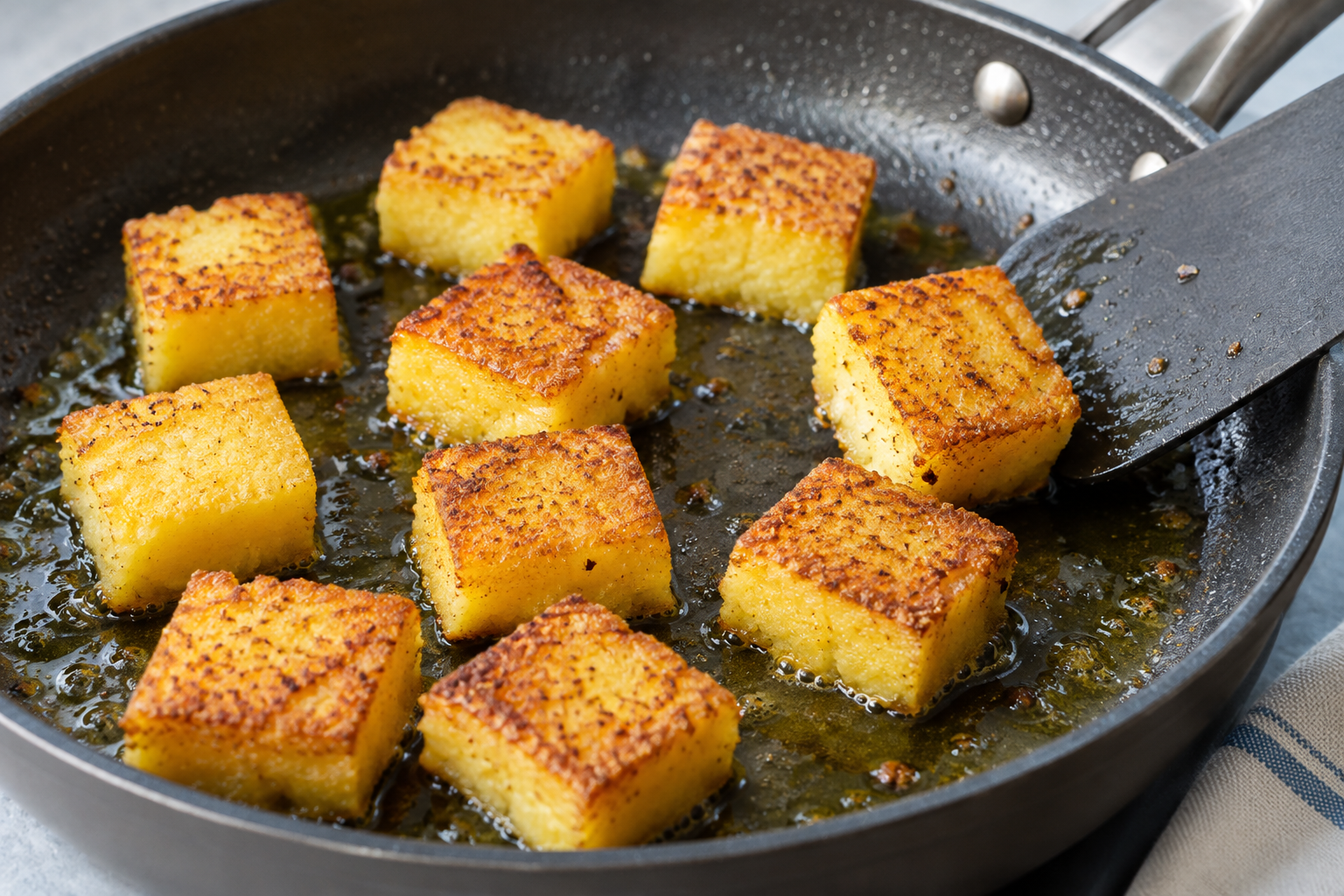
Let the polenta set completely before frying. An hour in the fridge is usually enough, but you can chill it for longer; if you do, cover the dish once the polenta has cooled. If there’s any moisture on the squares, gently pat them dry with paper towels before frying. Leave space between them in the frying pan and turn them only when the underside has formed a golden-brown crust. This helps them hold together and gives you a contrast between a crisp outside and a soft inside. Fry in batches if the pan gets too crowded: squares packed too closely will steam rather than brown.
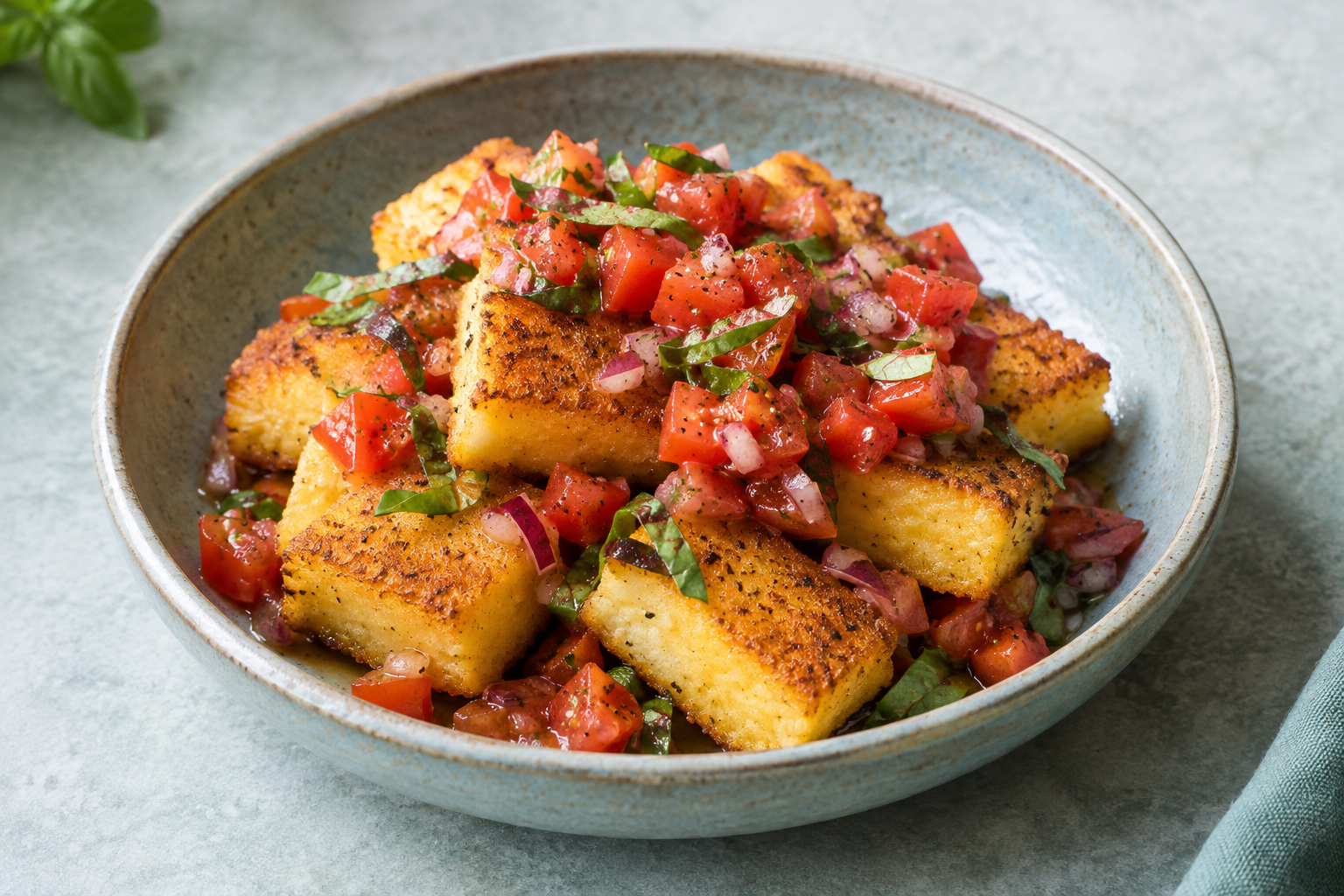
The relish is deliberately uncooked. Ripe tomatoes bring juice and sweetness, while red wine vinegar and red onion add sharpness. In summer, firm, ripe beefsteak tomatoes are often full of flavor; out of season, ripe cherry tomatoes work well as an alternative. In either case, choose tomatoes that aren’t watery or mushy. Dice them small so they stay on the squares. A little sugar mellows the vinegar, but taste first: with sweet tomatoes, you may need less. Add the basil at the very end so the leaves stay fresh.
Quick-cooking polenta is practical for this dish. If you’re using regular polenta, follow the cooking time and any extra liquid specified on the package; the mixture needs to be thick enough to cut into squares once chilled. Water keeps the corn flavor bright, but you can replace some of it with vegetable stock for more savory depth. Serve the squares warm with the relish on the side or spooned loosely on top, so the crust stays crisp. They work well as an appetizer before a light salad or a simple vegetable dish. Store any leftover squares and relish separately, covered in the fridge, and use within two days; fry the squares again in a pan to bring back the crust.
 Main course

