ABOUT THIS RECIPEBittersweet, creamy and fresh
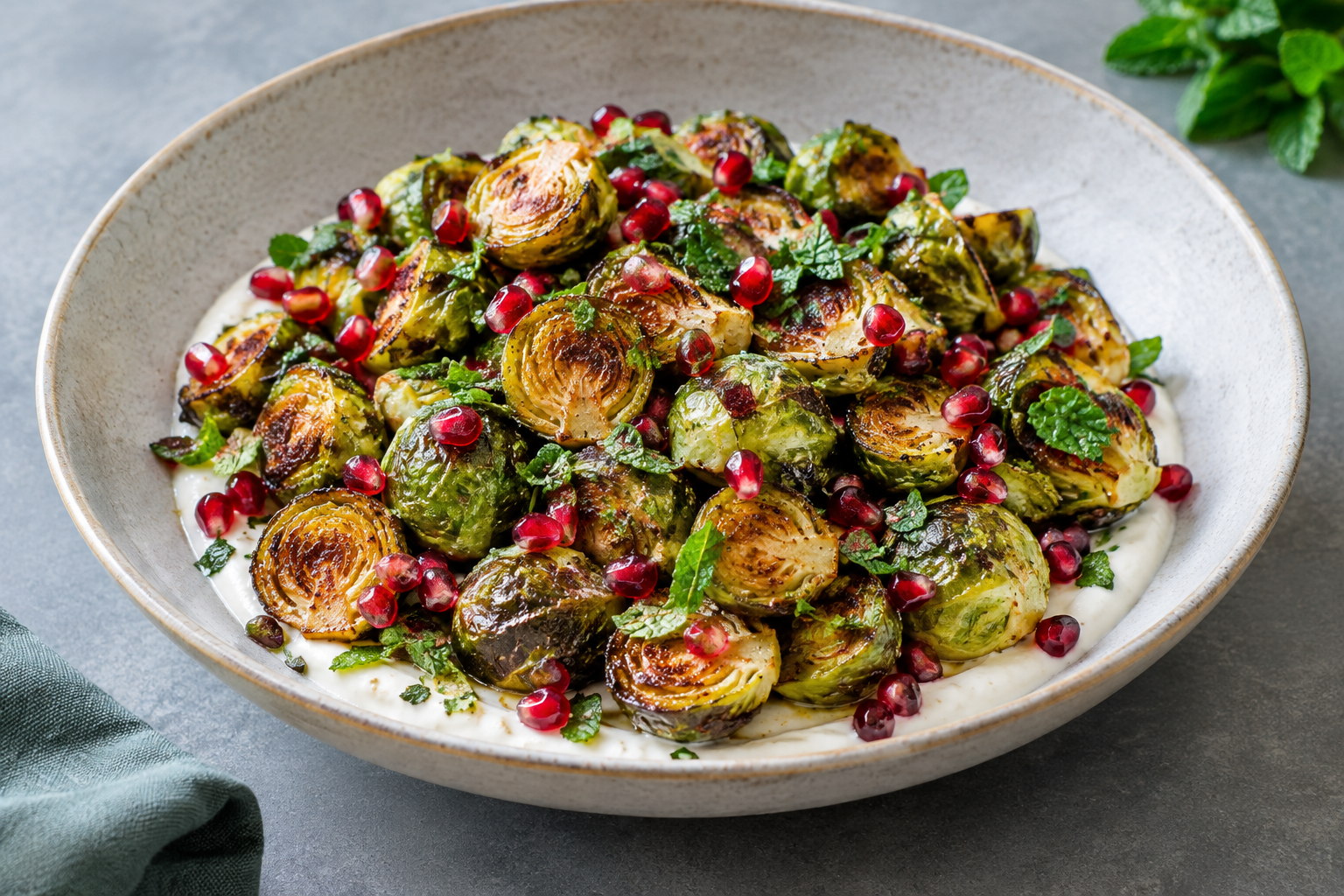
Brussels sprouts have a robust, slightly bitter flavor of their own. Roasting softens it and brings out their sweeter notes, while the outer leaves develop browned, crispy edges. That contrast is important here: the Brussels sprouts remain the star, surrounded by fresh, creamy and juicy flavors. In the Netherlands, Brussels sprouts are widely available in autumn and winter; choose firm sprouts with tightly closed leaves and roughly the same size so they cook evenly.
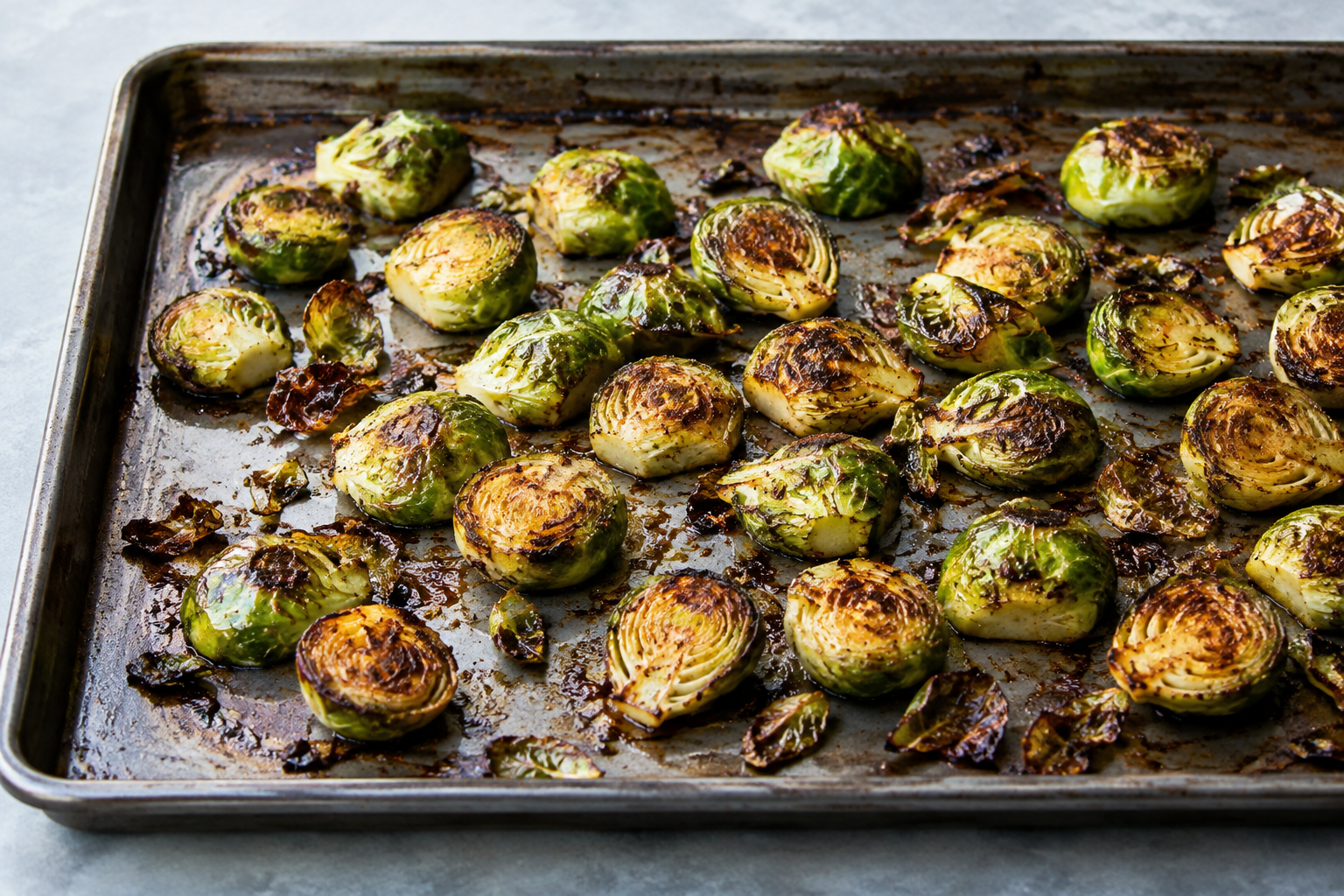
A hot oven and plenty of space on the baking sheet help the Brussels sprouts roast rather than steam. Dry them thoroughly after washing: water on the leaves slows browning. Arrange the halves cut-side down and don’t keep turning them during roasting. This gives the flat sides uninterrupted contact with the hot pan. If the baking sheet is too crowded, divide the Brussels sprouts between two sheets; when packed closely together, they retain more moisture and become less crispy.
Tahini gives the yogurt sauce an earthy, slightly bitter flavor that goes well with the roasted vegetables. Stir in lemon juice for freshness, then add cold water a little at a time until the sauce is spoonable. Tahini can seem thick or grainy at first when you add something acidic; keep stirring, then thin it out gradually. Greek yogurt makes the sauce thick and rich, while plain yogurt also works but is often a little thinner. If using plain yogurt, add less water.
Pomegranate seeds bring little bursts of juicy tartness among the warm Brussels sprouts. Fresh mint keeps everything fresh; chop the leaves just before serving so their aroma doesn’t fade. No pomegranate available? A handful of coarsely chopped tart apple can provide a similar fresh note, though you won’t get the juice in every bite. Serve the Brussels sprouts straight on top of the sauce, for example alongside roasted potatoes, lentils or a spiced grain dish. This keeps the sauce cool and helps the leaves retain as much of their crispy texture as possible.
 Main course

