ABOUT THIS RECIPECoarse texture, fresh contrast
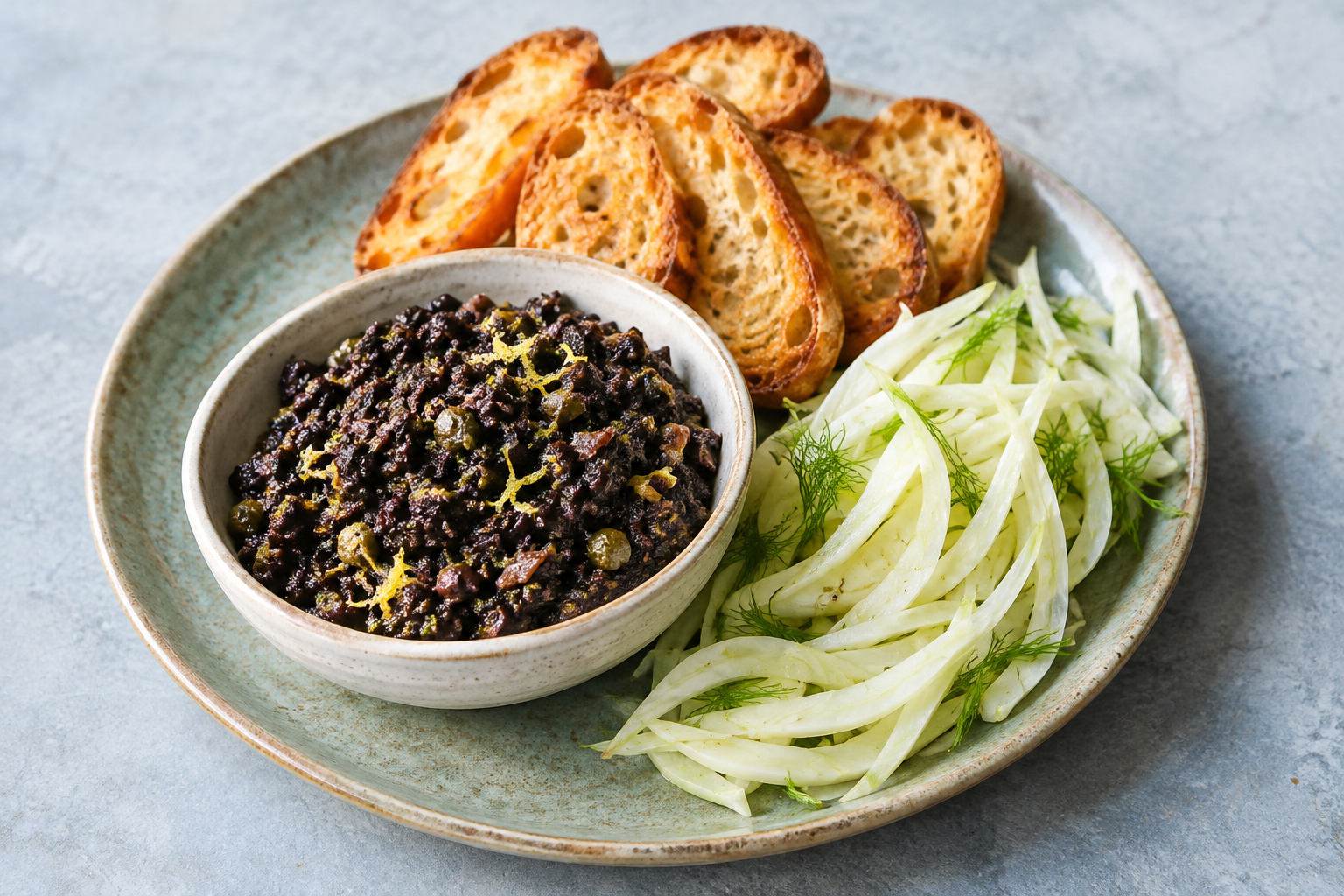
Tapenade is closely associated with Provence, in southeastern France. The name refers to tapeno, the Provençal word for capers. In this version, black olives are the base, with capers and anchovies for saltiness and lemon zest for a fresh, fragrant note. The quantities are deliberately balanced: the ingredients have plenty of flavor, so extra salt usually isn’t needed.
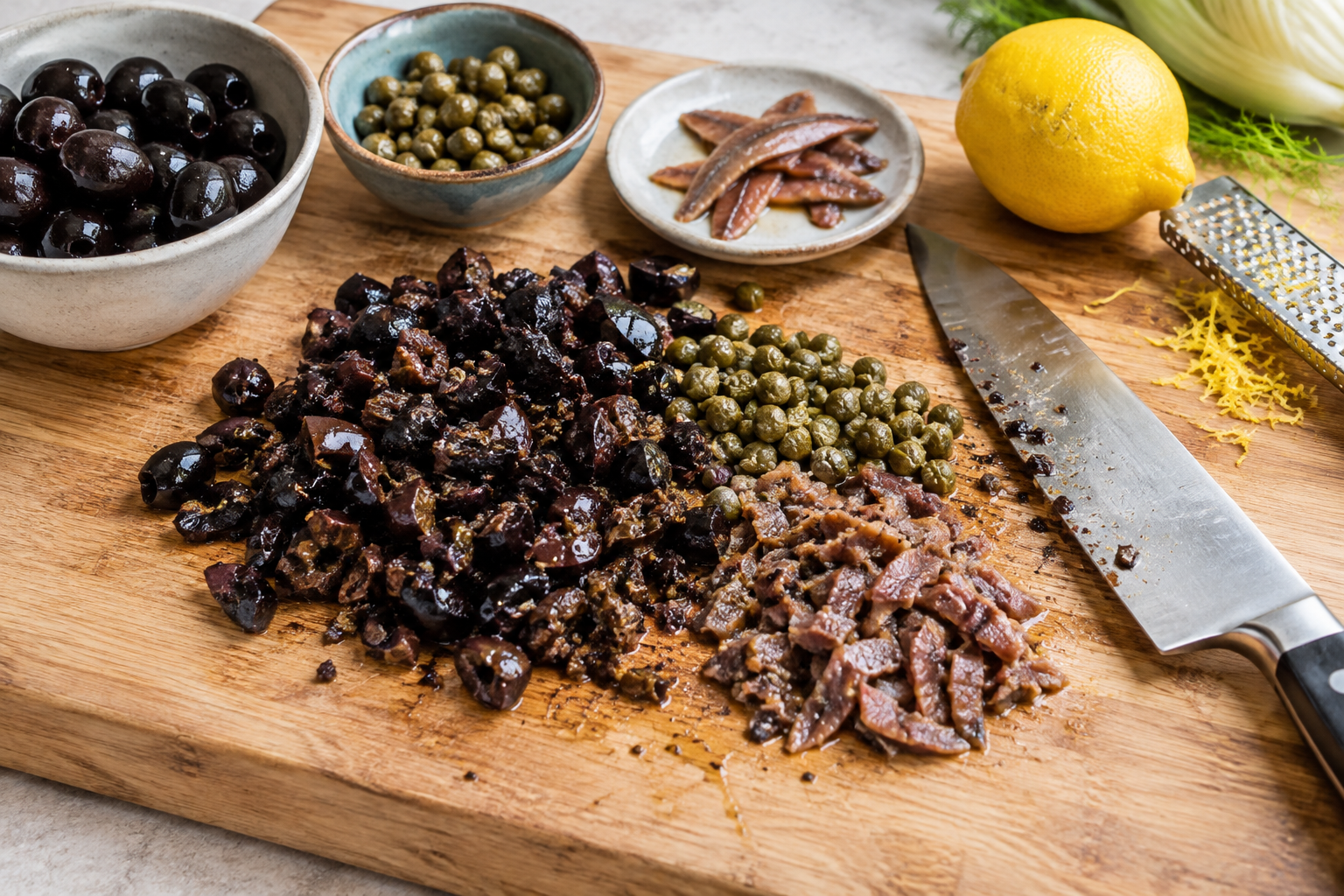
The texture makes a difference here. Finely chop the olives, capers and anchovies with a knife, then stir them with olive oil into a coarse paste. A food processor can quickly turn everything into a smooth mixture; if you use one, pulse briefly and scrape down the bowl as you go. Chopping by hand leaves more little pieces of olive, so the tapenade spreads easily without looking like a purée. Grate only the yellow part of the lemon peel: the white pith underneath can taste bitter.
Choose black olives with a full, fruity flavor, preferably pitted so you don’t have to look out for pits while chopping. Brined olives are often saltier than oil-cured olives, so taste the tapenade before adding any pepper. Briefly rinse the capers if they taste very salty, then pat them dry. Anchovy fillets from a jar or tin add depth without making the dip taste strongly of fish. For a version without anchovies, you can leave them out, though the flavor will be less savory; don’t automatically add extra capers, as they also add salt.
Serve the tapenade with thin slices of baguette, lightly toasted so they stay crisp under the spreadable olive paste. Thinly sliced fennel adds a juicy, fresh crunch and a subtle anise flavor. Slice the fennel just before serving and arrange the slices loosely beside the toast to keep them crisp. The dip also works on a drinks platter with raw vegetables or as a savory accent with grilled vegetables.
You can make the tapenade ahead and keep it covered in the fridge. Use a clean, tightly sealed container and serve it chilled, or let it come to room temperature briefly so it’s easier to spread. Keep leftovers refrigerated and use them within a few days; don’t leave the tapenade on the table for an extended time. It’s best to toast the bread just before serving, as it will soften if it sits in contact with the tapenade for too long.
 Main course

