ABOUT THIS RECIPEThe finishing touch makes all the difference
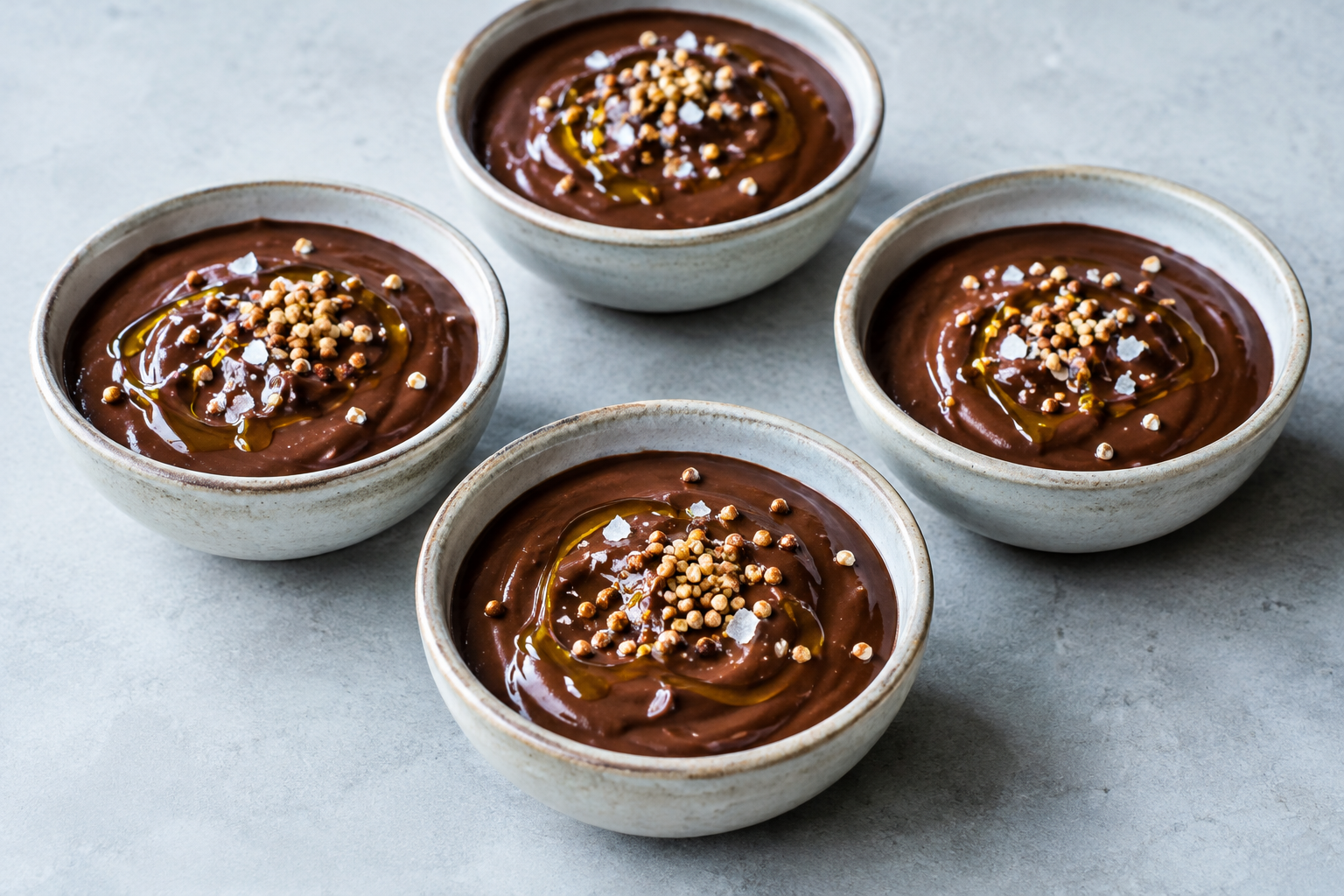
This cream is all about contrast, not lots of extras. Dark chocolate brings deep, slightly bitter flavour and a smooth base; olive oil rounds out the flavour and adds a fruity aroma. Buckwheat groats provide a dry, nutty crunch that contrasts nicely with the soft cream. The sea salt is more than just decoration here: a few flakes bring the chocolate flavour into sharper focus. Keep the finishing touches simple so each element remains distinct.
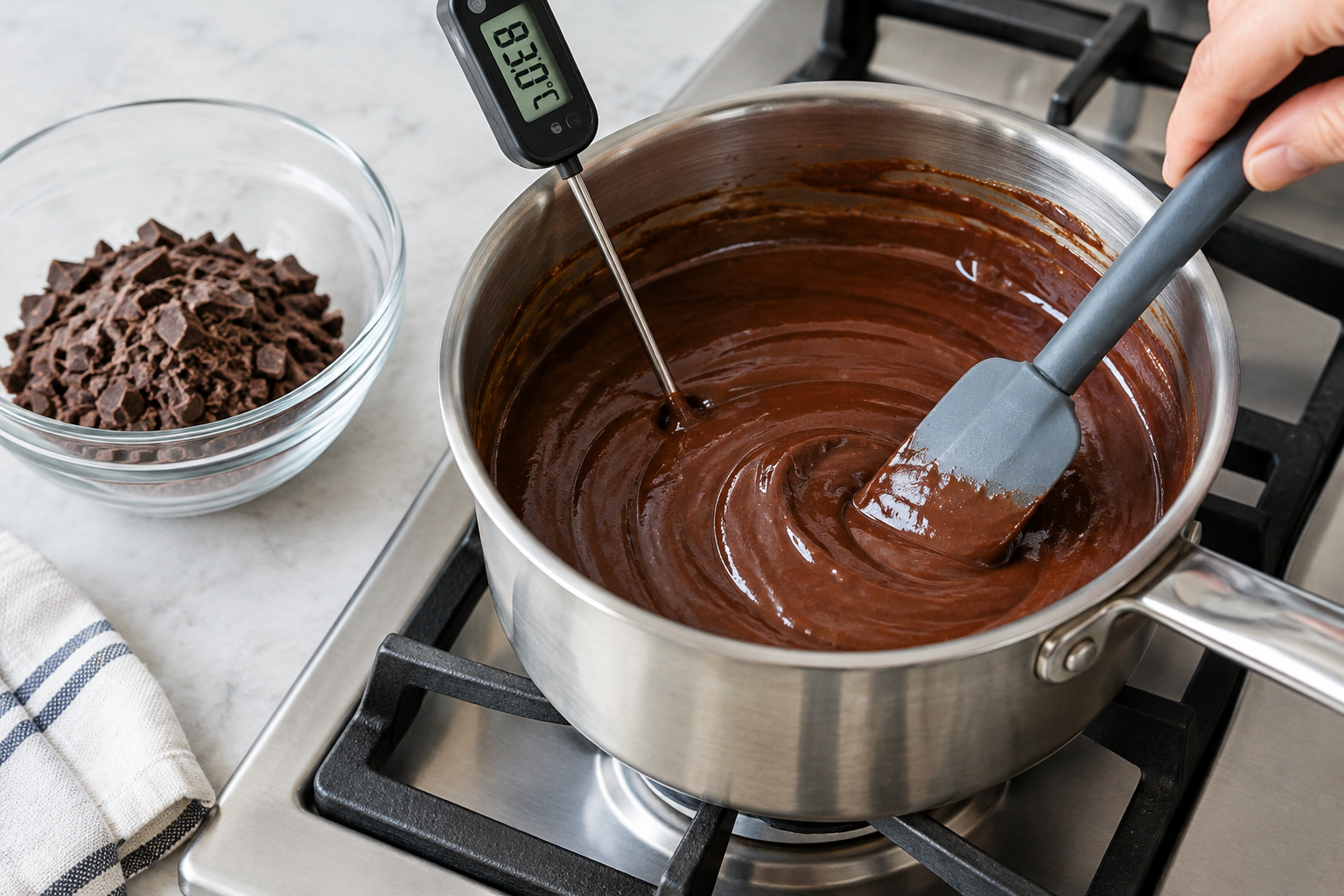
The secret to a smooth cream is temperature. Heat the milk and egg yolks, stirring, to 82–84 °C: the yolks thicken the milk, but must not set like scrambled eggs. A kitchen thermometer makes this easier. Pour the warm custard over the finely chopped chocolate and stir from the centre until the mixture turns glossy. This gentle emulsion prevents the cream from turning grainy or greasy. Then leave the dishes to set in the fridge for at least four hours; covering them prevents the tops from drying out or picking up fridge odours.
Choose chocolate you enjoy eating on its own, preferably around 65–70% cocoa. A higher cocoa percentage makes the cream firmer and more distinctly bitter; milk chocolate makes it sweeter and softer, but also changes the balance and texture. Whole milk gives a creamy result. For the olive oil, use a fruity extra-virgin variety with a flavour you enjoy on its own; a very peppery oil can overpower the chocolate. Drizzle the oil over the cream just before serving so its aroma stays fresh.
Toast the buckwheat in a dry frying pan and keep an eye on it: once the groats smell fragrant and start to colour lightly, they can quickly become too dark. Let them cool before adding them, or they’ll lose their crunch on the cold cream. Add the buckwheat, olive oil and sea salt at the very end. Serve the dishes straight from the fridge as dessert after a light meal. Keep covered portions chilled and use within two days; store the toppings separately and add them just before serving.
 Main course

