ABOUT THIS RECIPEA bowl with distinct accents
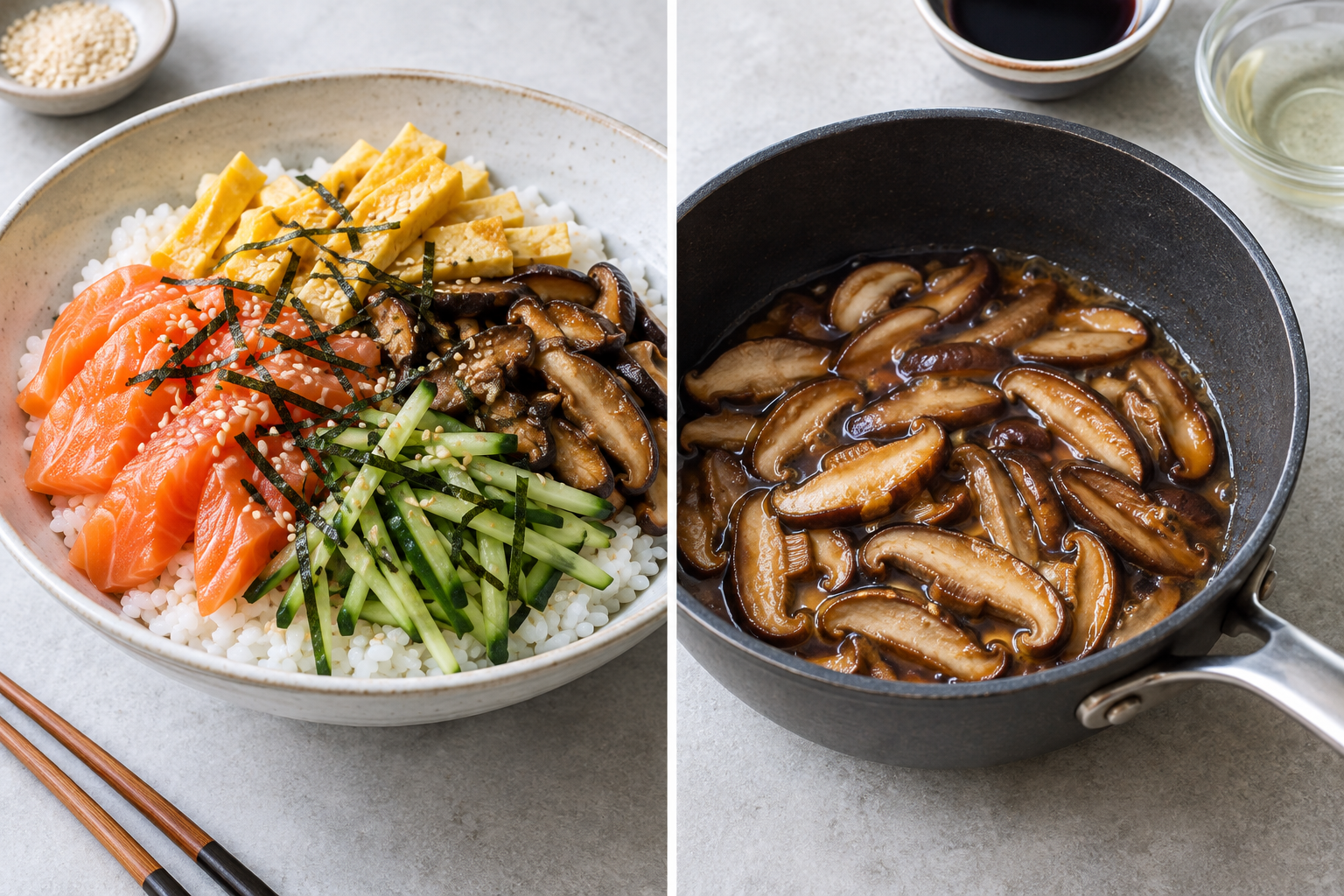
Chirashi-zushi broadly means sushi with toppings scattered over or placed on the rice. It isn’t rolled sushi: the rice is the base of a bowl, with the toppings left on display. There’s no set combination. Depending on the style, occasion and what’s available, it may be topped with raw fish, as well as egg, vegetables or cooked fish. In this version, salmon, tamagoyaki, shiitake and cucumber sit side by side, bringing a range of colors and textures.
The rice is what makes the bowl feel like chirashi-zushi. Use Japanese short-grain rice, often sold as sushi rice: once cooked, it becomes sticky enough to eat together, but shouldn’t be stirred into a dense mass. Rinse the grains until the water is less cloudy, then let them drain for a little while. After cooking, they can steam briefly with the lid on. Then gently mix the warm rice with rice vinegar, sugar and salt; use a rice paddle or wide wooden spoon to lift from the bottom, keeping the grains whole. A wide bowl helps the rice cool evenly and keeps it from getting too wet.
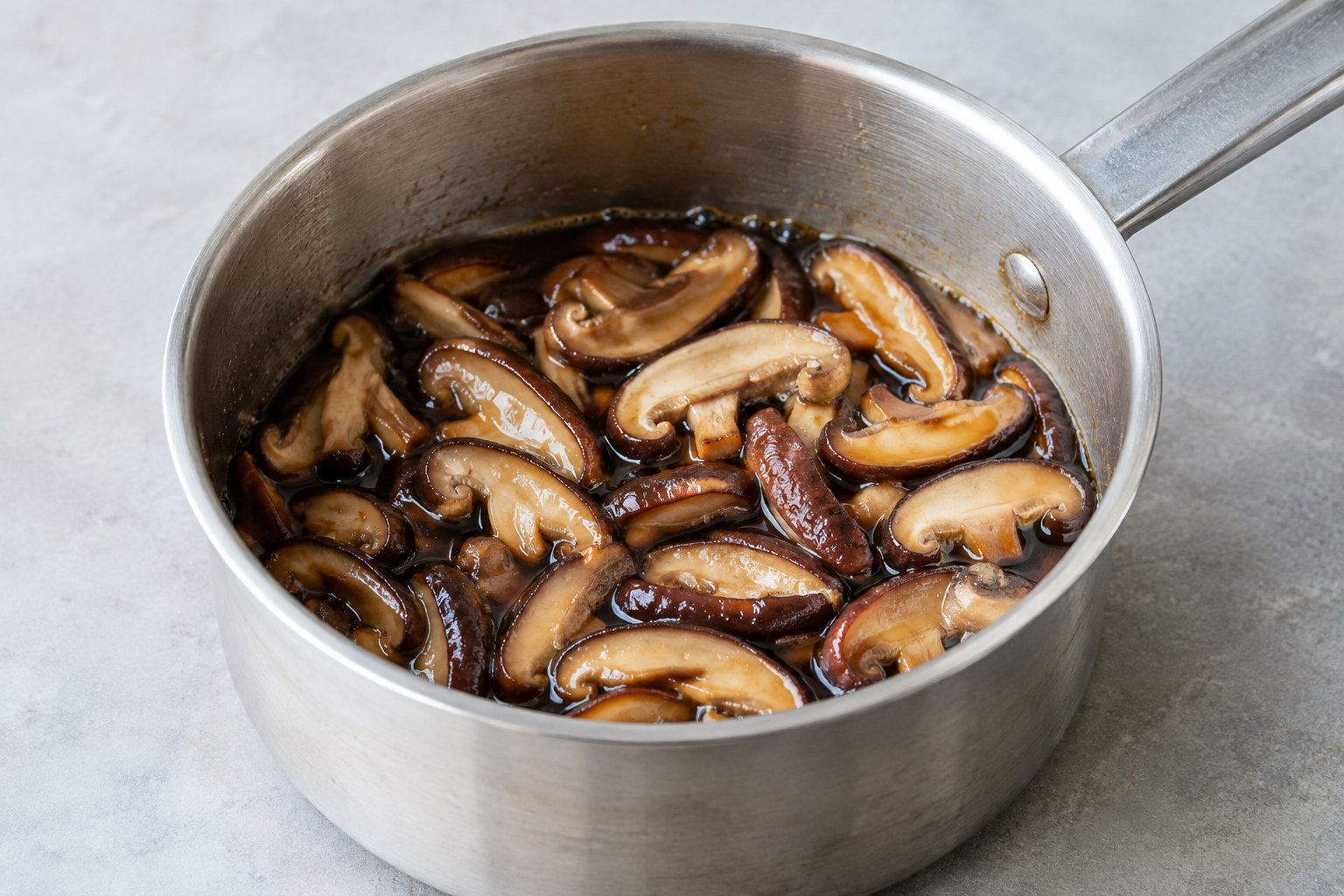
The toppings bring contrasting flavors without overpowering the rice. Tamagoyaki is a Japanese rolled omelet; you can easily make a thin omelet in a regular frying pan and roll it while it’s still soft. Shiitake is briefly simmered with soy sauce and mirin, adding a savory, slightly sweet flavor. Cucumber brings freshness and a firm bite. Cut the ingredients into bite-size pieces and arrange them separately on the rice rather than mixing everything together.
Raw salmon calls for careful sourcing and refrigeration. Ask your fishmonger for salmon intended to be eaten raw, keep it chilled and slice it just before serving. Fish suitable for raw preparation is not automatically free of all risks, so follow your fishmonger’s advice too. If you don’t want to use raw fish, replace the salmon with cooked, cooled salmon or cooked shrimp. That’s a practical variation, not a fixed rule for chirashi-zushi.
Serve the bowl once the rice has cooled and the toppings are ready. Nori and sesame add a salty, toasty finish; sprinkle them on at the last moment so the nori doesn’t soften. The flavors are easy to adapt too: replace the shiitake with another mushroom, and if you don’t have mirin, use a small splash of water with a little sugar instead. Serve extra soy sauce on the side so everyone can add as much as they like. Don’t leave the rice and fish at room temperature any longer than necessary, and refrigerate leftovers promptly; it’s best to serve raw fish right away.
 Main course

