ABOUT THIS RECIPEFresh and green, with a crunchy bite
Peas give this soup body and a gentle, slightly sweet flavor. Frozen peas are a practical choice here: they’re already shelled and give an even result. In late spring and early summer, you can also use fresh peas; keep in mind that shelling takes time and the cooking time may vary slightly from one harvest to another. A small onion adds savoriness without overpowering the flavor of the peas. Don’t use too much stock: the soup should be smooth and spoonable, not thin.
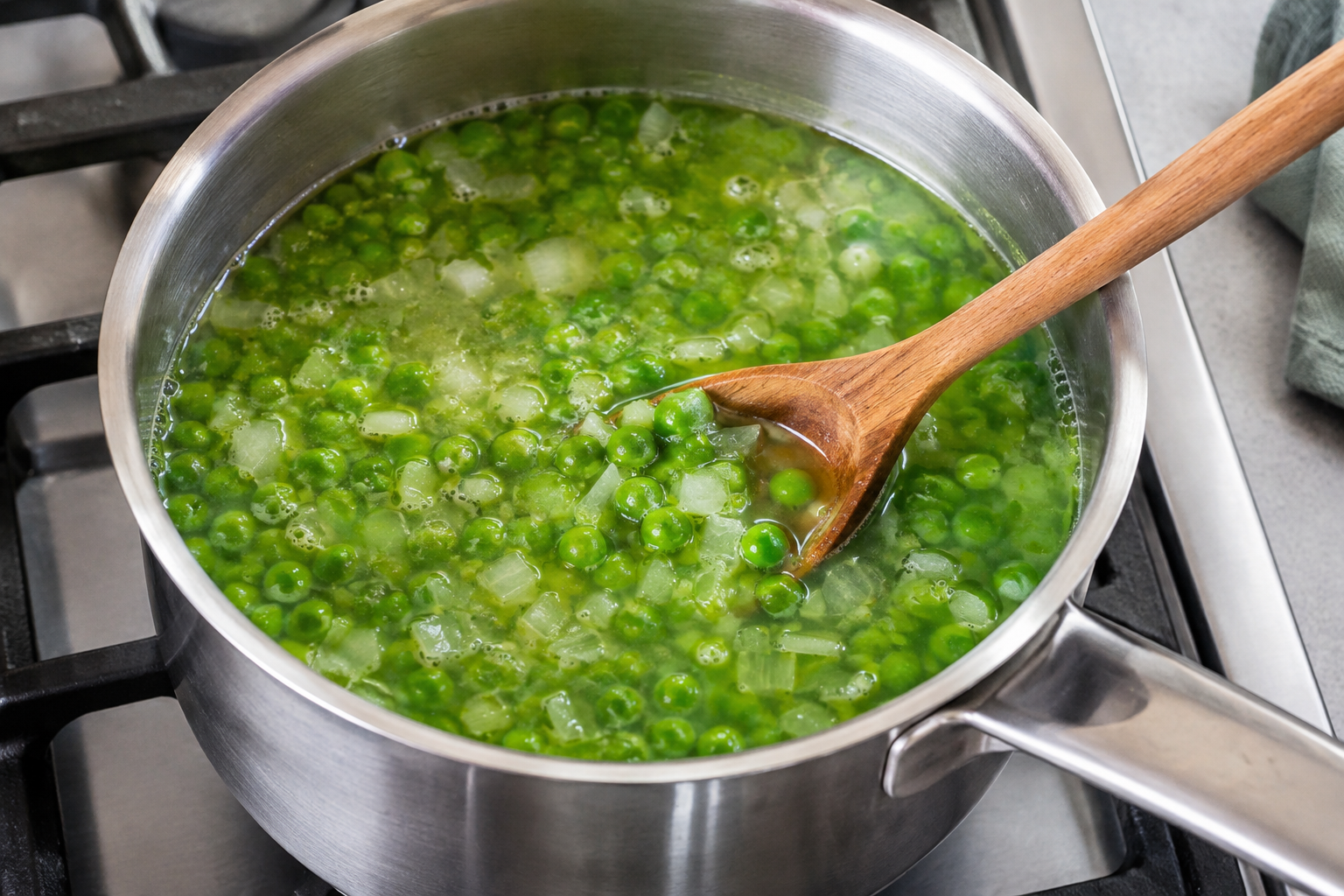
The peas cook only briefly, just long enough to become tender. Cooking them for too long makes their fresh flavor less pronounced. Then let the soup cool completely before blending in the mint. This keeps the mint tasting fresh and prevents you from accidentally serving the soup lukewarm. A blender gives the smoothest result; an immersion blender works too, though the texture may be a little less silky. Cool the soup more quickly by pouring it into a shallow dish.
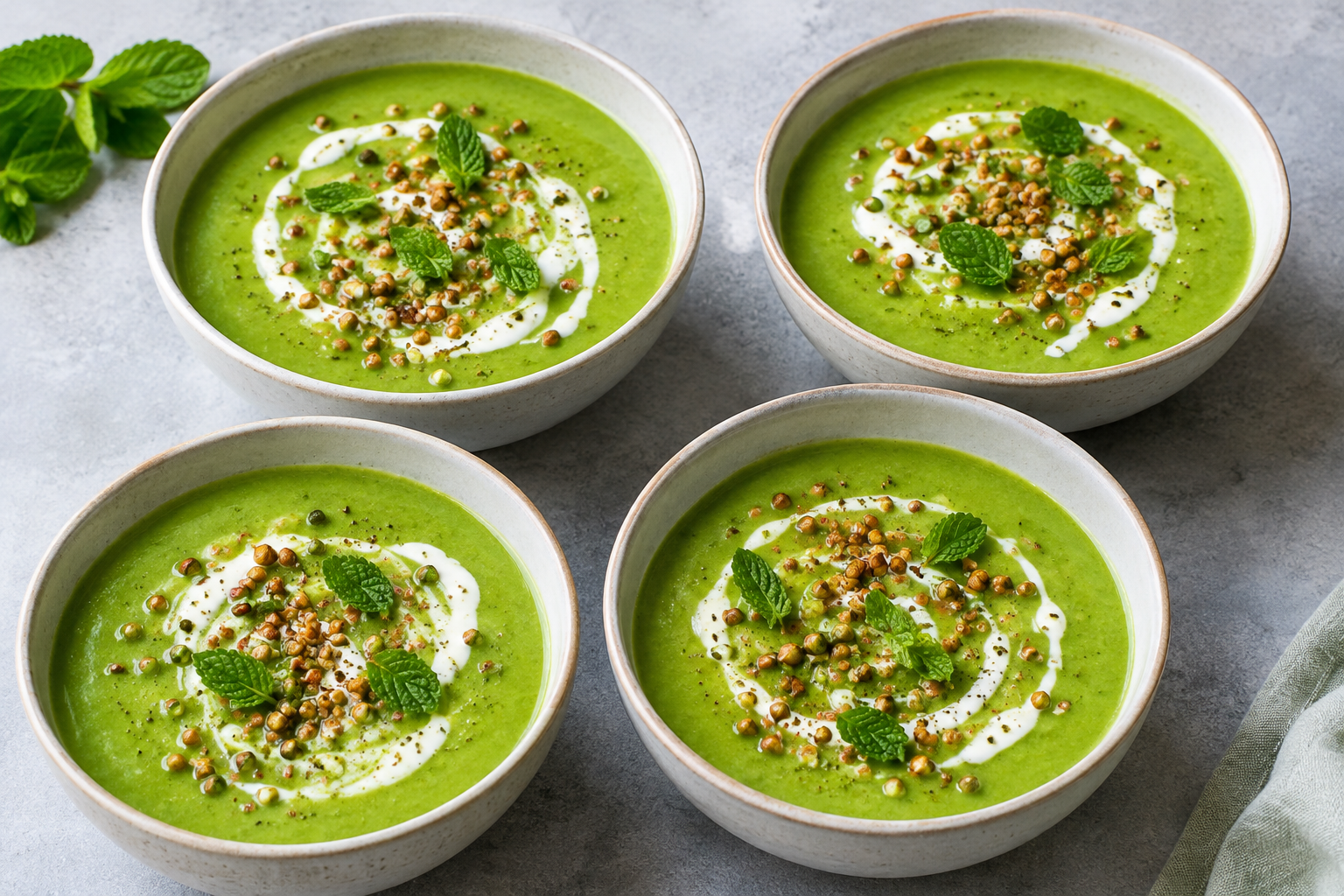
The lemon yogurt brings creamy freshness and a little tang, while toasted buckwheat adds contrast. Toast the buckwheat groats in a dry frying pan and keep an eye on them: once they smell fragrant and start to pop here and there, they’re ready. Use whole, uncooked buckwheat groats, not cooked buckwheat. Greek yogurt gives you a thick swirl; regular full-fat yogurt works too, but runs a little more easily. Taste the yogurt after adding the lemon juice and zest, so the acidity brightens the soup without overpowering it.
Serve the soup well chilled in small bowls or wide glasses, as a starter on a warm day. Add the buckwheat at the last moment, otherwise it will lose its crunch. You can make the soup ahead and keep it covered in the fridge; cool it quickly after cooking and serve within two days. Keep the yogurt and buckwheat separate until serving. Stir the soup well before serving. The soup is meant to be eaten cold; reheating it would take away its fresh character.
 Main course

