ABOUT THIS RECIPEA sauce that brings the dish into balance
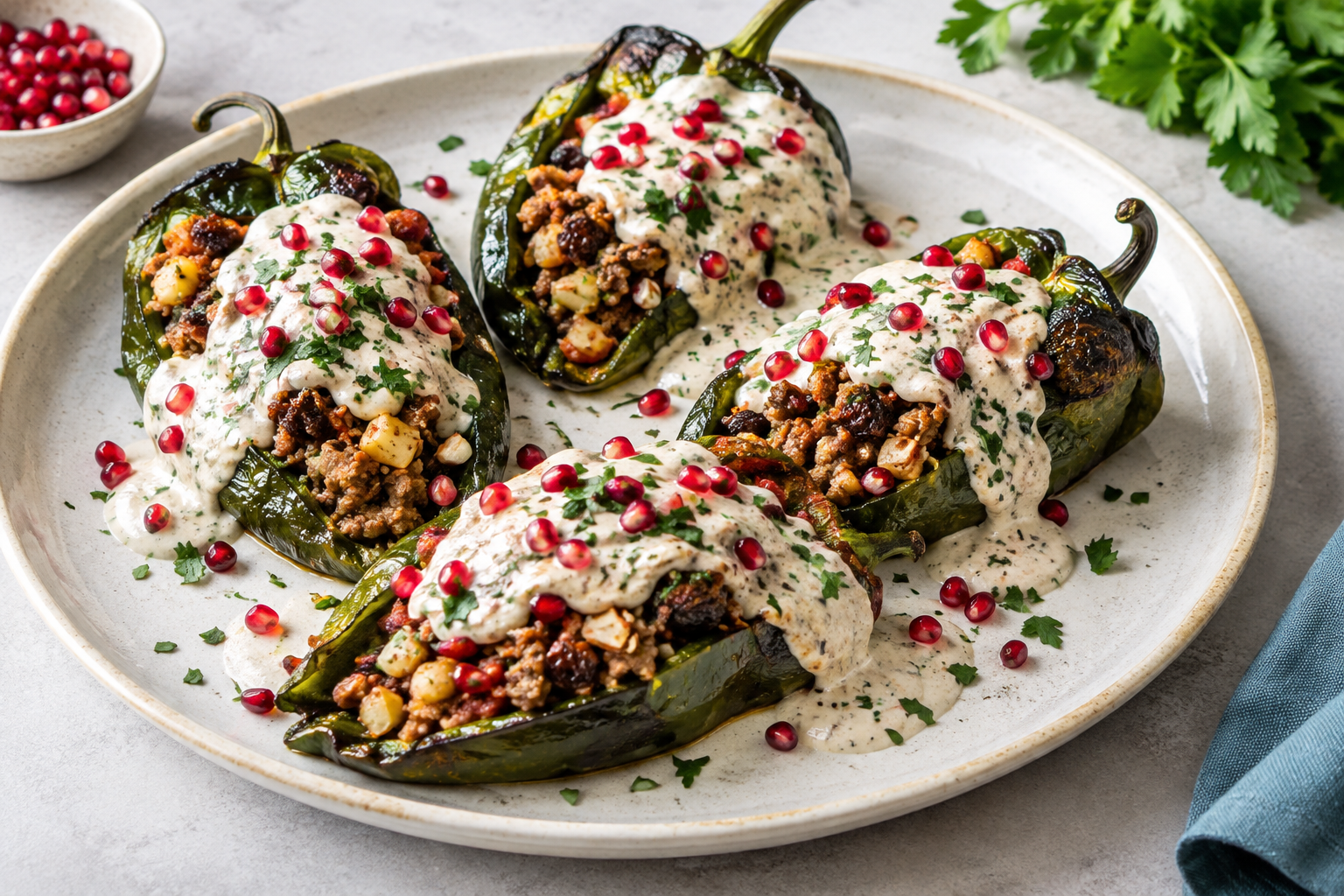
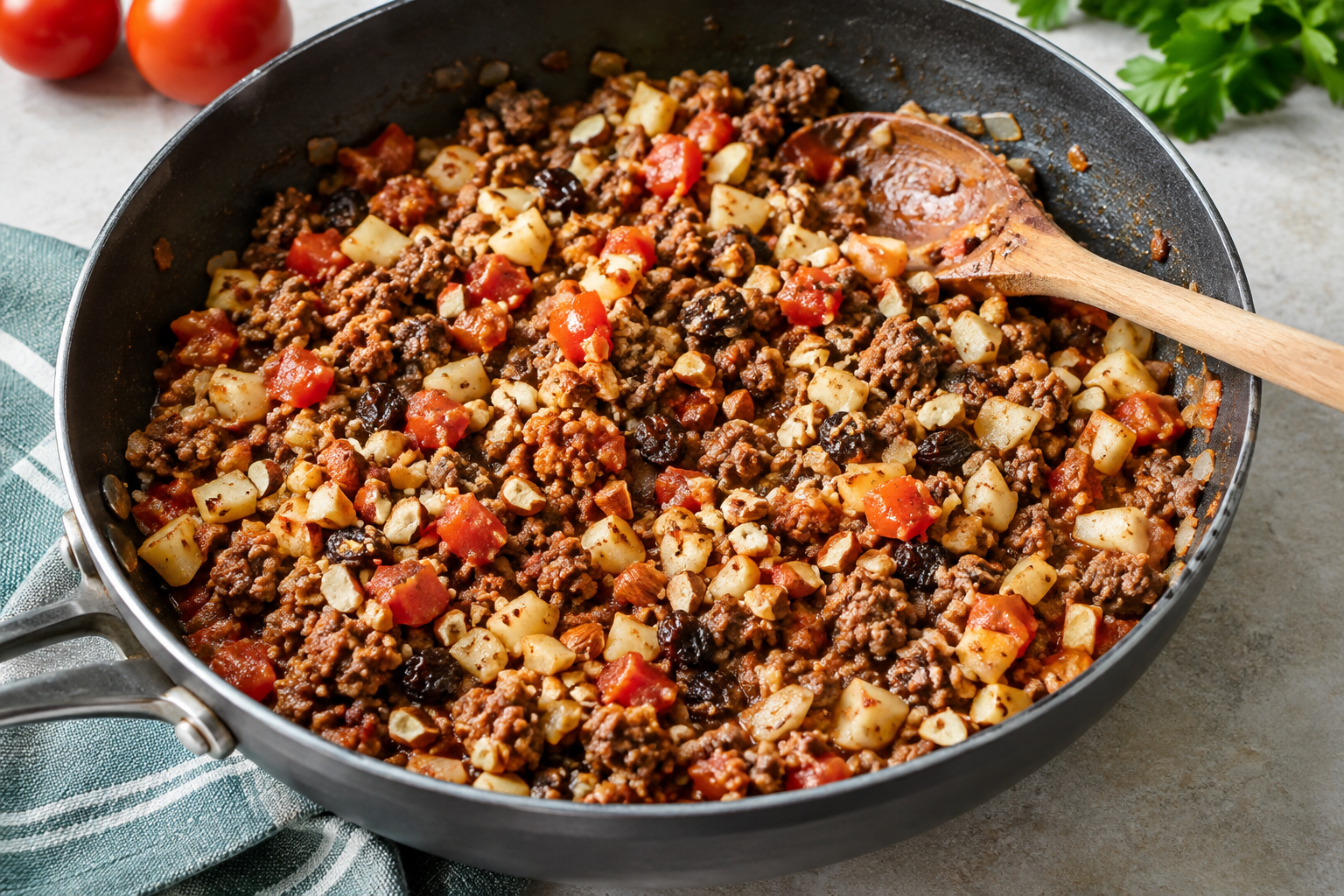
Chiles en nogada brings together different flavors without letting any one of them overpower the rest. The poblano is mild, with a soft, slightly smoky flavor after roasting. Picadillo provides a contrast: ground meat with onion, tomato, apple, pear, raisins and almonds. The fruit doesn’t turn the filling into a dessert; instead, it adds sweet notes to the savory meat. Pomegranate seeds bring fresh, juicy bursts, while parsley adds a green, herbal finish.
The walnut sauce, nogada, should be creamy and mild. Walnuts can taste bitter, especially if their thin brown skins are left on. Soaking them in warm water makes them easier to peel; take a little time to do this. In Mexico, queso de Castilla, a fresh cheese, is often used. It isn’t available everywhere here, so queso fresco or a mild fresh goat cheese is a good substitute. Don’t choose a strongly salted cheese: the sauce should soften the filling, not dominate it. Milk makes the sauce pourable; add it gradually so the sauce doesn’t become watery.
Poblanos are usually available at Mexican shops and well-stocked greengrocers. If you can’t find them, large green bell peppers are a practical substitute, but they lack the distinctive flavor of the poblano. Roast the peppers until the skin is charred in several places, then cover them and let them steam. This makes the skin easier to remove and softens the flesh enough to stuff. Peel carefully and make a narrow opening: a large tear makes it harder to keep the soft filling in place.
This is a version without a batter coating. That keeps the walnut sauce and pomegranate clearly visible and makes preparation straightforward; versions with a light egg batter are also common. Warm the stuffed peppers briefly in the oven and serve them lukewarm, with the sauce over or alongside them. The sauce can be made ahead and stored covered in the refrigerator; stir it until smooth before serving and let it come up to temperature a little. Serve with rice or warm corn tortillas. Store leftovers covered in the refrigerator and eat them within two days; reheat the peppers thoroughly and keep the sauce separate until serving.
 Main course

