ABOUT THIS RECIPEBright and tangy on hearty bread
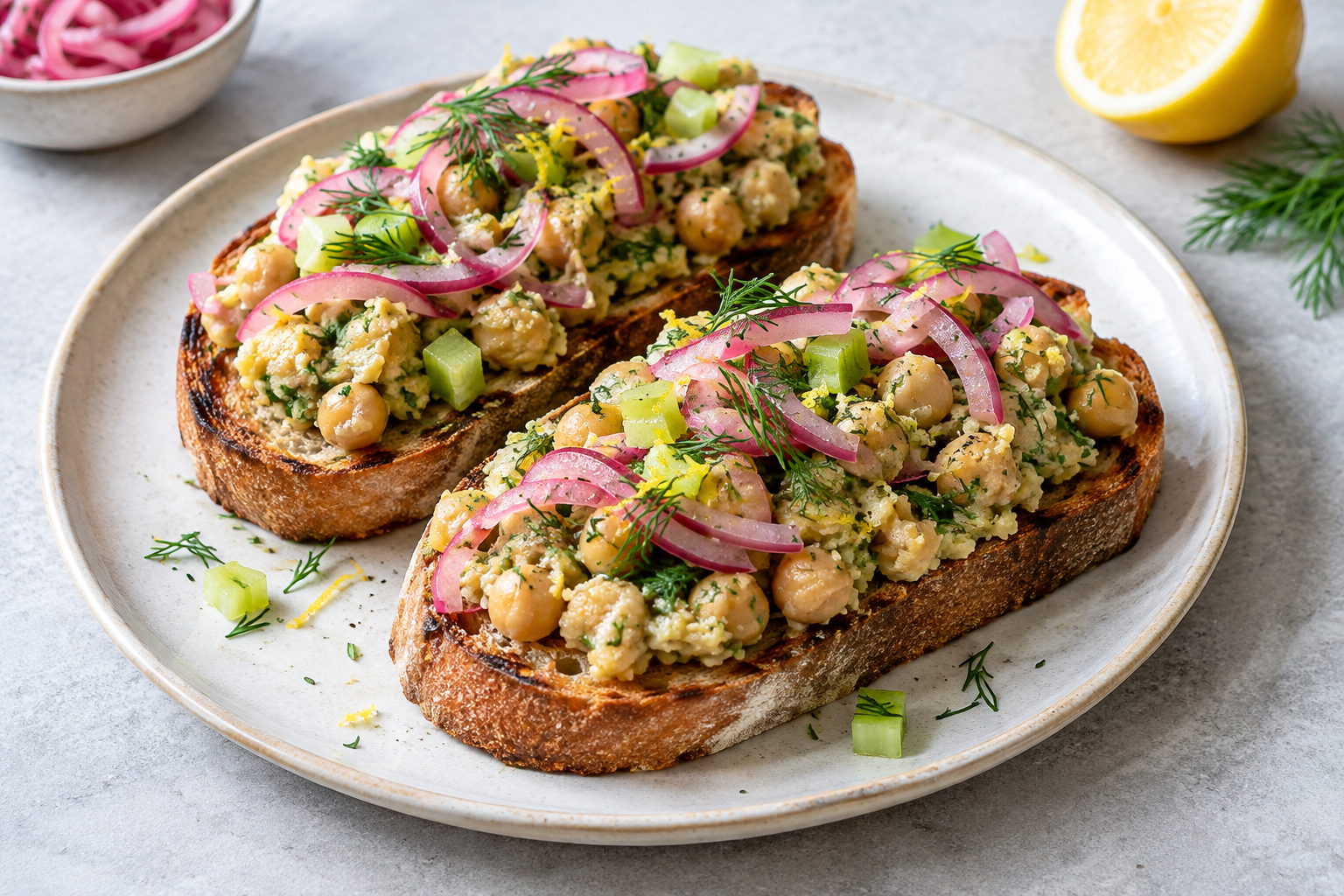
Here, a tartine is simply an open-faced slice of bread: sturdy enough to hold a generous layer of topping without making the whole thing feel heavy. Sourdough brings a lightly tangy flavor and a crust that contrasts nicely with the soft chickpeas. Toasting does more than warm the bread; it dries the surface a little, so the topping is less likely to soak in. Don’t slice the bread too thin, and toast it just before serving to keep it crisp.
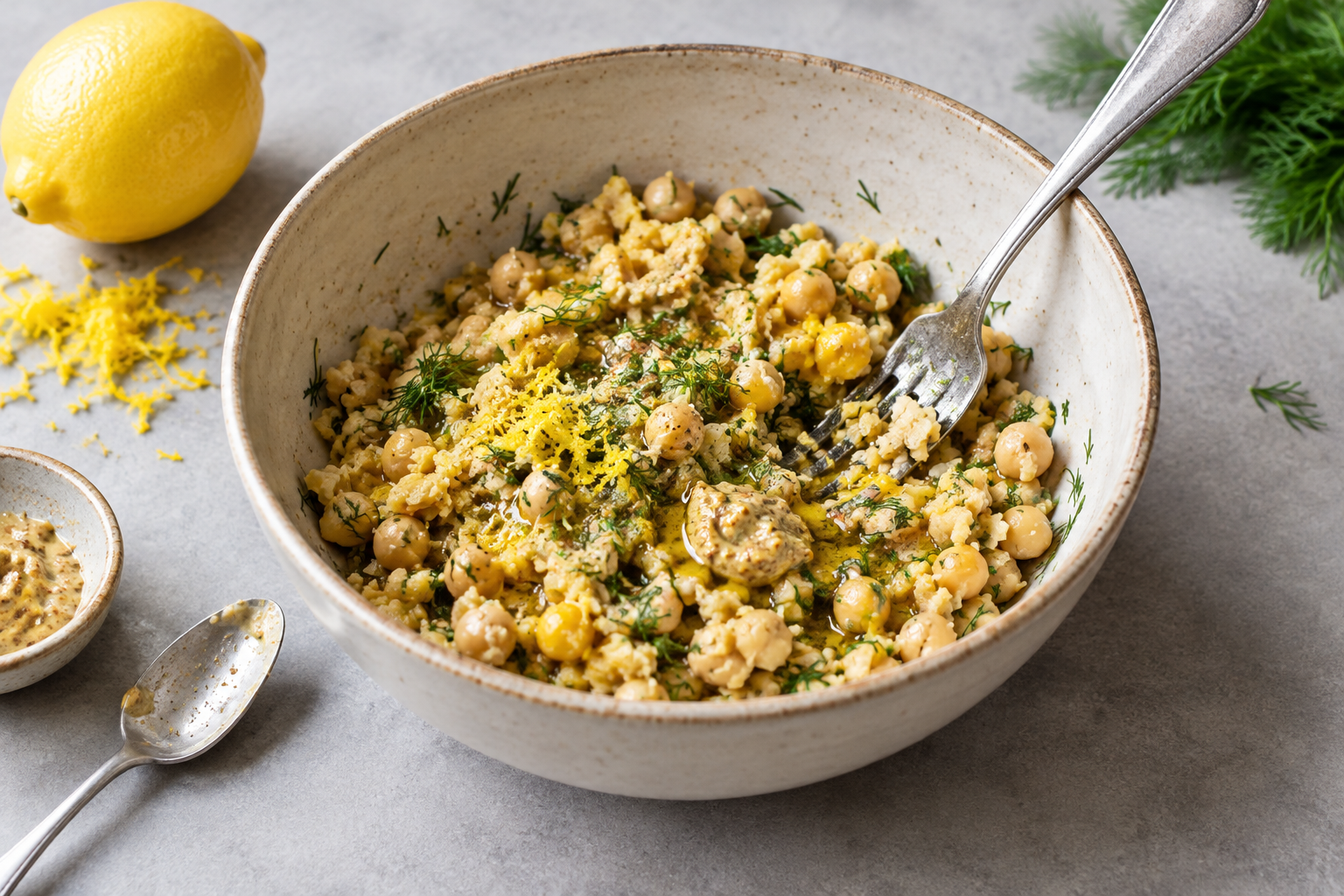
The chickpeas are deliberately mashed coarsely. A fork or potato masher breaks some of them down into a creamy base, while whole chickpeas add bite. Olive oil makes the topping supple; lemon zest brings an immediate citrus aroma, and the juice adds acidity. Mustard lends a savory sharpness that rounds out the lemon, while dill adds a fresh, herbal note. Add the lemon juice gradually: some lemons are juicier than others, and the topping should be spreadable, not wet.
The red onion is quickly pickled with vinegar, water and a little sugar. Thin rings take on the acidity in a short time and lose some of their sharp raw flavor, while staying crisp. Slice them as evenly as possible so they pickle at the same rate. Celery adds a second, milder crunch and a fresh, green flavor. Cut it small enough to eat comfortably on the bread. Drain the onion before adding it; this keeps the tartine’s acidity balanced and the bread from getting soggy.
Use canned or jarred chickpeas for convenience; rinse and drain them well, or the topping may turn watery. Cooked dried chickpeas work too, as long as they’re soft enough to mash in part. No dill on hand? Finely chopped parsley works well, though the flavor will be less anise-like. Mild white wine vinegar or apple cider vinegar works for the onion; it’s best not to use balsamic vinegar, which makes the pickle sweeter and darker. Serve the tartines right away for lunch, perhaps with a green salad. If preparing ahead, store the bread and topping separately.
 Main course

