ABOUT THIS RECIPEDark edges, fresh sauce
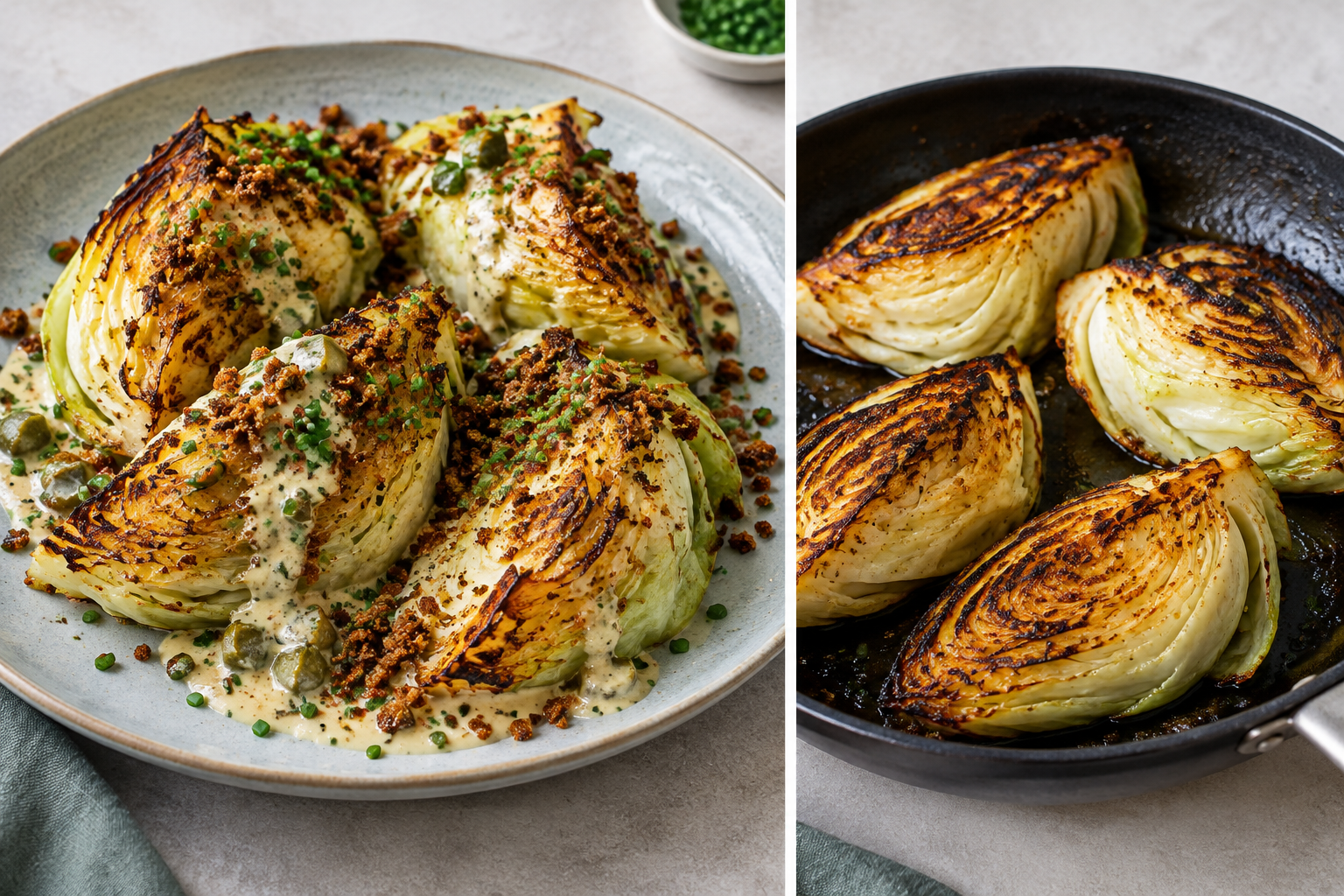
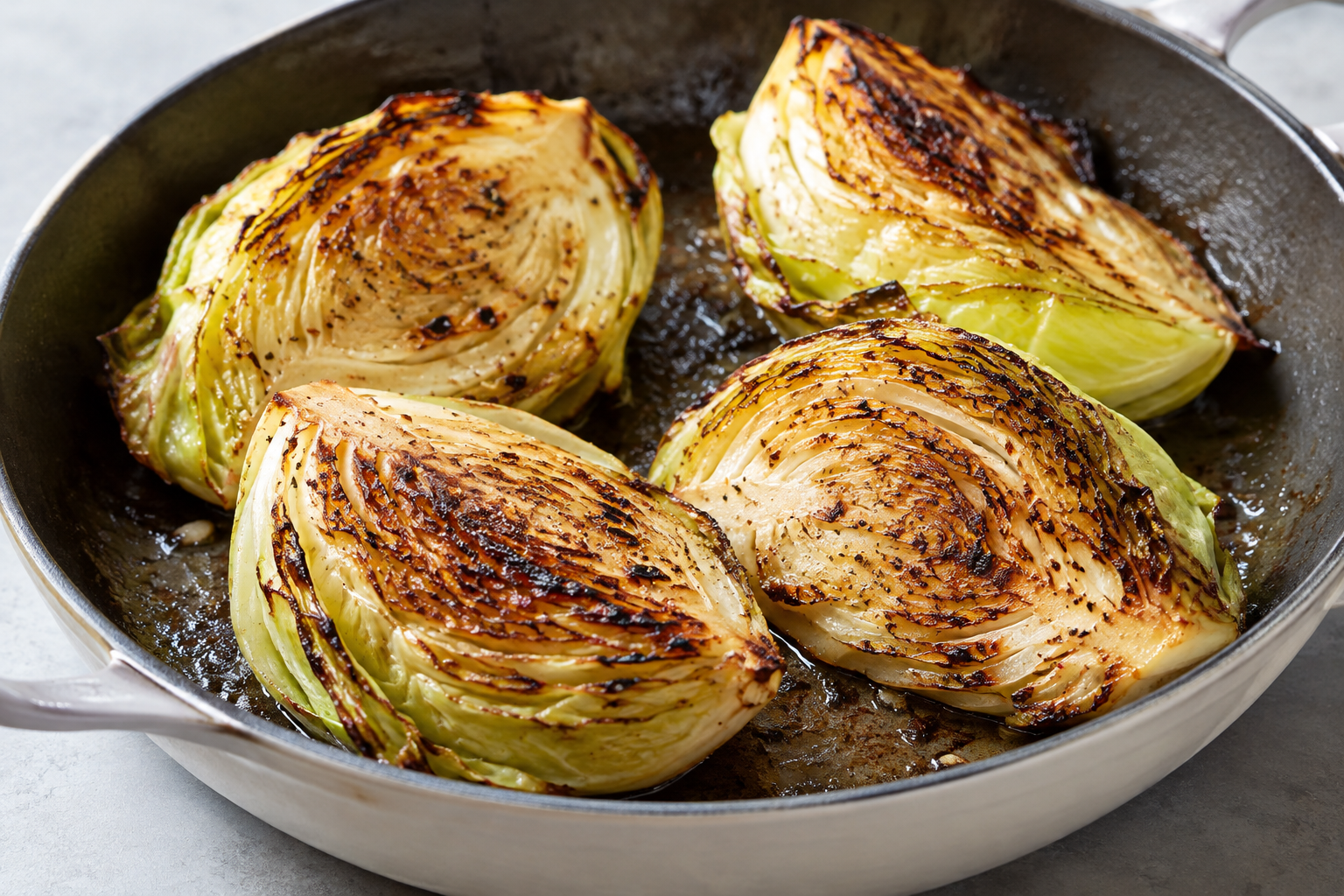
White cabbage is sturdy enough to fry in wedges without falling apart straight away. Cut the cabbage into quarters and leave the core intact: it holds the leaves together. Searing the cut sides well caramelizes the outer layers, giving them a lightly smoky, sweet flavor. The cabbage then finishes cooking in the oven, where the heat is more even than in a pan. Aim for a tender core that still offers some resistance, not cabbage that falls completely apart.
The sauce is inspired by beurre blanc, a French butter sauce made by emulsifying cold butter into a reduced wine mixture. A small pan and gentle heat help keep the sauce smooth: first reduce the wine well, then whisk in the butter a little at a time. If the sauce boils, the emulsion can split. Cornichons add salt and acidity, so the butter doesn’t taste too rich. Chop them finely enough to appear in every spoonful of sauce, but not so finely that they disappear.
Rye bread gives the dish an earthy, hearty crunch that goes well with the roasted cabbage. You can rub fresh bread into coarse crumbs yourself; stale rye bread crisps up quickly in the pan. Panko works too, but is more neutral and less distinctive. No cornichons on hand? Use finely chopped pickles and add a small splash of the brine from the jar. It’s usually milder in flavor, so taste the sauce before adding extra salt.
White cabbage is available in the Netherlands all year round and is often sold as a storage crop; its robust flavor works well with warm, buttery dishes in the colder months. Serve the wedges as a side with fried potatoes, lentils, or a simple piece of fish. With bread for mopping up the sauce, it can also make a light main course. Ideally, serve the cabbage and sauce straight away. Once cooled, leftovers can be stored covered in the refrigerator and used within two days; reheat the cabbage gently. The beurre blanc can split when stored or reheated, so it’s best to make it just before serving.
 Main course

