ABOUT THIS RECIPECabbage with Bright Counterpoints
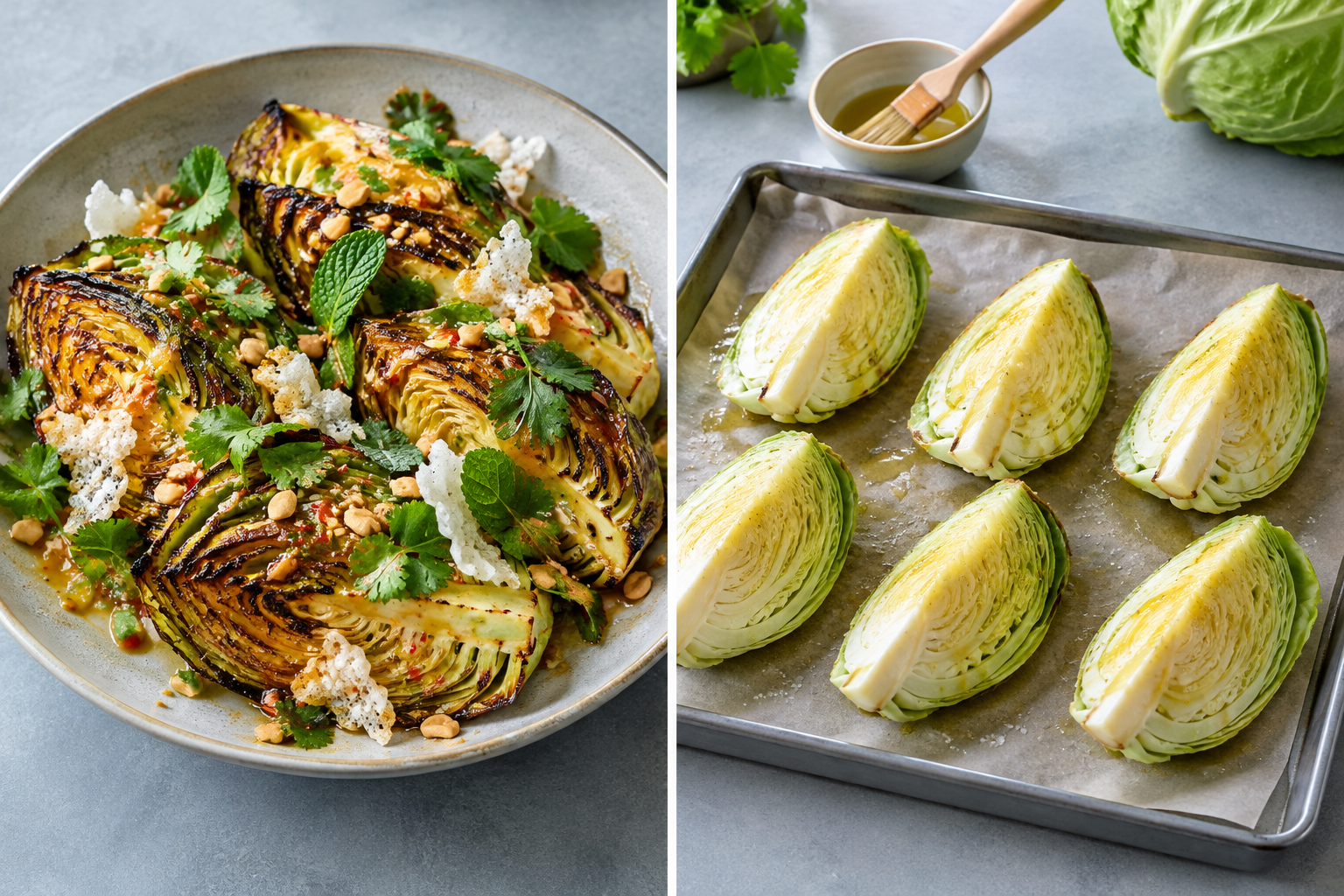
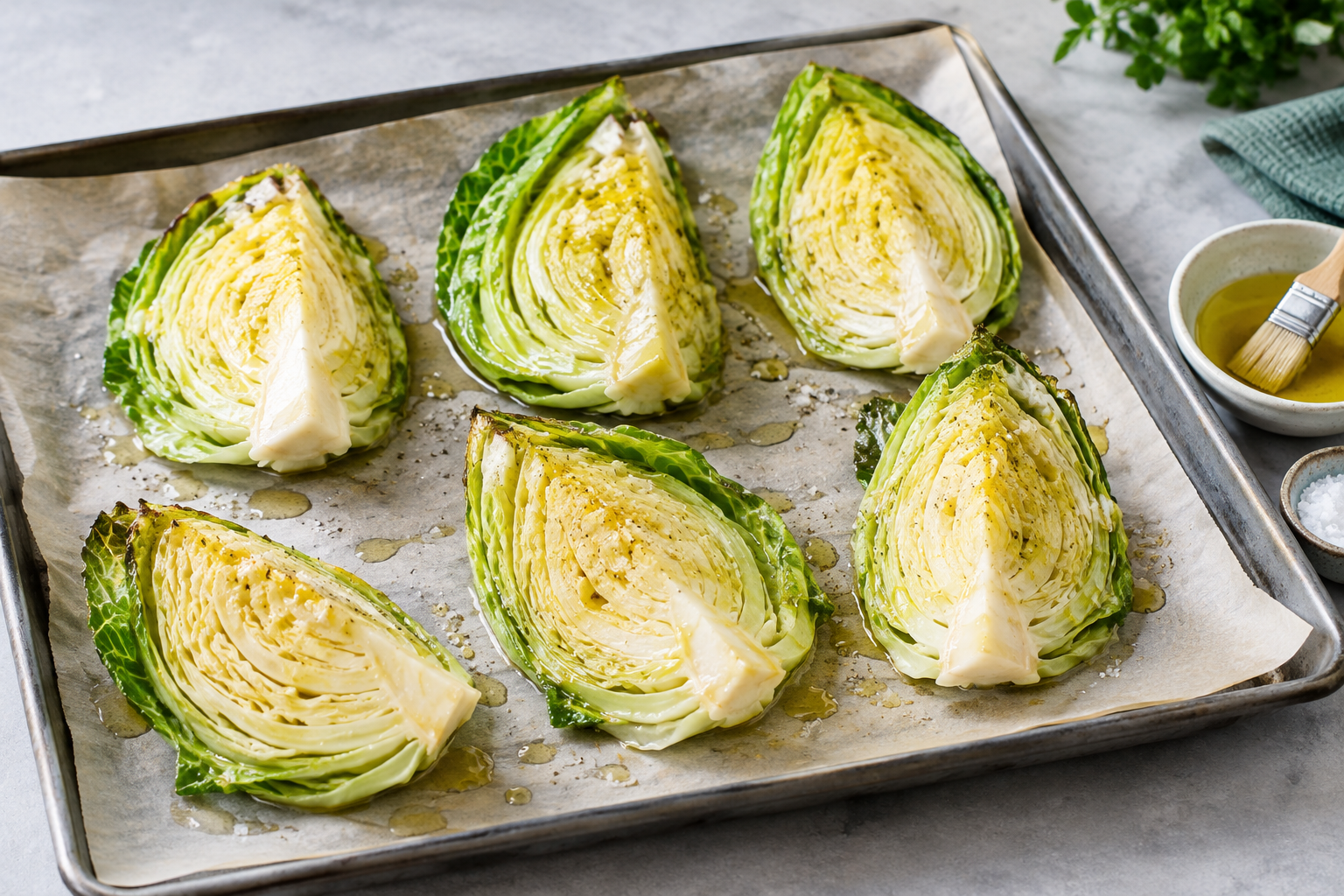
In this dish, pointed cabbage isn’t gently braised until soft; it’s roasted in wedges until the outer leaves char and the core turns tender. The high heat deepens the flavor and gives the cabbage edges with a slightly smoky bitterness. Cut the wedges through the stem so the leaves stay together. Leaving space between them on the baking sheet helps them brown instead of steam; use two sheets if needed.
The sauce is inspired by nước chấm, a family of Vietnamese dipping sauces in which fish sauce, acidity, sweetness and water are balanced. The proportions vary depending on the table and how the sauce is used. Here, lime juice adds a distinctly bright note, sugar softens the sharp edges and a little water makes the sauce light enough to spoon over the cabbage. Taste before serving: add more lime if it tastes too sweet or salty, or a small splash of water if the fish sauce dominates. Garlic and chili bring fragrance and heat without overpowering the cabbage.
The topping does more than add color. Mint and coriander taste cool and aromatic alongside the roasted cabbage; peanuts add a firm bite. Fried rice paper is lighter and crispier than peanuts, so the textures complement each other. Fry it just before eating: once cooled, it absorbs moisture more quickly, especially if it touches the sauce or warm cabbage. Don’t leave the hot oil unattended, and make sure the rice paper is completely dry.
Pointed cabbage is generally available year-round. Choose a firm head with fresh, undamaged leaves; smaller ones are often easier to cut into even wedges. No pointed cabbage on hand? A small green cabbage works too, though its wedges are firmer and the roasting time may be a little longer. For a vegetarian version, use a vegetarian fish sauce substitute or light soy sauce with a little extra lime juice. The flavor will change, but the bright, savory balance remains the goal.
Serve the cabbage as a side with rice, noodles or grilled tofu, fish or chicken. If you like, put the sauce and herbs on the table separately so everyone can add their own amount. Leftover roasted cabbage can be covered and refrigerated within two hours, then used within two days; reheat it thoroughly in a hot oven. Store the sauce, herbs and crispy rice paper separately and add them just before eating.
 Main course

