SIDE DISH · NOORS KITCHENCharred Pak Choi with Tahini-Lime Sauce
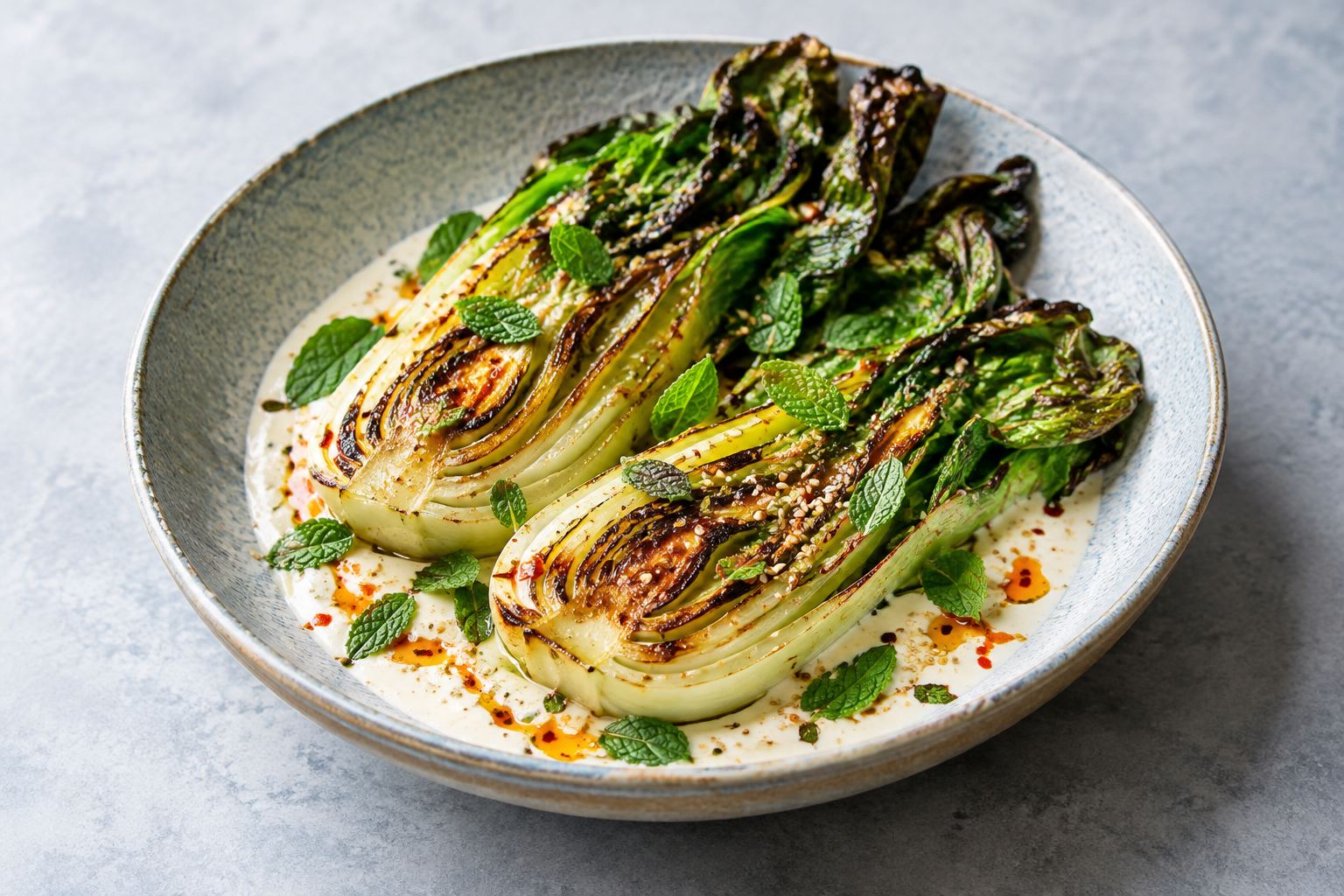
In a hot oven, pak choi develops dark, roasted cut sides and crisp leaf edges. Alongside it, a bright sauce of tahini, yogurt and lime adds creaminess, finished with mint, sesame and a little chili oil.
ABOUT THIS RECIPESmoky edges, bright sauce
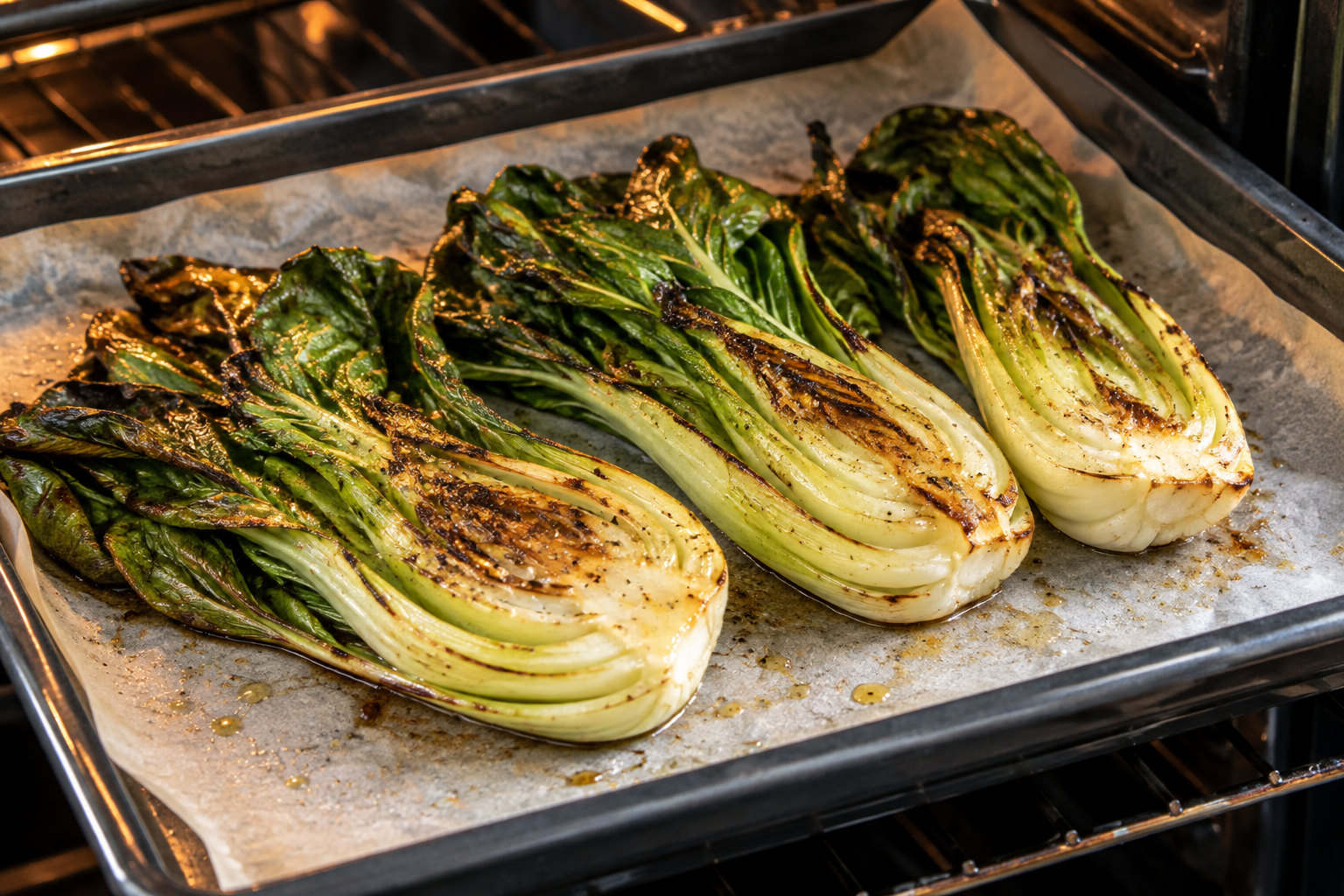
Pak choi has two very different textures: firm, juicy stems and thin leaves that crisp up quickly. Halving the heads lengthwise keeps these parts attached while giving them contact with the hot baking sheet. The cut sides turn dark and slightly bitter, while the inside stays tender. After washing the pak choi, let it drain well and pat it dry; excess water gets in the way of browning.
A properly hot oven matters more here than a long cooking time. At 230 °C, the pak choi develops roasted spots before the stems lose their bite. The leaves can shrivel a little at the edges and turn crisp, but take the vegetables out as soon as a knife slides easily into the thickest part. Small heads will be ready sooner than large ones, so start checking after about ten minutes and give larger ones a few extra minutes if needed.
Tahini gives the sauce an earthy, slightly bitter sesame flavor. Yogurt makes it richer and cooler, while lime juice brightens the sauce and balances the roasted flavor. Tahini can vary quite a bit in thickness from jar to jar: stir it well first, then add the water a little at a time until the sauce runs off a spoon. For a plant-based version, use unsweetened plant-based yogurt. Lemon juice can replace the lime, though the flavor will be a little less aromatic.
Mint adds a fresh aroma, and sesame seeds give the soft sauce and pak choi a little crunch. You only need a small drizzle of chili oil, so the chili stays an accent and the lime remains distinct. If you prefer to avoid heat, leave out the oil. Serve the pak choi as a side dish with rice, noodles or grilled tofu. You can also serve the sauce separately, so everyone can choose how much to add.
This dish is best just after roasting, while the leaves are still crisp. You can make the sauce ahead and keep it covered in the refrigerator; before serving, loosen it with a small splash of water if it has thickened. Refrigerate any leftover pak choi within two hours and eat it within two days. Reheating will soften the leaves, so serve leftovers cold if you like, or heat them briefly until piping hot throughout.
 Main course

