ABOUT THIS RECIPEBitter edges, bright butter
Belgian endive has a distinctive bitterness, especially in the firm base and outer leaves. That’s exactly what we want here: in a hot oven, the cut sides caramelize and the flavor becomes rounder, without losing the vegetable’s character. The heads are readily available throughout the year and feel especially at home in the colder months. Choose firm, tightly closed heads with fresh, pale yellow leaves; loose or brown edges are less suitable for roasting nicely.
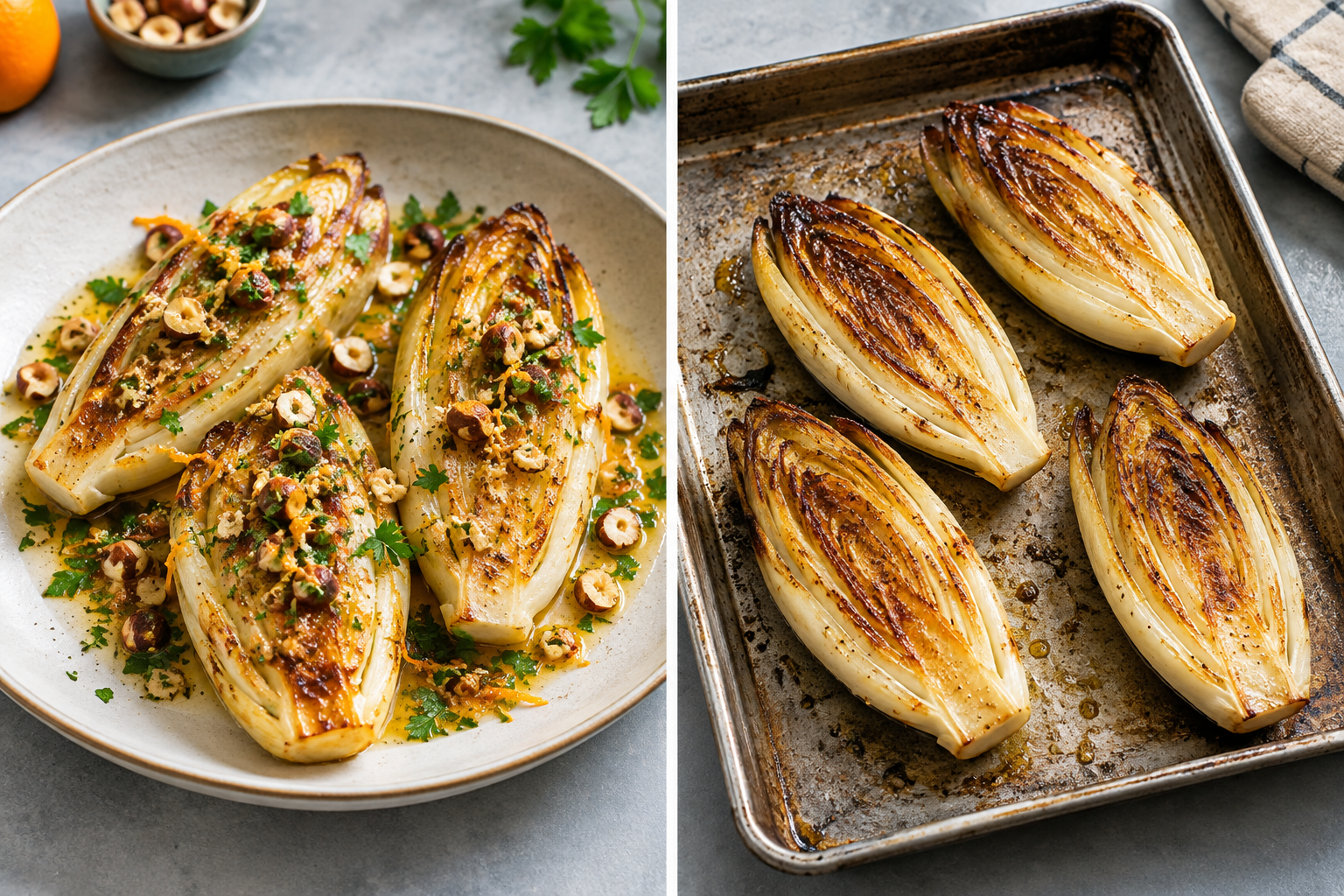
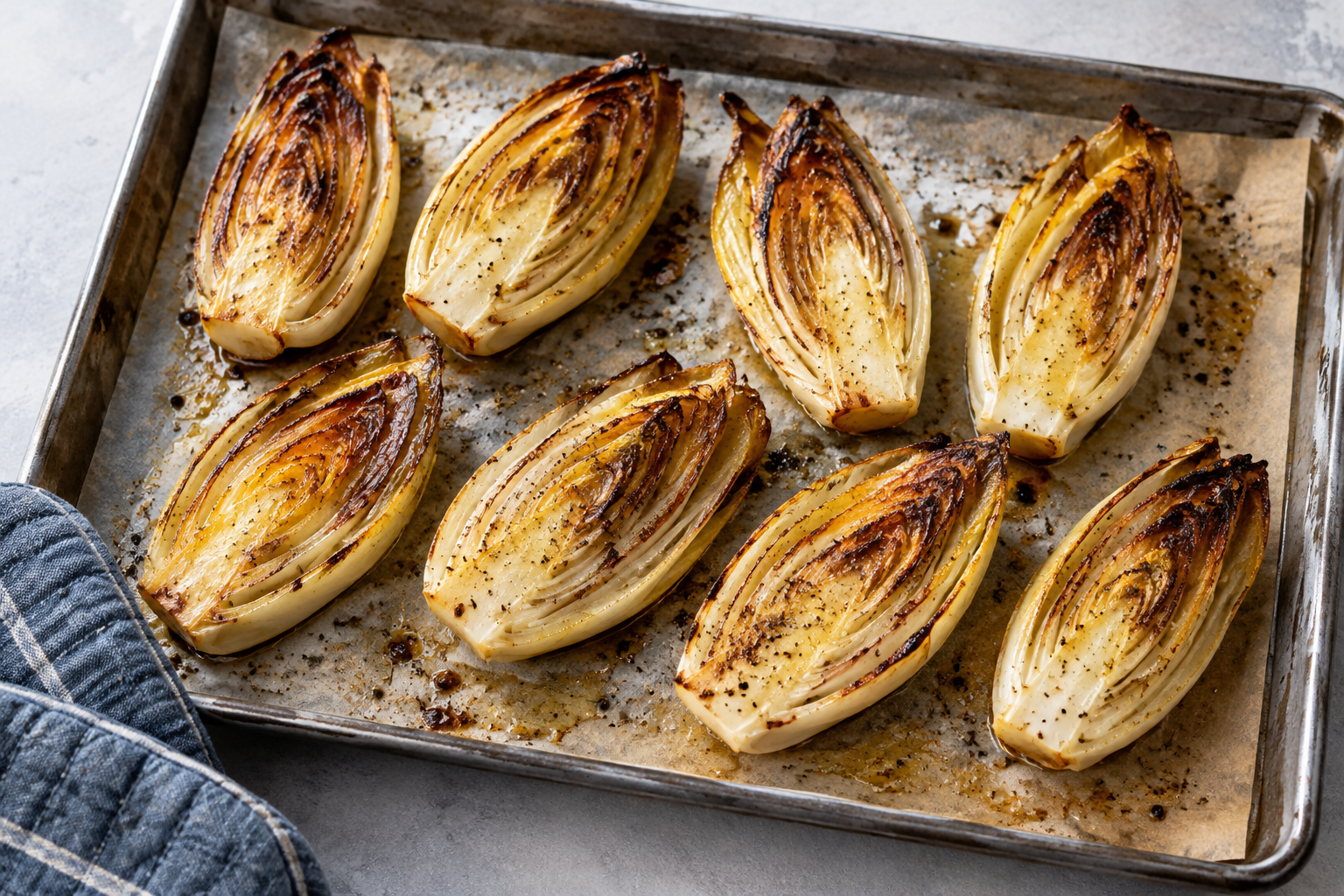
Cut the Belgian endive in half lengthwise, leaving a little of the core attached. This holds the leaves together as they roast. Place the halves cut-side down on a hot baking sheet and leave some space between them: if they’re crowded, they’ll release moisture and won’t brown as well. The oven needs to be fully preheated. Thin heads may be done sooner than larger ones, so check after a quarter of an hour to see if a small knife slides easily into the center. A deep brown cut side is what you want; black and dry is not.
The butter slowly turns golden brown over medium heat. First it melts, then the foam settles a little and the milk solids turn into small hazelnut-brown flecks. Take the pan off the heat as soon as the butter smells nutty, and only then add the orange juice. This prevents the butter from cooking longer than necessary and reduces splattering. Grate only the colored zest of the orange: the white pith underneath can add an unpleasant bitterness. The citrus cuts through the rich butter and complements the bitterness of the Belgian endive.
You can toast the hazelnuts in a dry skillet; stay close and shake the pan regularly, as they brown quickly. Let them cool briefly before chopping them coarsely. No hazelnuts on hand? Toasted almonds add crunch too, though their flavor is a little milder. A small amount of coarsely chopped walnut works as well, but it’s more bitter, so use it sparingly.
Serve the Belgian endive warm as a side with fried potatoes, lentils, or a simple piece of fish. Spoon the butter over the halves just before serving, so the roasted cut sides stay visible and the nuts stay crunchy. Parsley adds a fresh, green note; it’s best added at the end rather than to the hot sauce. If you like more acidity, put extra orange segments or a lemon wedge on the table instead of making the sauce more sour.
 Main course

