ABOUT THIS RECIPEBitter, bright and a little sweet
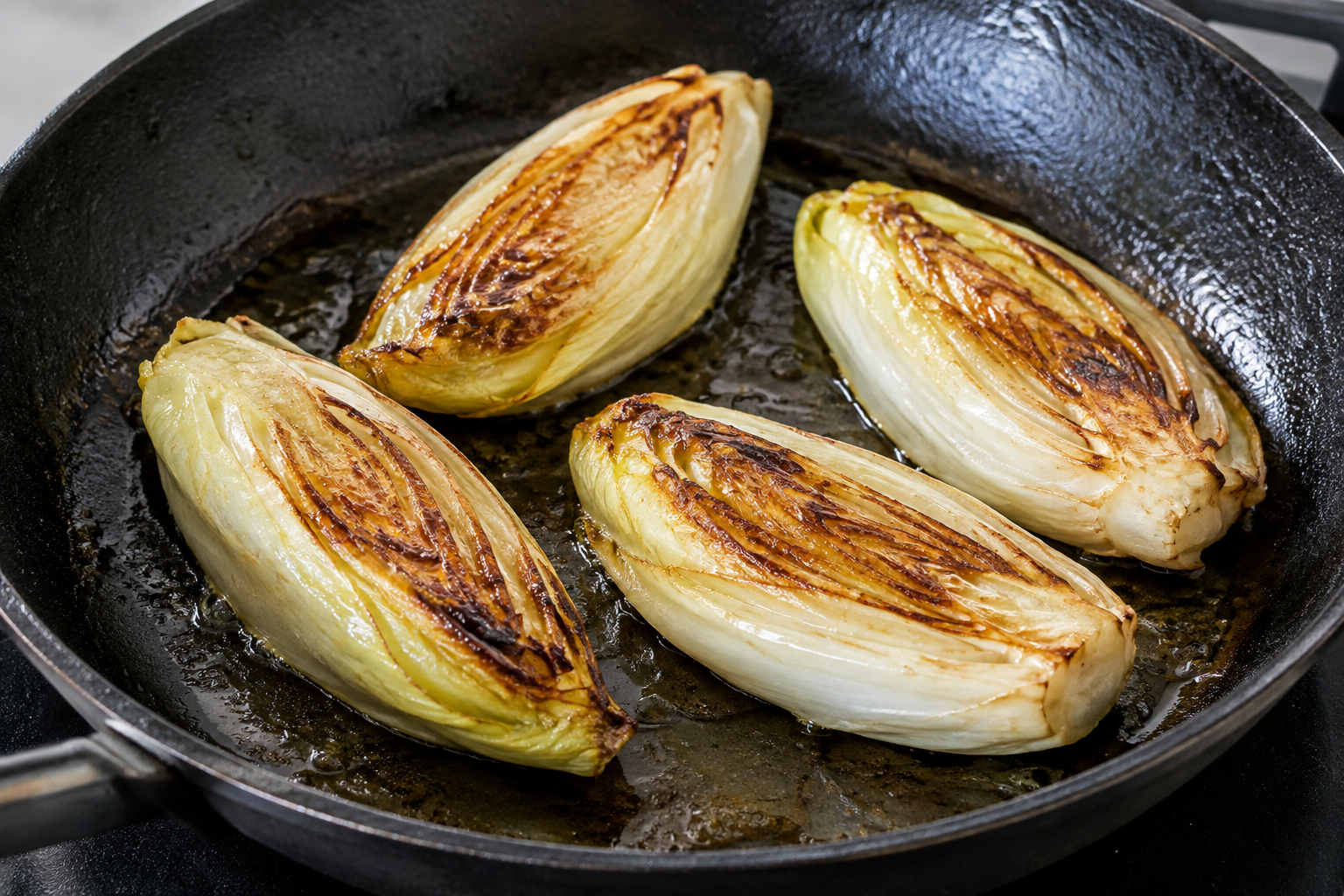
Belgian endive has a distinct bitterness of its own, especially near the firm core. Searing the halved heads over high heat first gives the cut sides dark, roasted patches that round out the bitterness. Then a small splash of water and a lid help the leaves cook through without drying out. The aim is tender endive that still holds its shape, not a pan full of limp leaves. Use a heavy skillet that fits the halves side by side; otherwise, cook them in two batches.
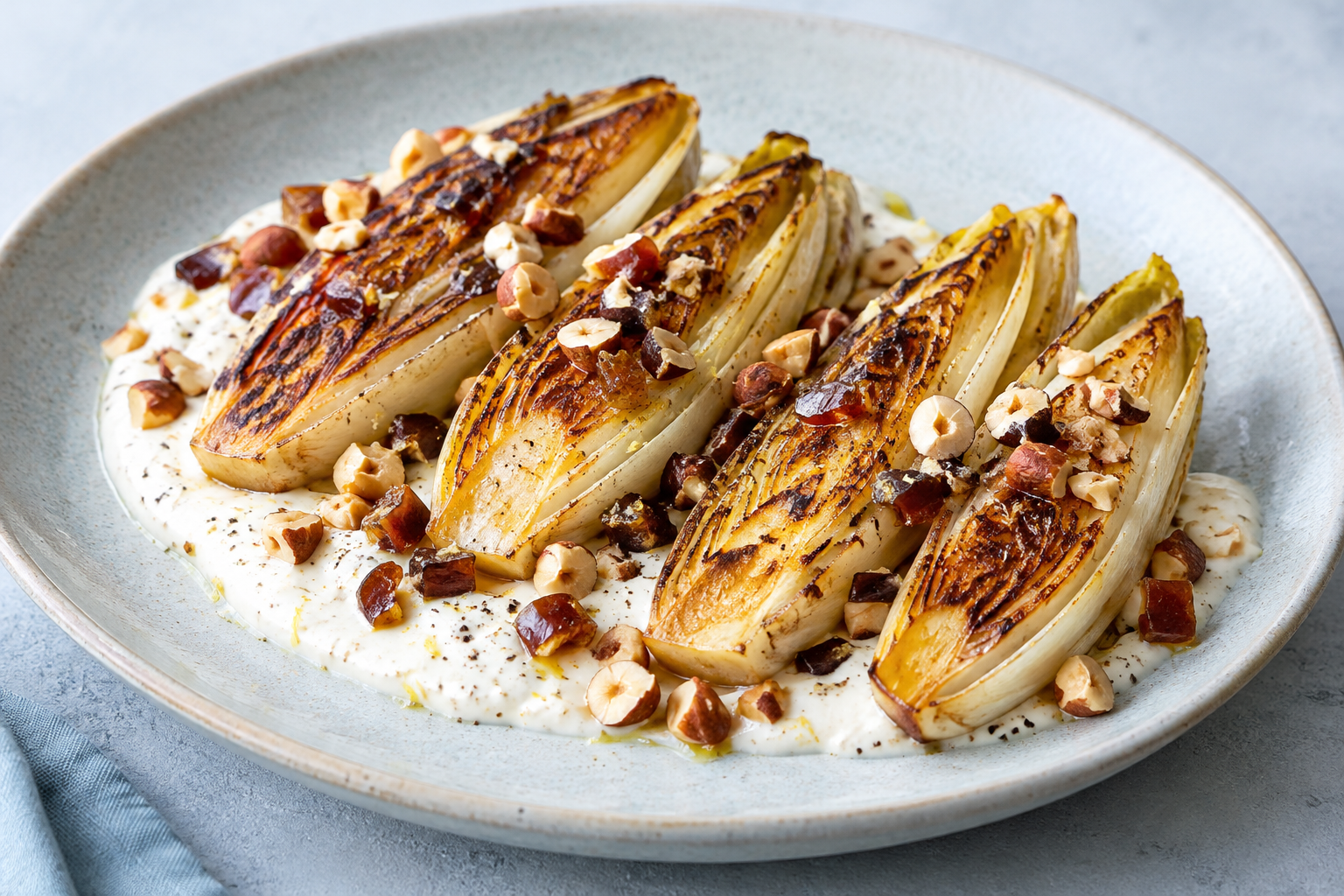
The lemon yogurt brings a cool, tangy contrast to the warm, charred vegetable. Stir lemon zest and juice into full-fat yogurt, then taste before adding extra salt: lemon juice can sharpen the flavor quite a bit. Greek yogurt makes a thicker sauce that holds its shape on the plate. Regular yogurt makes a thinner sauce, so use it sparingly. A little lemon zest adds fragrance without making the sauce as tart as extra juice would.
Dates add a mellow sweetness, while hazelnuts make the dish crunchy and nutty. Roughly chop both so you can still taste them separately. Toast the hazelnuts in a dry pan until fragrant and lightly golden in places; don't leave them unattended, as they can burn quickly. If your dates are soft, you can slice them straight away. Soak firm dates in warm water for a few minutes, then pat them thoroughly dry. Almonds can replace the hazelnuts, though the flavor will be a little less rounded.
In the Netherlands, Belgian endive is especially associated with the colder months, making it a natural choice for a winter meal, but it is generally easy to find outside that season too. Choose firm, tightly closed heads without wet or brown spots. Serve them as a side with roasted fish, or put them on the table alongside other vegetable dishes and bread for scooping up the yogurt sauce. Spoon the sauce underneath or beside the endive rather than over it: that way the dark cut sides stay visible and the hazelnuts keep their crunch.
 Main course

