ABOUT THIS RECIPESmoky noodles, hot wok
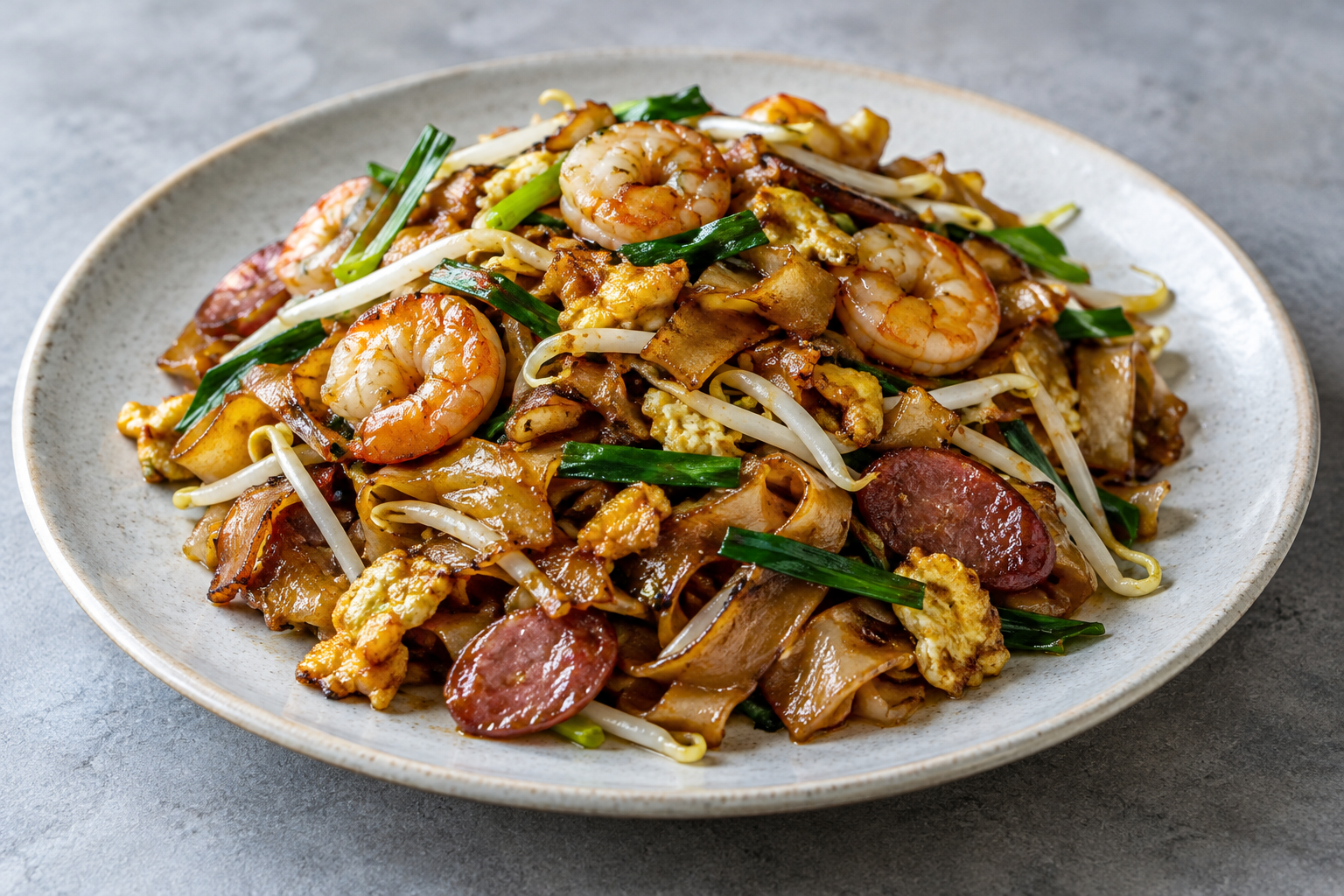
Char kway teow is a Malaysian stir-fried noodle dish strongly associated with Penang. The name refers to flat rice noodles cooked in a wok. Wide noodles are the base; prawns, egg, bean sprouts and Chinese chives add variety. Chinese sausage is included in many versions. Some preparations also contain cockles. This home version uses prawns and sausage, ingredients that are easy to find, and does not claim to represent one definitive or authentic combination.
The flavor is savory and a little sweet, with depth from dark soy sauce and a fresh, crunchy bite from the bean sprouts and chives. Chinese sausage adds little sweet-salty bites among the noodles. Use light soy sauce for saltiness and dark soy sauce mainly for color and a rounder flavor; they are not interchangeable. Oyster sauce brings the sauce together with the noodles. A little chili paste adds heat, but feel free to leave it out if you prefer a milder dish.
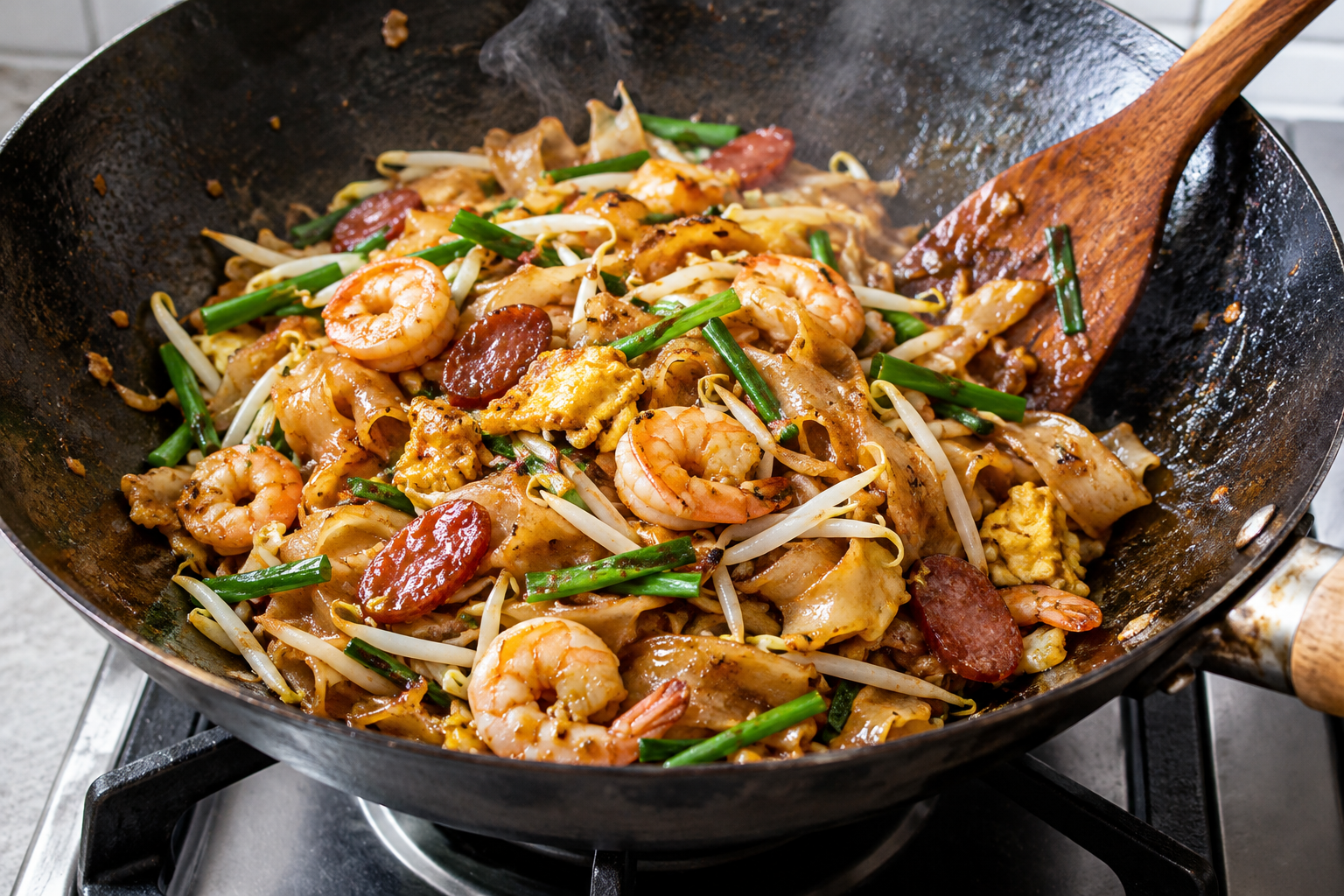
The characteristic smoky flavor comes from briefly cooking over high heat, often called wok hei. A powerful wok burner helps, but a regular stovetop can also give good results. The practical adjustment is to cook smaller batches: one serving at a time in a well-heated wok or large frying pan. A full pan cools quickly, causing the noodles to steam rather than fry. So let them sit against the hot surface briefly before tossing. A home stove may not produce the same intense smoky flavor, but the noodles will stay separate and develop fried edges.
Dried wide rice noodles are a good option if fresh noodles aren’t available. Soak or boil them according to the package directions, but drain them as soon as they’re pliable and still have some bite: they’ll continue cooking in the wok. Chinese sausage is often available at Asian supermarkets; slice it thinly so it heats through quickly. If you can’t find it, you can leave it out. That will change the flavor profile, but the prawns, egg and savory sauce still make this a complete dish.
Serve the noodles right away, while the bean sprouts are still crunchy and the sauce hasn’t dried out in the pan. They’re a complete meal on their own, but also go well with a fresh bowl of cucumber or some extra raw bean sprouts at the table. Cool leftovers quickly after the meal and refrigerate them within two hours. Keep them covered and eat them within two days; reheat thoroughly in a hot pan. The noodles will soften as they sit, so they have the best texture straight from the wok.
 Main course

