ABOUT THIS RECIPERoasted Edges, Fresh Contrasts
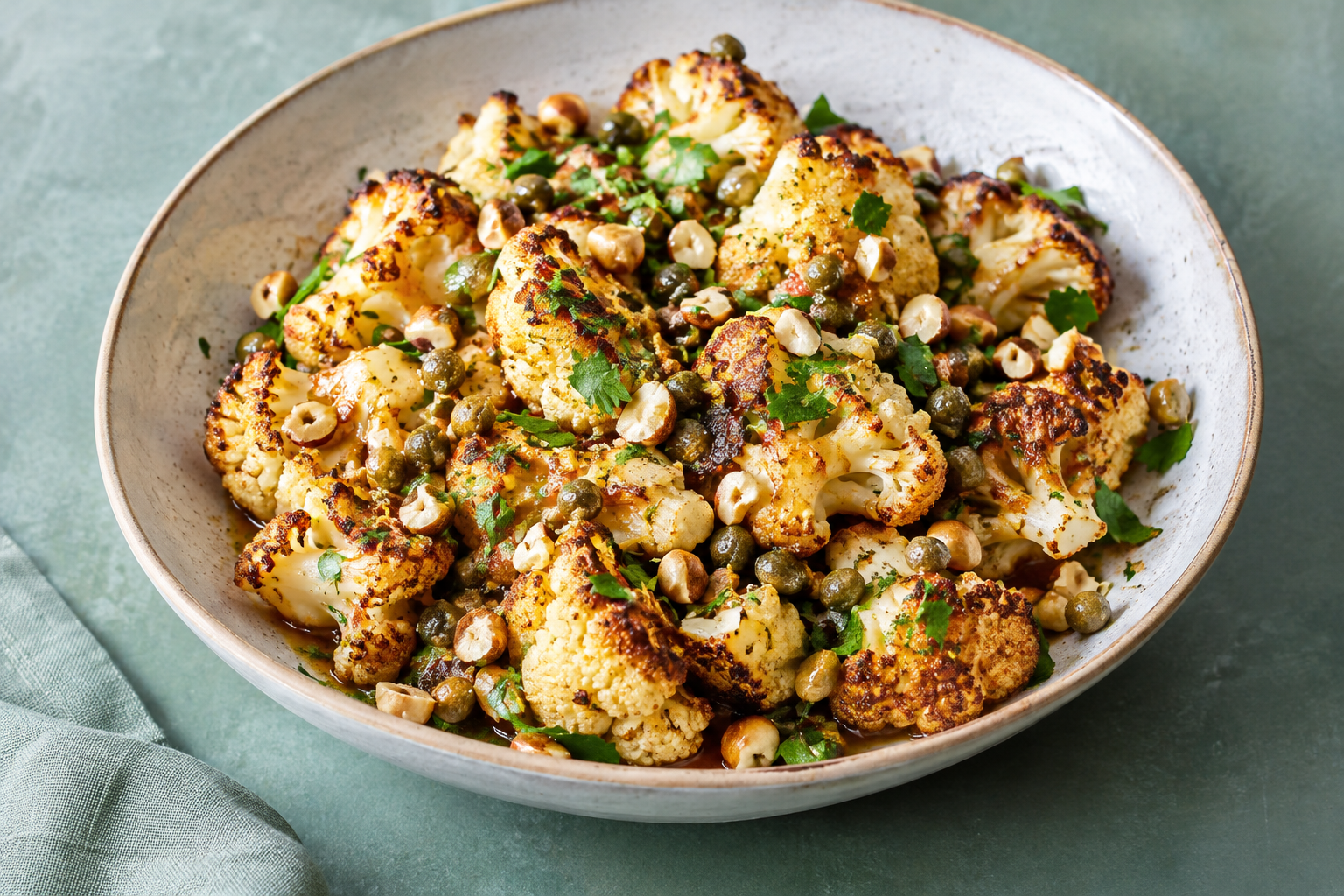
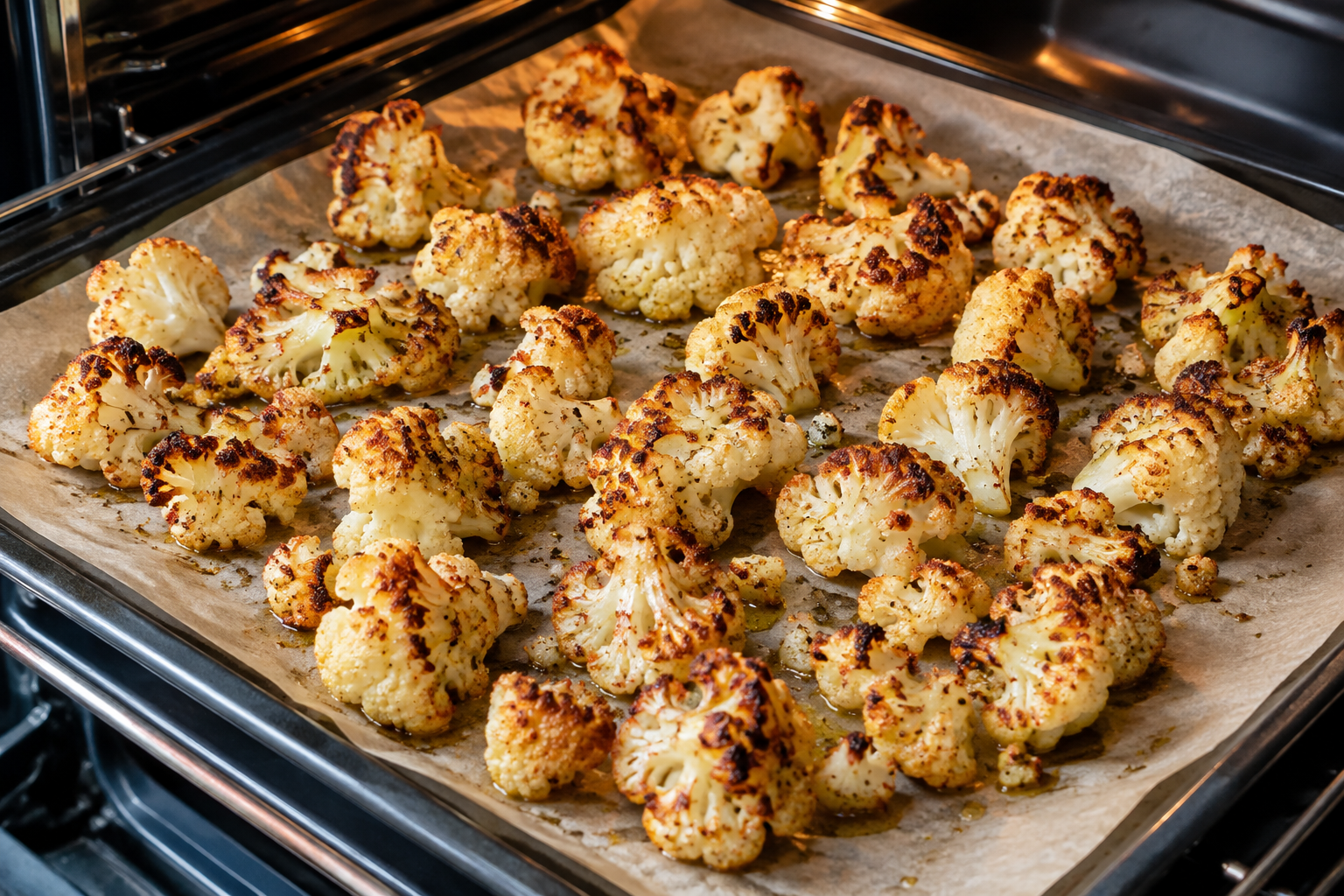
Cauliflower has a mild, slightly earthy flavour of its own. Roasting the florets at a high temperature darkens the edges and gives the vegetable more depth, while keeping the inside tender. Give the pieces plenty of room on the baking tray: if they’re crowded, they release moisture and steam rather than brown. Cut the florets to roughly the same size so they cook at the same time. A few loose leaves can go into the oven too; they brown faster and turn deliciously crisp, but take them off the tray earlier if needed.
Brown butter brings a roasted, almost hazelnut-like aroma that works well with the cauliflower. The butter can go from golden to too dark quickly, so it’s best to use a light-coloured pan where you can see its colour. Take the pan off the heat as soon as the milk solids turn amber and smell nutty. Capers add saltiness and a savoury, slightly sharp note; lemon brightens the sauce and keeps the butter from tasting heavy. If the capers are very salty, rinse them briefly and pat them dry before adding them to the butter.
Hazelnuts add a firm bite and complement the flavour of the butter. You can toast them in a dry frying pan or, if there’s room in the oven, briefly on a second baking tray. Let them cool before roughly chopping them: warm nuts are softer and crumble more easily. Parsley adds a fresh, green flavour. No hazelnuts on hand? Almonds work too, though their flavour is a little milder. Finely chopped chives can replace the parsley, but use a little less.
Cauliflower is most widely available in the Netherlands from late spring through autumn, though it’s generally sold in shops outside that season too. Choose a firm head with compact, pale florets; you can cut away any small discoloured spots. Serve this side dish with pan-fried fish, white beans or lentils, or spoon it over a grain such as farro or pearl barley. Add the sauce and nuts to the vegetable just before serving: that way, the hazelnuts stay crunchy and the roasted edges keep their texture.
 Main course

