ABOUT THIS RECIPETwo Textures from One Cauliflower
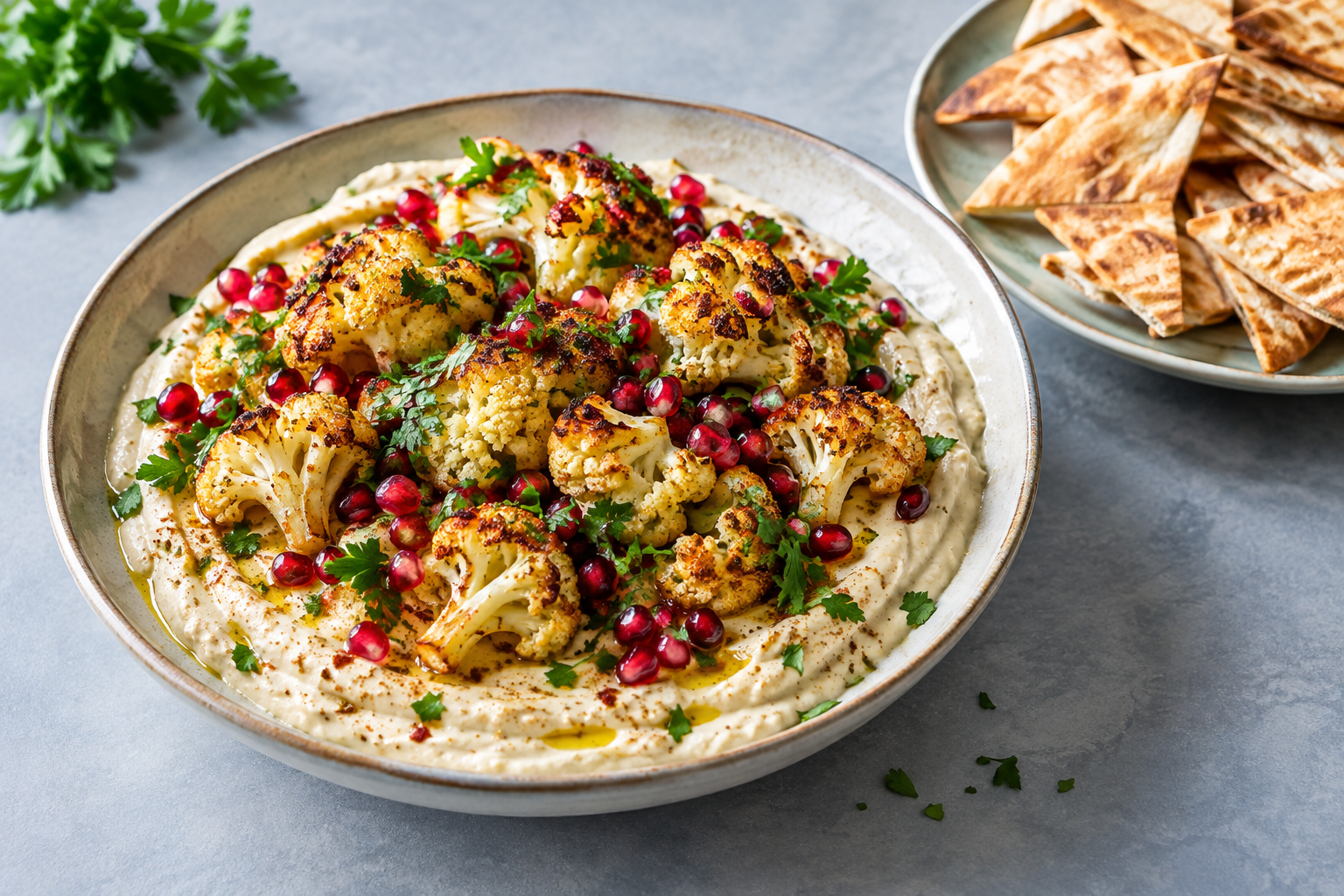
In this dish, cauliflower plays two roles: some of it is blended with tahini into a thick cream, while the rest remains recognisable as a roasted topping. That means it doesn’t taste like a smooth purée; instead, each bite gives you both soft, creamy cauliflower and florets with dark, lightly nutty edges. Lemon keeps the cream fresh, while cumin adds warmth without overpowering the vegetable. Pomegranate seeds bring juicy, slightly tart accents, and crispy pita adds a satisfying crunch.
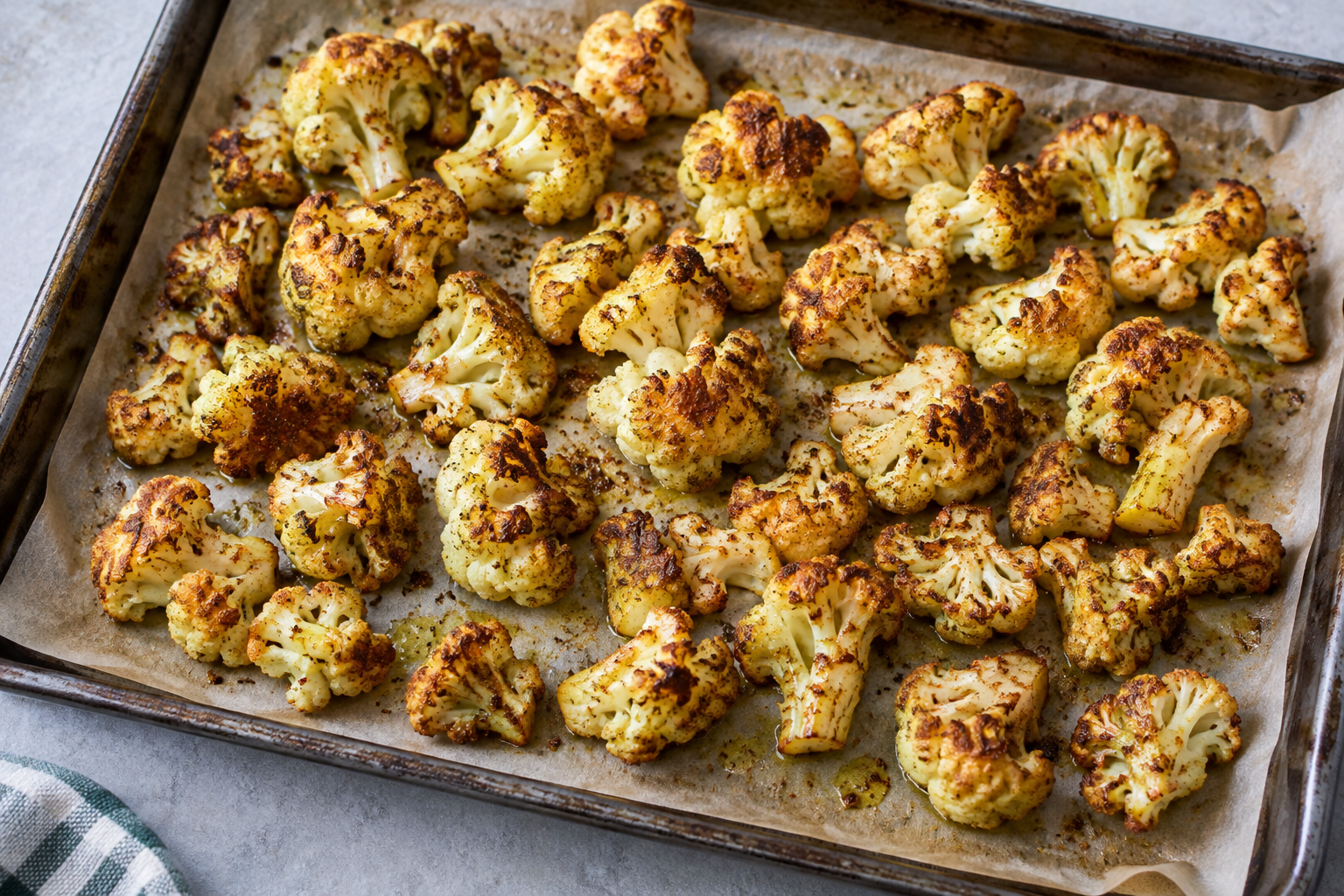
Roasting at a high temperature matters more here than boiling. In the oven, moisture evaporates from the cauliflower and the edges brown, while the inside becomes tender. Give the florets plenty of room on the baking sheet: if they’re crowded, they’ll steam rather than brown. Cut them to roughly the same size so they cook at the same time. Take the tray out of the oven as soon as the cauliflower is easy to pierce with a fork and has turned deep golden brown in several places; the exact time depends on your oven and the size of the florets.
Tahini makes the cream richer and adds a mild bitterness. First whisk the tahini with the lemon juice, garlic and a little water; then add the warm cauliflower. Start with a little water and add more until the immersion blender or food processor makes a thick, smooth cream. Tahini can be thicker or thinner depending on the brand, so the amount of water is a guide. No pomegranate at home? A few tablespoons of pomegranate molasses can add a tangy note, but use it sparingly. You can replace the pita with flatbread torn into pieces.
In the Netherlands, cauliflower is a familiar vegetable from summer through winter, but it’s available all year round. Choose a firm head with compact florets; a few small blemishes on the outer leaves are no reason to leave the whole cauliflower behind. Serve the cream lukewarm on a wide platter, topped with the roasted florets, parsley and pomegranate. Serve the pita alongside so it stays crispy. This works as a starter for four or as part of a spread with other vegetable and legume dishes. Store leftovers covered in the fridge and eat them within three days; keep the pita separate and briefly toast it again before serving.
 Main course

