ABOUT THIS RECIPEFrom roasted carrot to delicate tartare
Carrots have enough flavour of their own to take centre stage here: roasting makes them sweeter and gives them lightly caramelised edges. Leave the carrots whole or halve them lengthwise so they cook through without drying out. For this tartare, they should be soft enough to chop finely, but not so soft that they fall apart into a purée. A fork should slide in easily while the carrot still holds its shape.
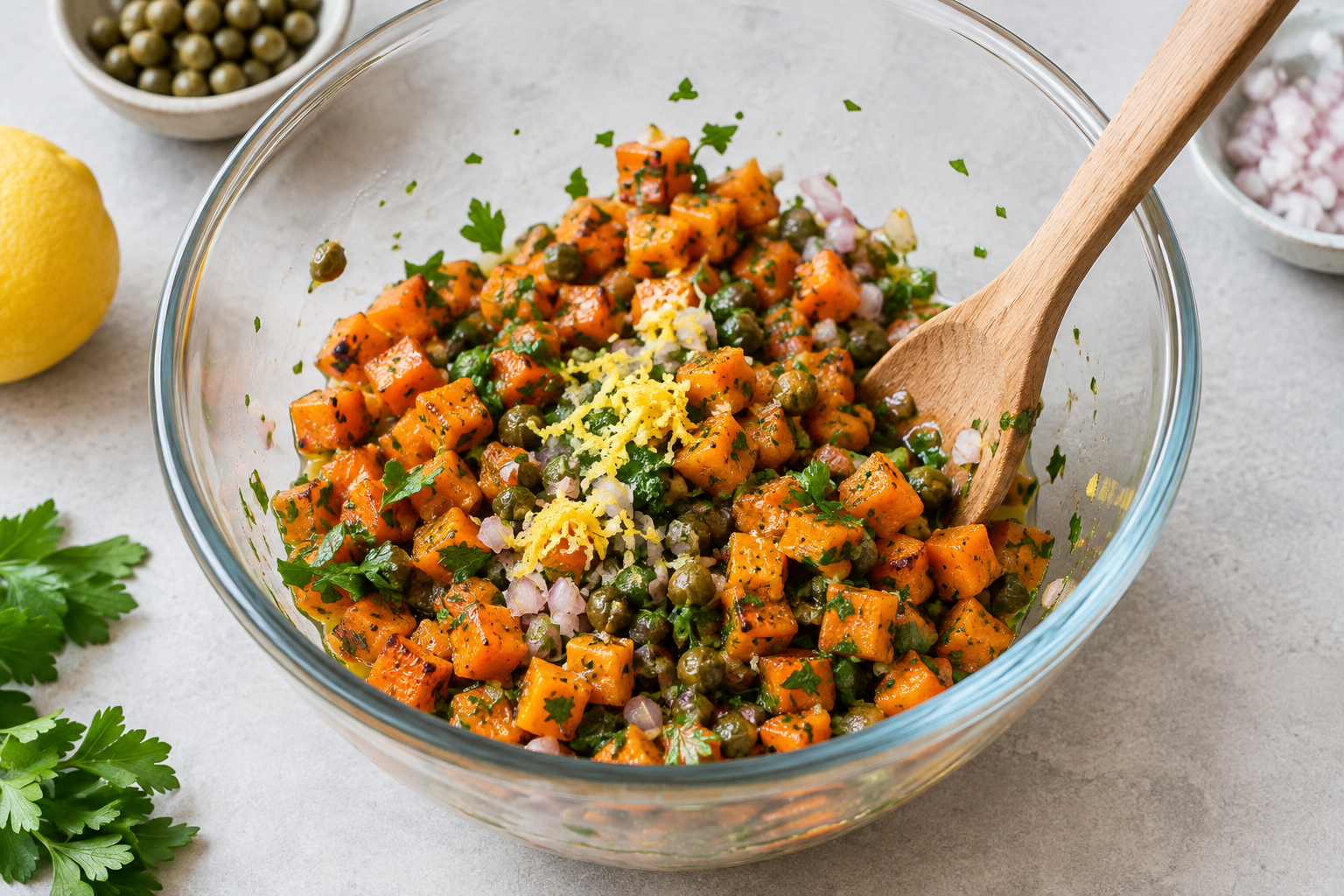
The contrast comes from a few small but bold additions. Capers bring salt and acidity; shallot adds a mild onion flavour, and lemon zest lifts everything without overpowering the carrot. Once the carrots have cooled, cut them into small dice with a sharp knife and mix gently. A food processor is less suitable here: it can quickly turn the texture mushy. Taste before adding extra salt, as capers vary in saltiness and may already provide enough flavour.
Parsley adds a fresh, herby note. Use flat-leaf parsley and chop it just before mixing so the leaves stay fresh. No parsley on hand? Chives work too, though the flavour will be milder and more oniony. You can replace the lemon zest with a little finely grated orange zest for a rounder citrus aroma, but keep the amount small. Olive oil brings the ingredients together; add it gradually so the tartare turns luscious without becoming glossy with oil.
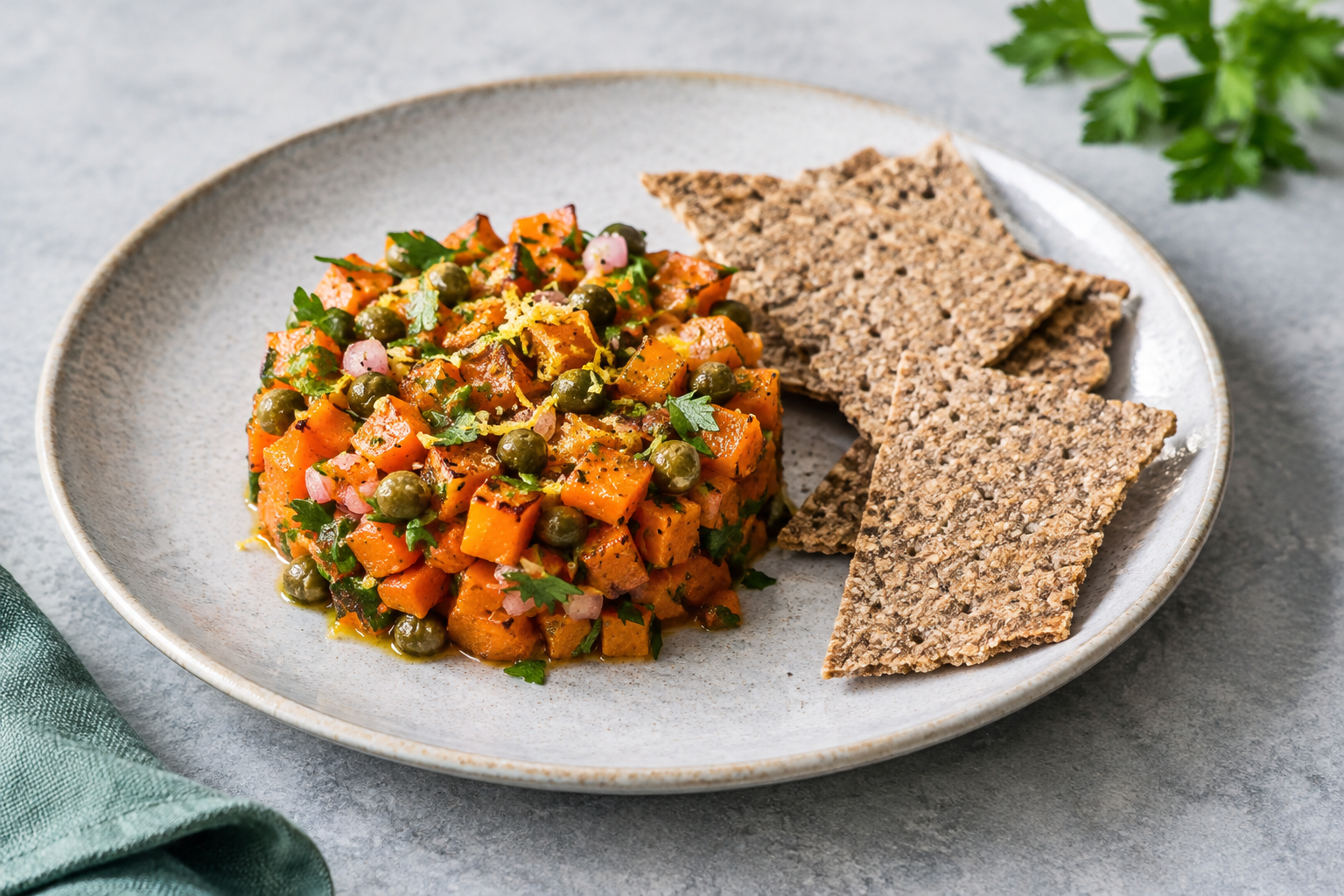
Thin rye crackers provide a dry, crisp contrast to the soft carrot. Roll the dough out evenly and thinly, then prick it all over; this helps it bake evenly and makes crackers that snap easily. Keep an eye on the edges while they bake, as they brown sooner than the middle. For a quicker version, use thin store-bought rye crackers. Serve the tartare straight away on small plates, or use a ring mould to shape it into a neat mound and arrange the crackers alongside. A simple green salad goes well if you’d like to make the starter a little more substantial.
 Main course

