ABOUT THIS RECIPECrisp Bread, Spiced Syrup and Salty Cheese
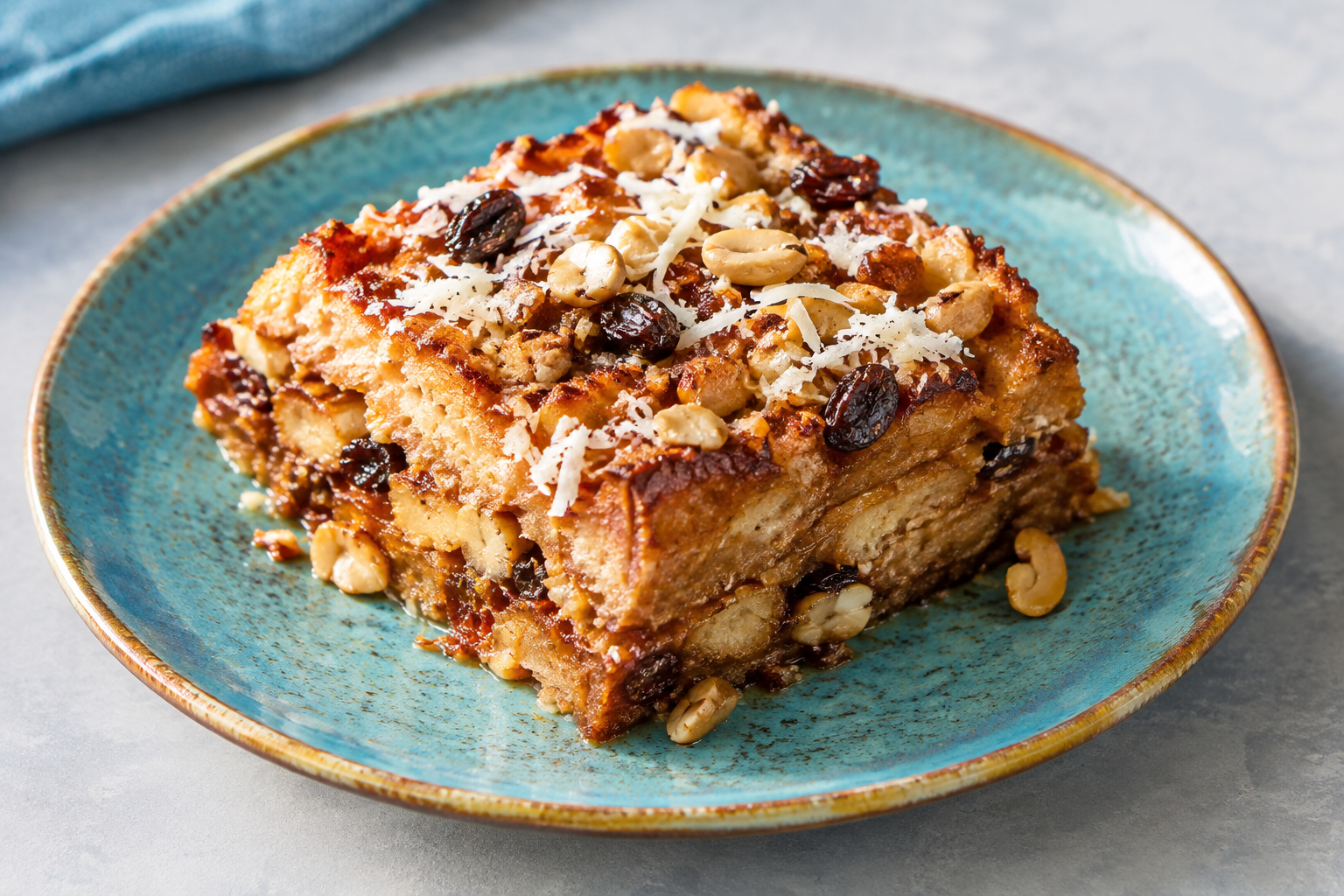
Capirotada is a Mexican bread pudding often associated with Lent. There’s no single set way to make it: the types of bread, cheese and other additions vary by region and household. The basics are familiar: bread is layered and covered with a syrup made from piloncillo and cinnamon. Raisins, peanuts and cheese add sweet, earthy and salty notes to this version. It’s this combination that makes the dessert different from a pudding made with custard or milk.
Piloncillo is unrefined cane sugar, often sold in compact cones. It dissolves in hot water to make a dark syrup with a caramel-like flavor. Break up or grate the cone to help it dissolve faster. If piloncillo isn’t available, use dark brown sugar; the flavor will be a little less pronounced, but the syrup will still work. A cinnamon stick gently infuses the syrup, adding fragrance without making the pudding taste strongly of spices. You can add a couple of cloves, but they’re not essential.
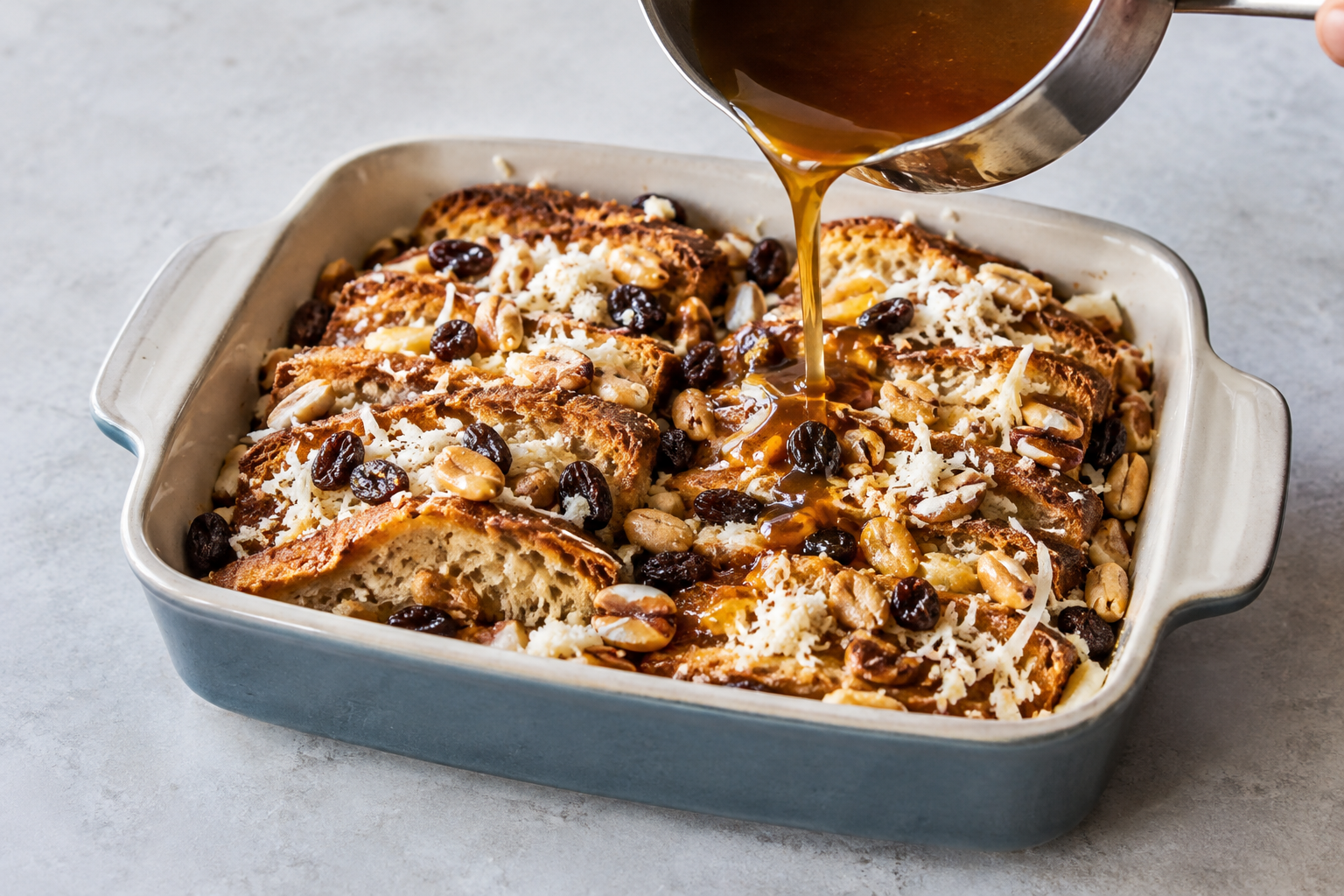
Firm white bread, ideally a day old, works well because it holds its shape when the syrup is added. Bolillo is a good Mexican bread choice; a firm baguette or another compact white bread works too. Thin, soft sandwich bread falls apart more easily. Toasting the slices first dries them out a little, helping the edges brown in the oven. Pour the syrup over the layers gradually: the bread should become moist, but not be left swimming in a pool of syrup.
The cheese provides the striking salty contrast. Different cheeses are used in capirotada, depending on the region and what’s available. Queso añejo or Cotija has a robust, salty flavor; crumble or grate it between the layers. Feta is a practical substitute, though it tastes a little more sour. It’s best not to use a large amount of young, mild cheese: its flavor quickly disappears among the sweet syrup and bread. Peanuts add crunch; unsalted roasted peanuts make it easier to keep the balance just right.
Serve the capirotada warm or at room temperature, in small pieces: it’s sweet and quite filling. The top is crispiest soon after baking; the bread softens after storage. Refrigerate leftovers in a sealed container within two hours and eat them within three days. Reheat portions thoroughly in an oven at 160 °C, covered with foil so the top doesn’t get too dark. You can serve a little extra cheese on the side, but fresh fruit isn’t needed to balance the bold flavors.
 Main course

