ABOUT THIS RECIPEFreshness alongside sweetness and roasted flavours
Bulgur is wheat that has been parboiled, dried and cracked. The coarse grains stay firm and separate after cooking, making them a good match for roasted vegetables and a creamy sauce. Choose medium or coarse bulgur for this pilaf; fine bulgur absorbs liquid faster and can turn mushy with the same amount of stock. Cooking times vary by brand, so check the package instructions too, and taste before taking the pan off the heat.
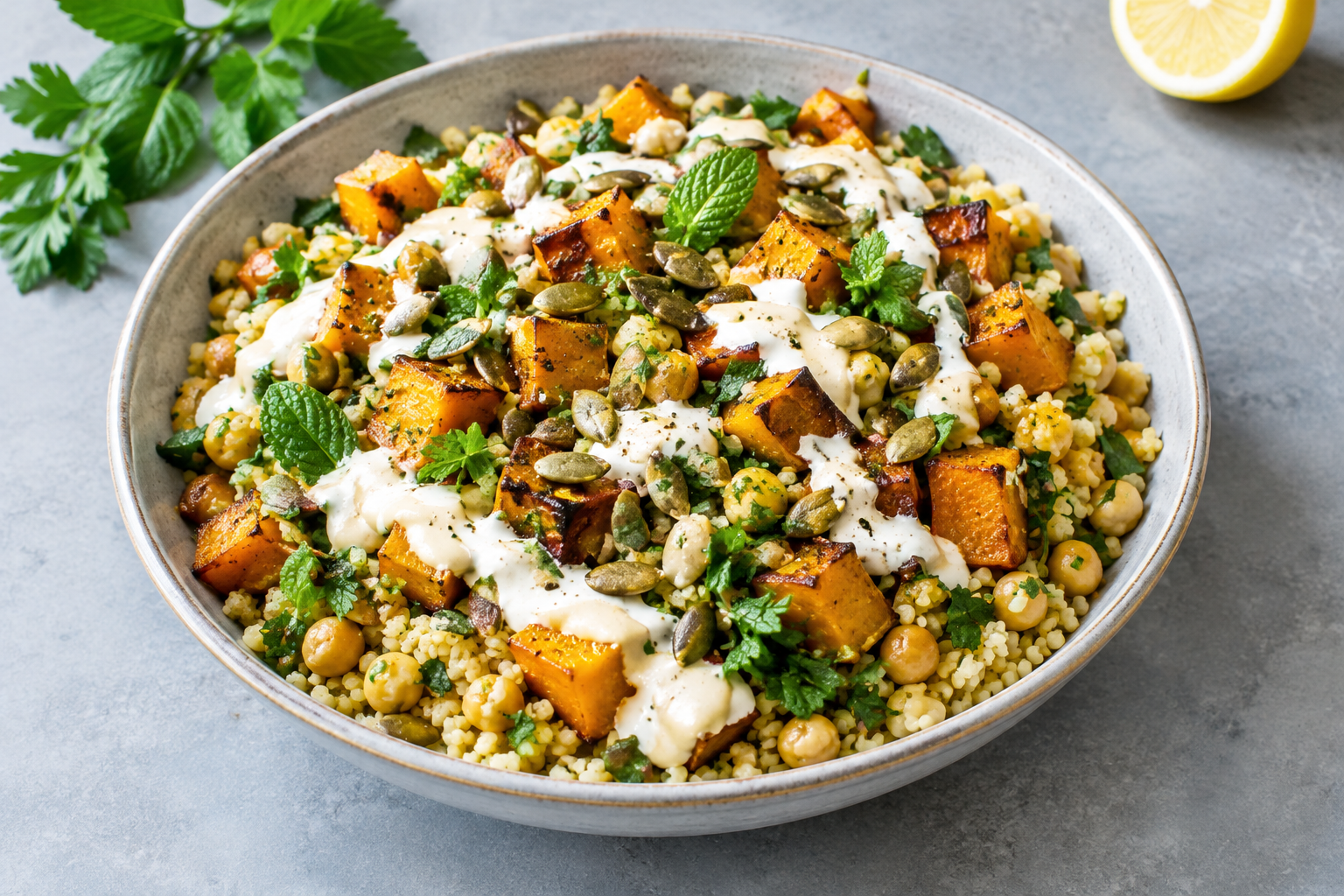
Pumpkin develops sweet, roasted edges in the oven while the flesh softens. This makes it a good counterpoint to the earthy bulgur and savoury chickpeas. Pumpkin is widely available in autumn and often keeps for a while; butternut squash is easy to peel, while smaller Hokkaido pumpkins can usually be roasted with their skin on. Cut the pieces to roughly the same size so they cook evenly. Leave space between them on the baking tray: if they’re too close together, they’ll steam rather than brown.
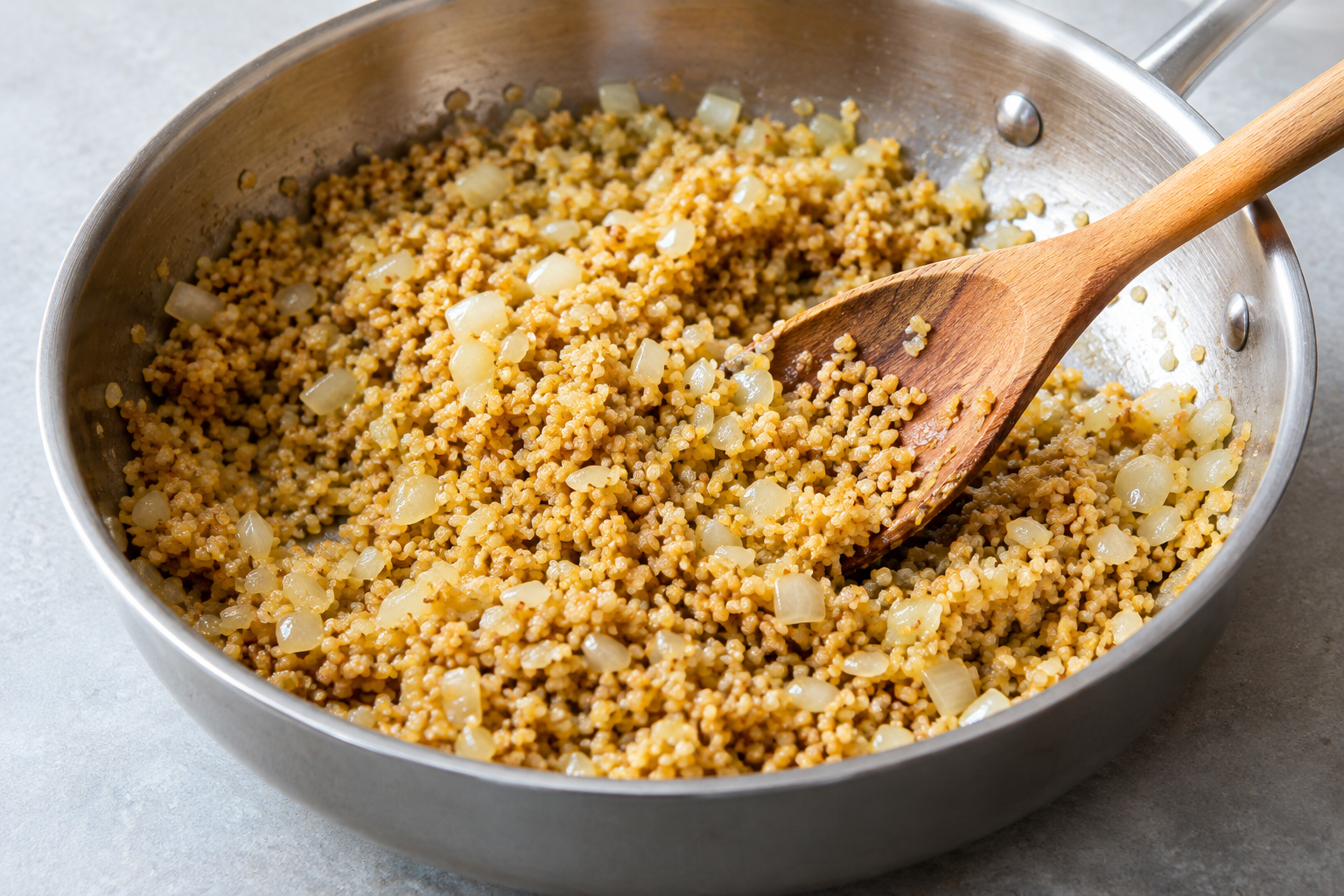
The pilaf method gives the bulgur flavour before it cooks through. Tossing the grains briefly with fried onion and oil coats them and gives the onion a chance to release its sweet, savoury flavour. Then the grains cook gently in stock. Don’t stir constantly; this can damage the grains and makes it harder to tell whether the liquid has been absorbed. Leave the bulgur covered for a little while after cooking, then gently fluff it with a fork.
Lemon, parsley and mint provide a fresh counterpoint. Use plenty of herbs and chop them just before mixing them in, so their aroma stays bright. No fresh mint on hand? Use extra parsley. The tahini-yogurt sauce makes the dish creamy with a slight nuttiness; stir in water a little at a time until it’s pourable. Thick or firm tahini may need a little more water. Plant-based yogurt works too, preferably an unsweetened variety with a mild flavour.
Serve the pilaf as a meal on its own, with the sauce drizzled over it or on the side so everyone can add as much as they like. The pumpkin seeds add a pleasing crunch; toast them briefly in a dry frying pan and keep an eye on them, as small seeds colour quickly. You can cover and refrigerate leftovers within two hours and use them within two days. Store the sauce separately if possible; heat the pilaf through thoroughly and, ideally, add the fresh herbs only after reheating.
 Main course

