ABOUT THIS RECIPECoconut, root vegetables and sago in every spoonful
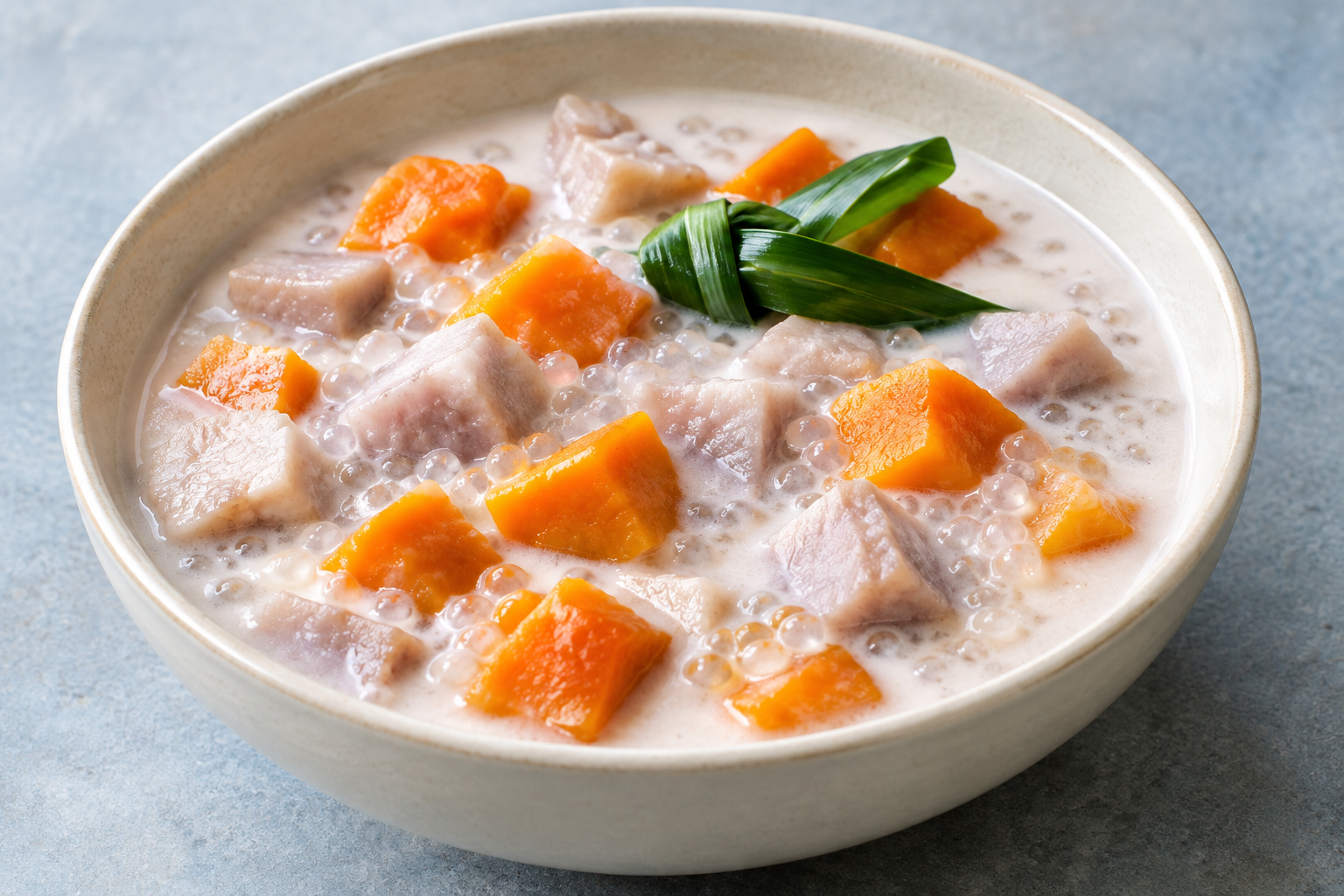
Bubur cha cha is a Malaysian dessert that can be served hot or cold. Its base is creamy coconut milk with tender pieces of root vegetables and sago—small, translucent pearls with a slippery, slightly springy bite. Sweet potato adds a rich, earthy sweetness; taro has a milder flavor and a somewhat firmer, crumbly texture. Together, they make this dessert less one-note than a smooth pudding.
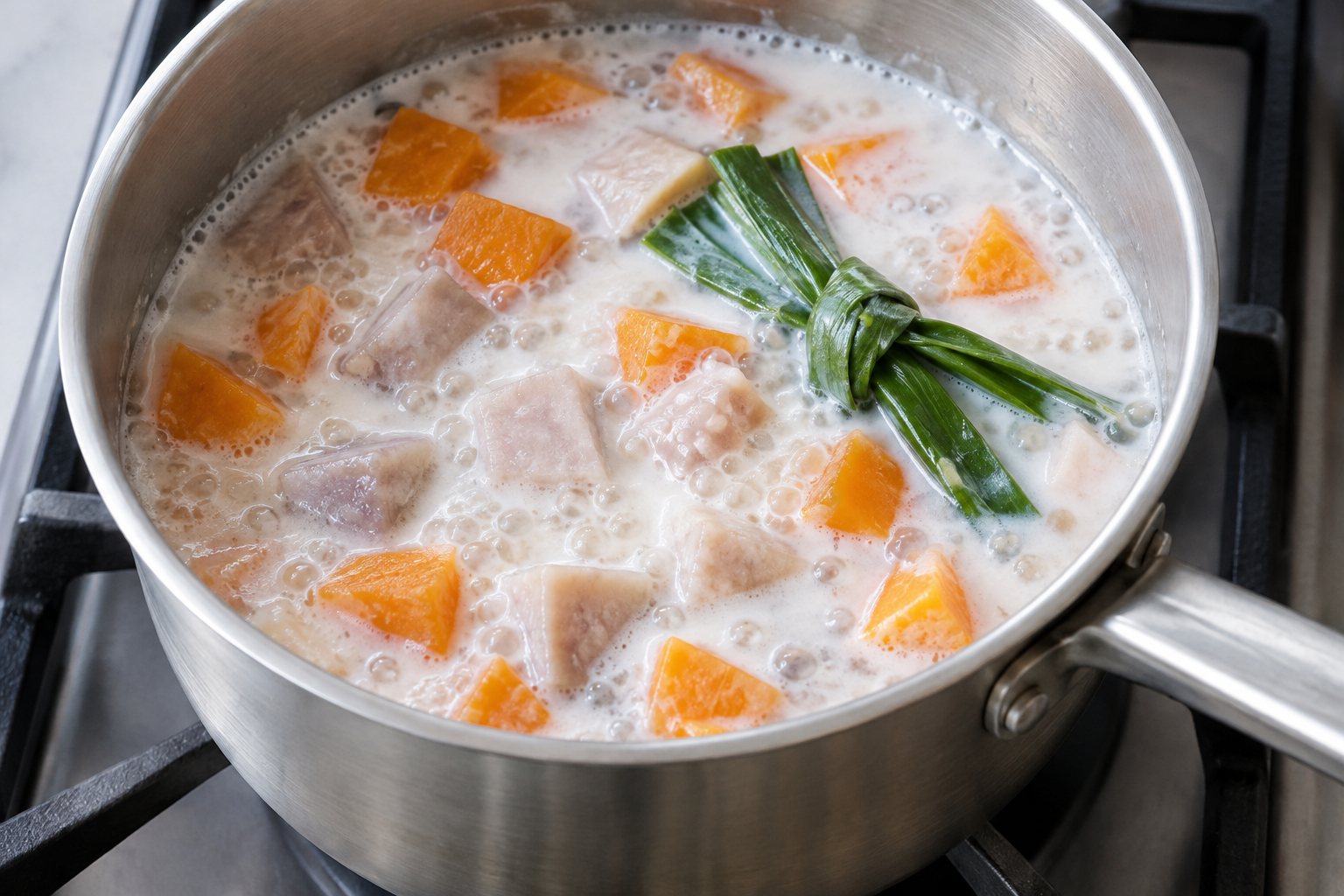
Pandan gives the coconut broth its distinctive fragrance. A bruised leaf tied in a knot releases its flavor as it heats, and is easy to remove from the pan afterward. Fresh pandan isn’t available in every supermarket; where possible, use frozen pandan from an Asian grocery store. Leave it out if you can’t find it rather than adding another strong flavor. A small pinch of salt helps balance the sweetness of the coconut and sugar.
Cook the root vegetables in water first, not in the coconut milk. That way, you can cook them until tender without heating the coconut broth for too long; otherwise, it may thicken or stick to the pan. Cut the pieces to roughly the same size, but cook the sweet potato and taro separately: they don’t always become tender at the same time. Check with the tip of a knife. The cubes should be soft but still hold their shape when lifted from the water.
Sago needs a different approach from the root vegetables. Cook the pearls in plenty of water and stir regularly so they don’t stick to the bottom. Small sago is ready when the pearls are mostly translucent; a tiny white dot in the middle may disappear as they finish cooking off the heat. Cooking time varies by brand, so follow the package instructions too. Briefly rinse the cooked pearls to wash away excess starch before stirring them into the coconut broth.
The choice of root vegetables and colorful additions varies from one version of bubur cha cha to another. You can replace some of the sweet potato with another variety of sweet potato, but keep the taro for its own soft, slightly crumbly texture. Serve small bowls for dessert, for example after a meal with spicy or savory flavors. The coconut broth is thinner and fragrant when warm; it thickens as it cools. Store leftovers covered in the refrigerator and reheat them gently with a splash of water if the coconut has thickened.
 Main course

