ABOUT THIS RECIPEFrom Day-Old Brioche to Golden Bostock
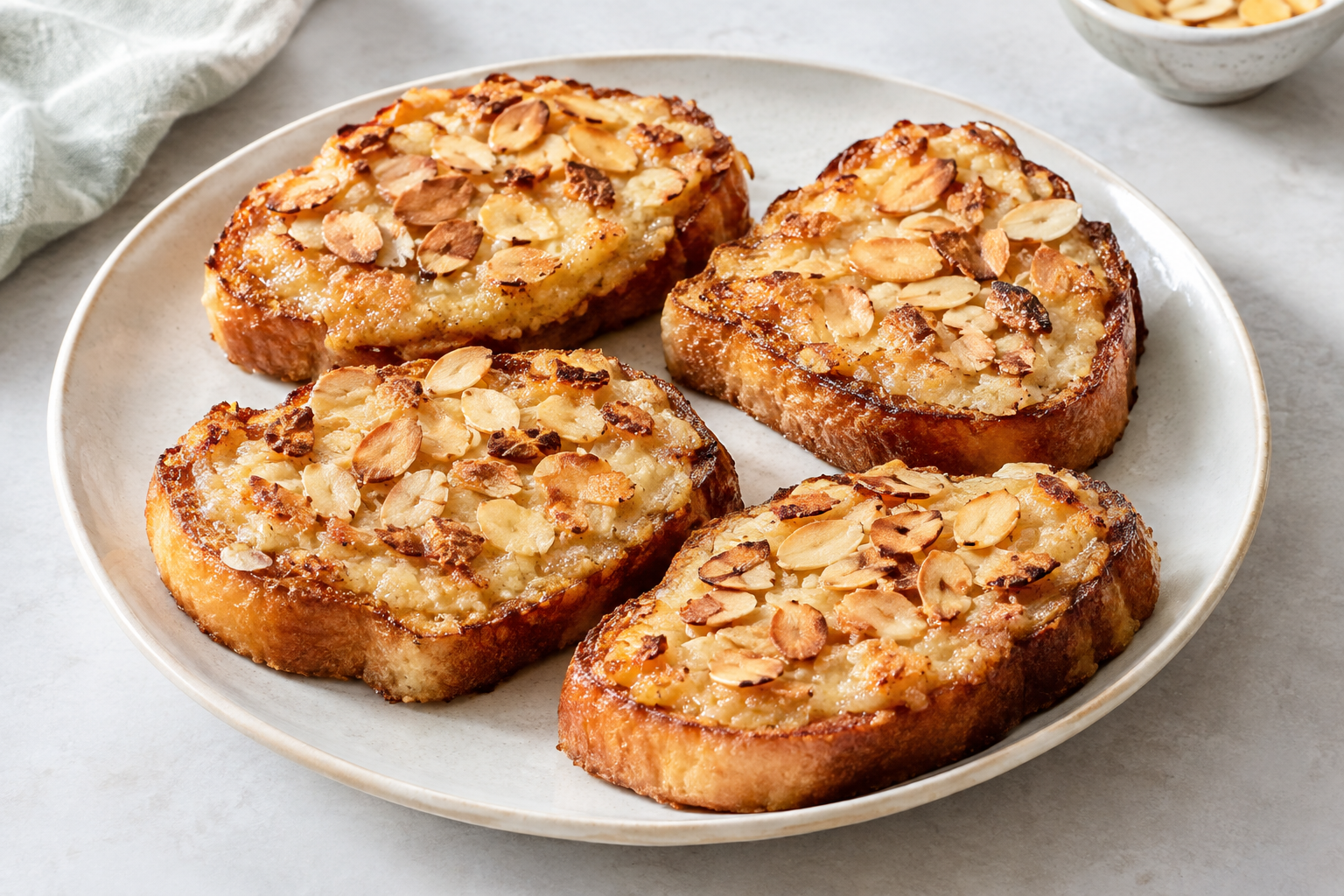
Bostock is a French bakery classic made with brioche, sugar syrup and almond cream. It’s a handy way to use brioche that’s no longer at its best for eating as is: the bread soaks up a little syrup and stays tender as it bakes. The almond cream, often called crème d’amande, forms a soft, rich layer on top. Sliced almonds add a thin, crisp crust. The result falls somewhere between toast and pastry, and is richer than a plain slice of toasted bread.
Use day-old brioche, preferably cut into slices about two centimetres thick. Fresh bread works too, but it’s more delicate and absorbs the syrup faster; brush it gradually rather than dipping it in the syrup. The syrup doesn’t need to thicken: dissolving sugar in water is enough. Bring the liquid briefly to a boil and let it cool before brushing it onto the bread. This makes it easier to control the amount and prevents the brioche from getting too wet.
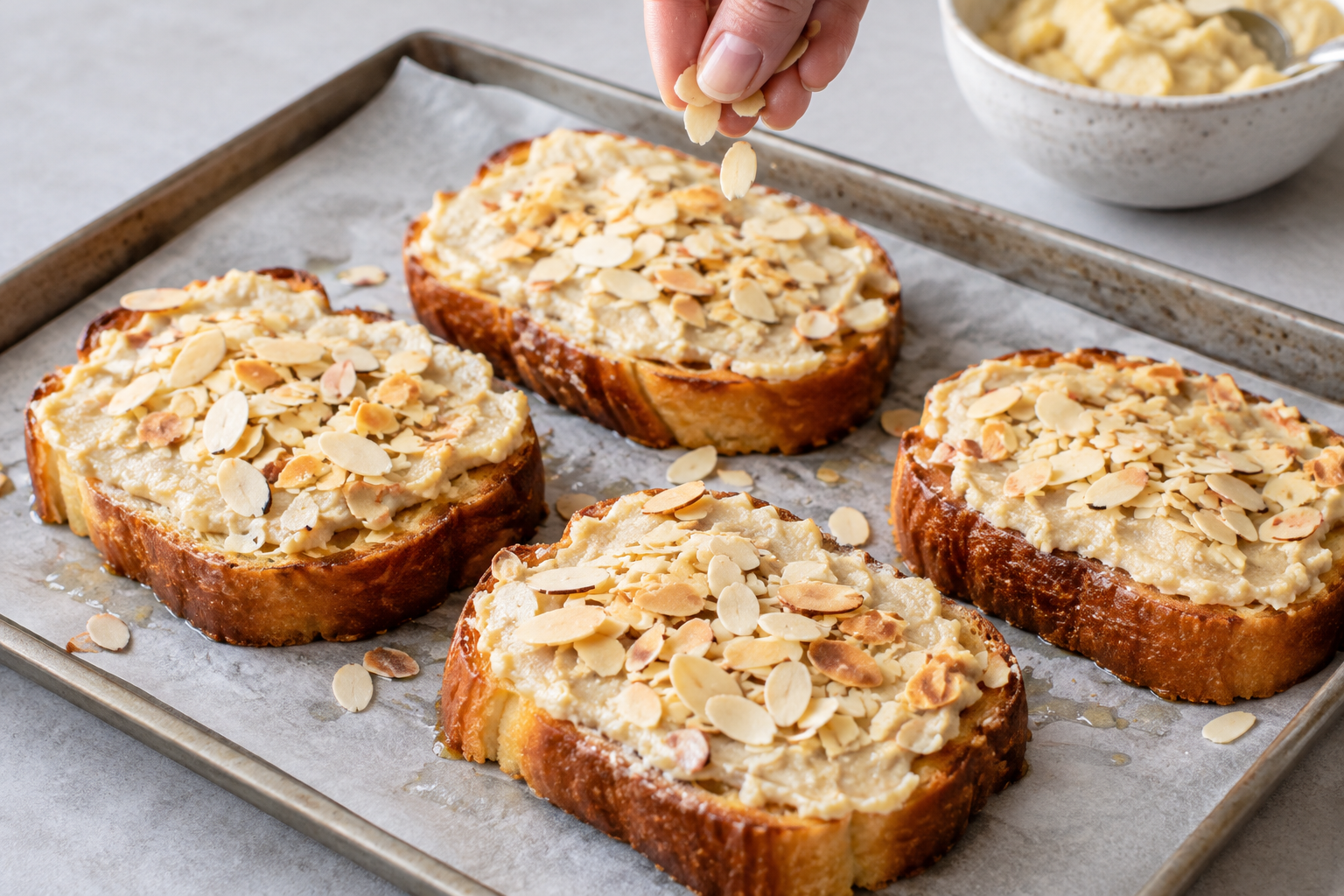
For the almond cream, stir softened butter with sugar, egg and ground almonds until you have a spreadable mixture. Don’t beat it for a long time until fluffy: a smooth cream that stays on the brioche is just what you want. A pinch of salt balances the sweetness. If the butter is still cold, cut it into small cubes and let them come to room temperature briefly; don’t melt the butter, or the cream will be runny. Both almond flour and finely ground blanched almonds work well.
Bake the bostock on a baking sheet until the cream is set and golden brown. The baking time depends on the thickness of the bread and your oven, so keep an eye on the top: it should turn golden, but not dark brown. Sliced almonds toast quickly; scatter them over the cream so they develop flavour and colour as they bake. Let the slices rest for a few minutes after taking them out of the oven. The syrup will be hot and the almond cream still soft.
Serve bostock for breakfast or with coffee, optionally with plain yogurt and fruit for a fresh contrast. A little lemon zest in the almond cream also works, but it isn’t a necessary addition to this classic version. Once cooled, store leftovers covered in the refrigerator and eat them within two days; warm them briefly in an oven at 160 °C to crisp up the top again. The microwave will make the bread softer.
 Main course

