ABOUT THIS RECIPEA crust that takes patience
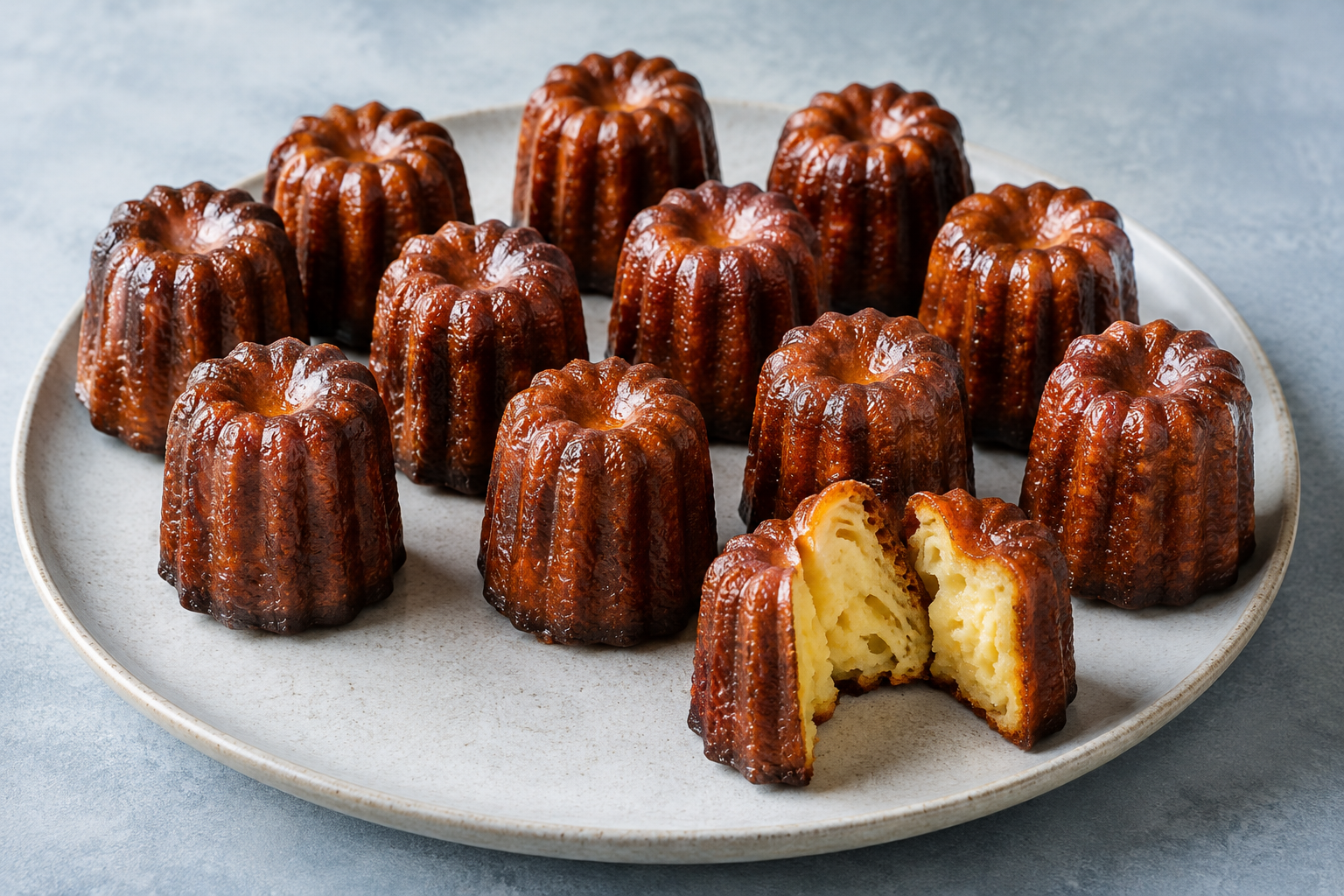
Canelés are associated with Bordeaux and are recognizable by their tall, ridged shape. The flavor is built from simple ingredients: milk, vanilla, sugar, flour, egg, and a splash of rum. In the oven, the outside slowly caramelizes while the moist batter stays soft inside. That contrast is what makes the texture interesting; a canelé shouldn’t be light and cake-like all the way through. The rum adds warmth and depth, but shouldn’t overpower the vanilla.
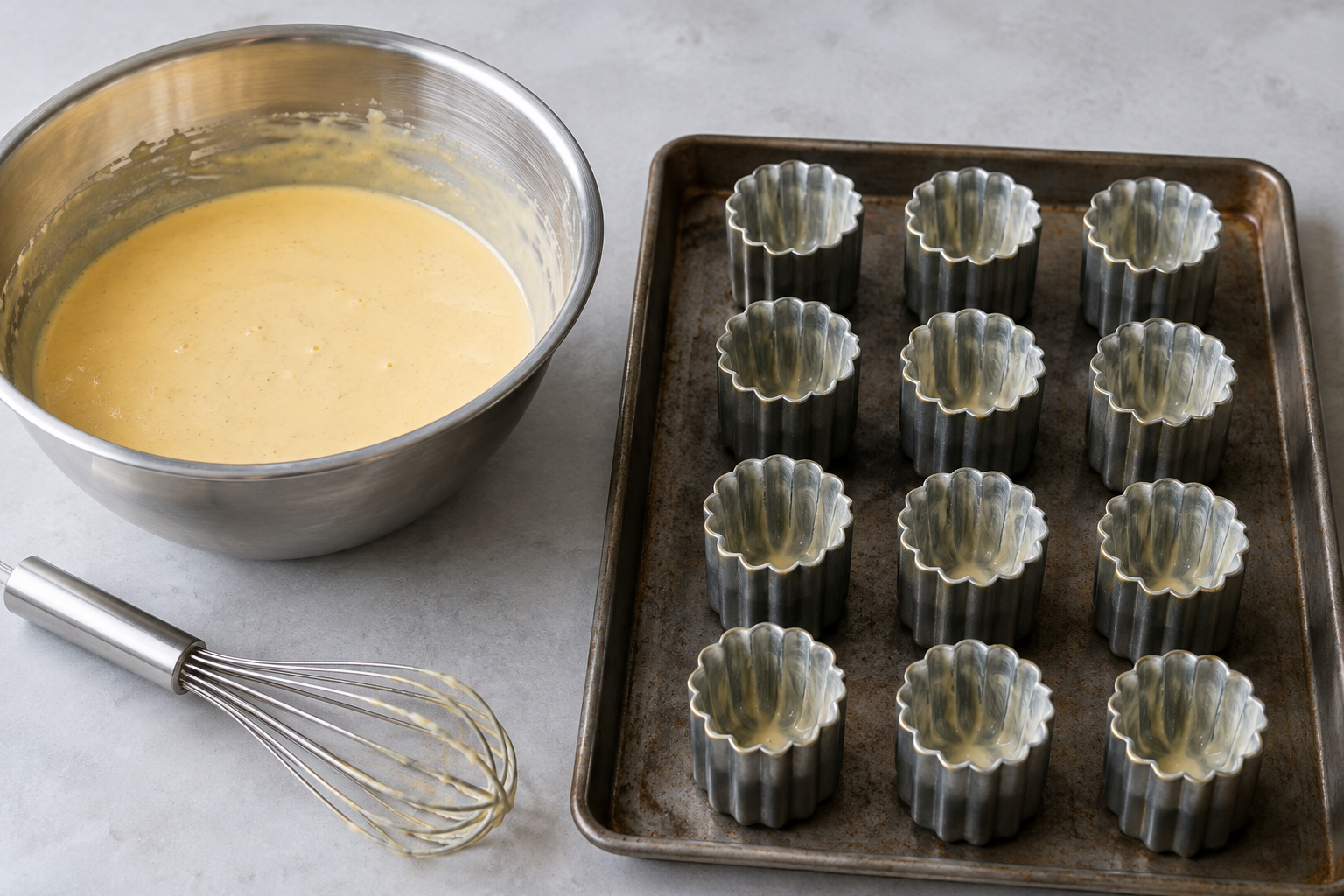
The batter’s resting time isn’t a step to skip. During at least twelve hours in the refrigerator, the flour absorbs the liquid and the batter develops a more even texture. A resting time of about 24 hours is practical if you want to work ahead. Gently stir the batter after it has rested; don’t whisk it until airy, as incorporating too much air can make the pastries rise unevenly. Let the batter come to room temperature briefly just before filling the molds, so it’s easier to pour.
Metal canelé molds give the pastries their distinctive ridges and generally bake the crust more evenly than silicone molds. Grease them carefully with softened butter, including the grooves, but don’t leave any pools of butter. Set the molds on a baking sheet so you can move them safely. The high oven temperature at the beginning helps the outside brown quickly; then a lower temperature allows the inside to cook without the crust burning right away. Ovens vary, so check the color toward the end: deep mahogany brown is what you want, not black.
A vanilla bean gives a rounded, distinct vanilla flavor. Scrape the seeds into the milk along with the pod, then remove the pod before mixing. A teaspoon of vanilla extract can be used instead, but add it only after taking the milk off the heat. Dark rum is customary in this flavor profile; use a slightly smaller amount if you want the vanilla to take center stage. For an alcohol-free version, you can leave out the rum, although the flavor will be less pronounced.
Serve the canelés on the day they’re baked. That’s when the crust is at its crispest and gives the clearest contrast with the soft center. They go well with coffee or black tea and are small enough to serve as dessert after a meal. Store leftovers covered at room temperature and expect the crust to soften. Reheating can make the outside a little drier again, but won’t fully restore the original contrast.
 Main course

