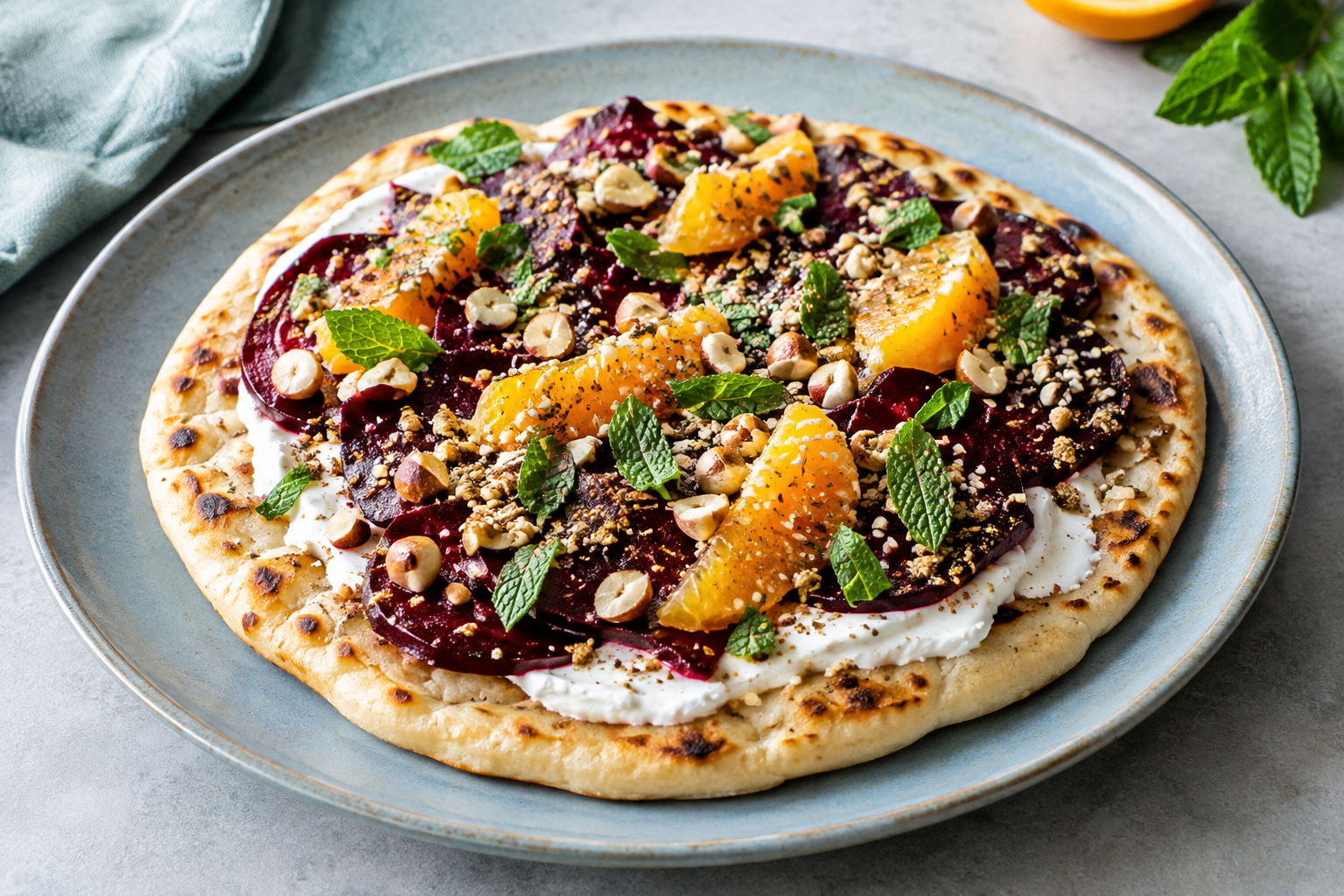
ABOUT THIS RECIPEEarthy, Creamy and Crunchy
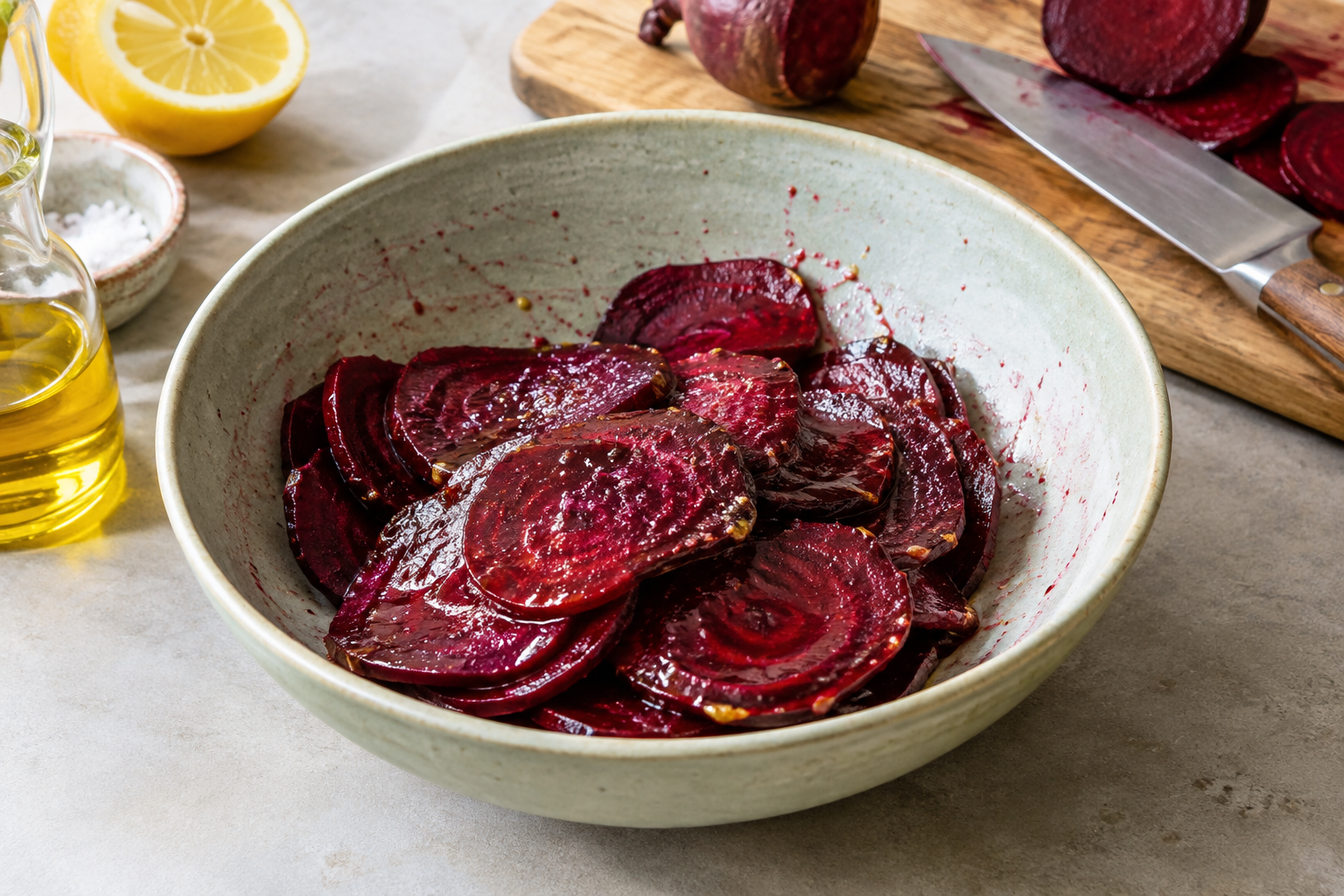
Beetroot has an earthy flavor and becomes sweeter and more concentrated when roasted. Roasting the beets whole keeps them juicy; their skin protects the flesh from drying out. The cooking time depends on their size: small beets are done sooner than large ones. A thin knife should slide in without much resistance. Let them cool until they’re easy to handle, then cut them into thin slices so they sit neatly on the flatbread.
In the Netherlands, beetroot is mainly in season in late summer and fall, but it’s available for much of the year. Choose beets that are about the same size so they cook more evenly. Orange adds juicy, sweet-and-sour fruitiness to balance the earthy beets; lemon juice makes the labneh and the whole dish taste fresher. Cut the segments over a bowl if you want to catch the juice, and spoon it over the beets if you like.
Labneh is strained yogurt with a thick, slightly tart texture. Store-bought labneh works well; Greek yogurt is a good alternative, though it’s often a little less firm. If you want to strain the yogurt, do this ahead of time in a strainer lined with a clean cloth in the fridge. The flatbreads are only warmed: this keeps them soft and pliable without melting the cool labneh. A skillet is handy, but an oven works too.
Dukkah gives the soft bread a dry, crunchy contrast. The mixture of nuts, sesame and spices is coarsely chopped, not ground into a powder, so you still get distinct pieces. Hazelnuts can be replaced with almonds. Toast the nuts, sesame and spices briefly and separately, because small seeds brown faster than nuts. Take them out of the pan as soon as they become fragrant and let them cool before chopping them finely.
Serve the flatbreads as a lunch to share, with extra orange segments or a simple green salad on the side. Add the dukkah to the dish at the very last moment so it stays crunchy. It’s best to store leftovers separately, covered, in the fridge; use the roasted beets within three days and follow the storage instructions on the labneh packaging. Reheat the flatbreads just before serving, then add the toppings.
 Main course

