ABOUT THIS RECIPEBriny, creamy and crunchy in one shell
Oysters have a soft, briny flavor of their own, so they don’t need many additions. White miso adds savory umami and a mild fermented flavor; lemon zest keeps the butter fresh. Panko gives a lighter, coarser crumb than fine breadcrumbs and browns quickly under the broiler. Since miso is already salty, you usually don’t need to add salt to the butter. Taste the miso first: some varieties are more pronounced than others.
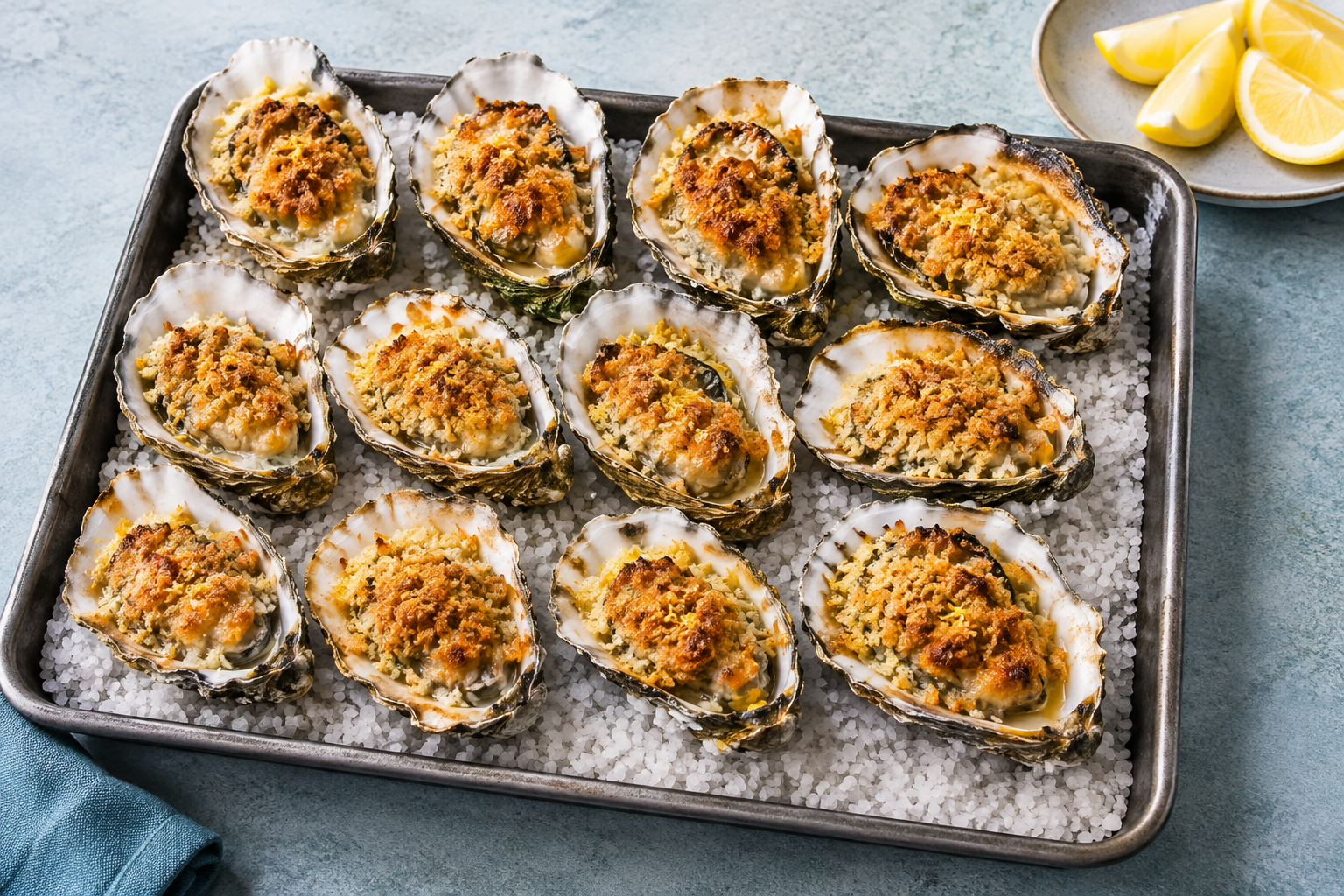
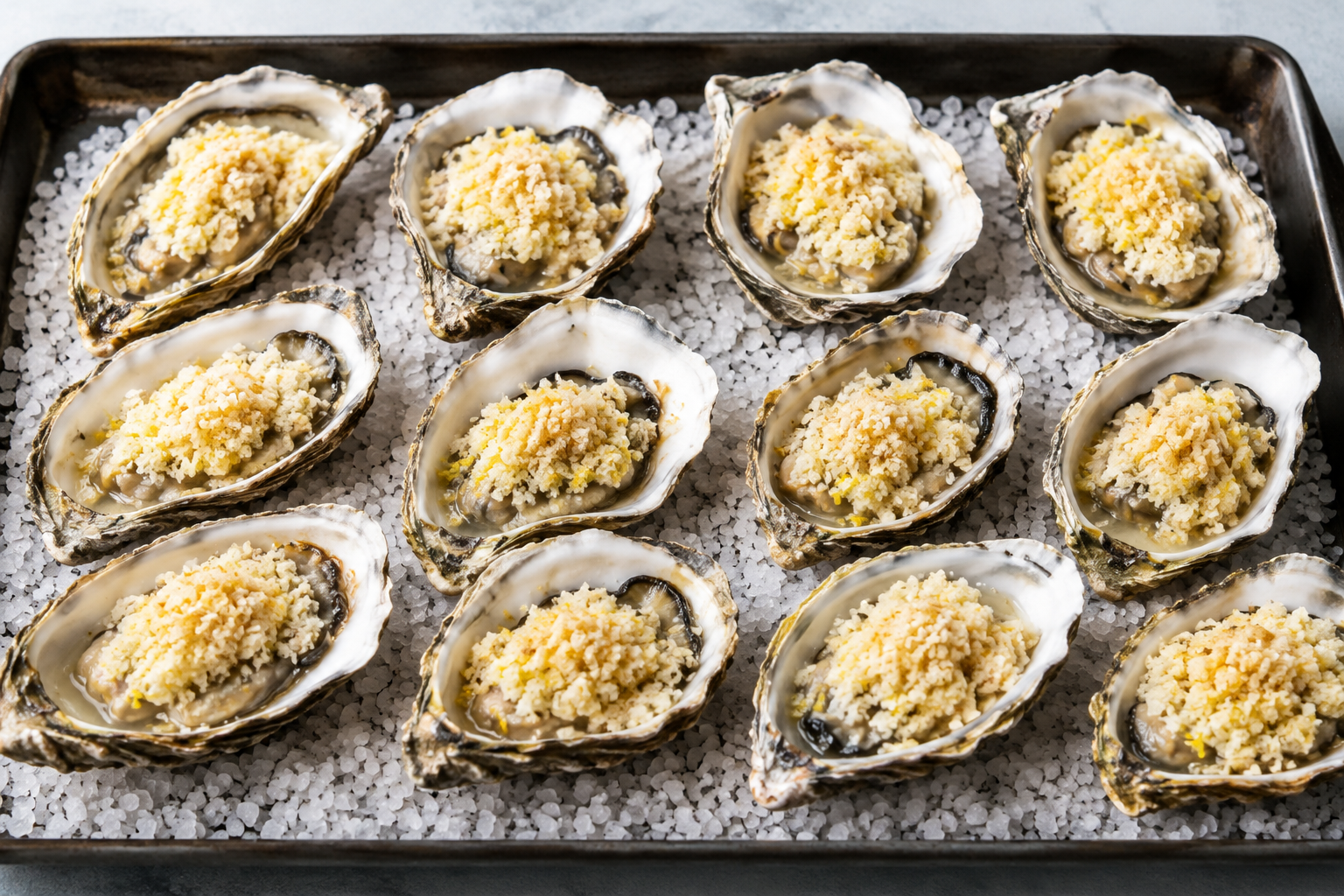
The butter should be soft, but not melted. That way, you can stir in the miso and lemon evenly, and the mixture will stay on the oysters. Under a hot broiler, the panko browns quickly while the oyster itself is heated only briefly. Keep an eye on the tray and take the oysters out as soon as the crumbs are golden brown and the oysters are hot. Baking them for too long makes the flesh firm and less juicy.
Buy live oysters from a trusted fishmonger and keep them chilled until just before using. Don’t use any shells that are broken; tap shells that are open and discard any that don’t close. Open the oysters with an oyster knife and a sturdy towel, keeping the flat side up and leaving the liquid in the shell. If you’re having trouble opening them, ask the fishmonger to open them for you and keep them chilled until you’re ready to cook. Work cleanly and serve them as soon as they’re baked.
White miso is mild and works well here, but another light miso will also do; bear in mind that the flavor and saltiness can vary. If you don’t have panko, use coarse breadcrumbs, though the topping will be a little denser. For an extra fresh touch, serve lemon wedges at the table. Serve three oysters per person as a small starter, for example before a vegetable dish or a meal with rice. The miso butter is flavorful enough; an extra sauce or garnish is more likely to distract than add anything.
 Main course

