ABOUT THIS RECIPEBalancing Peppers and Molasses
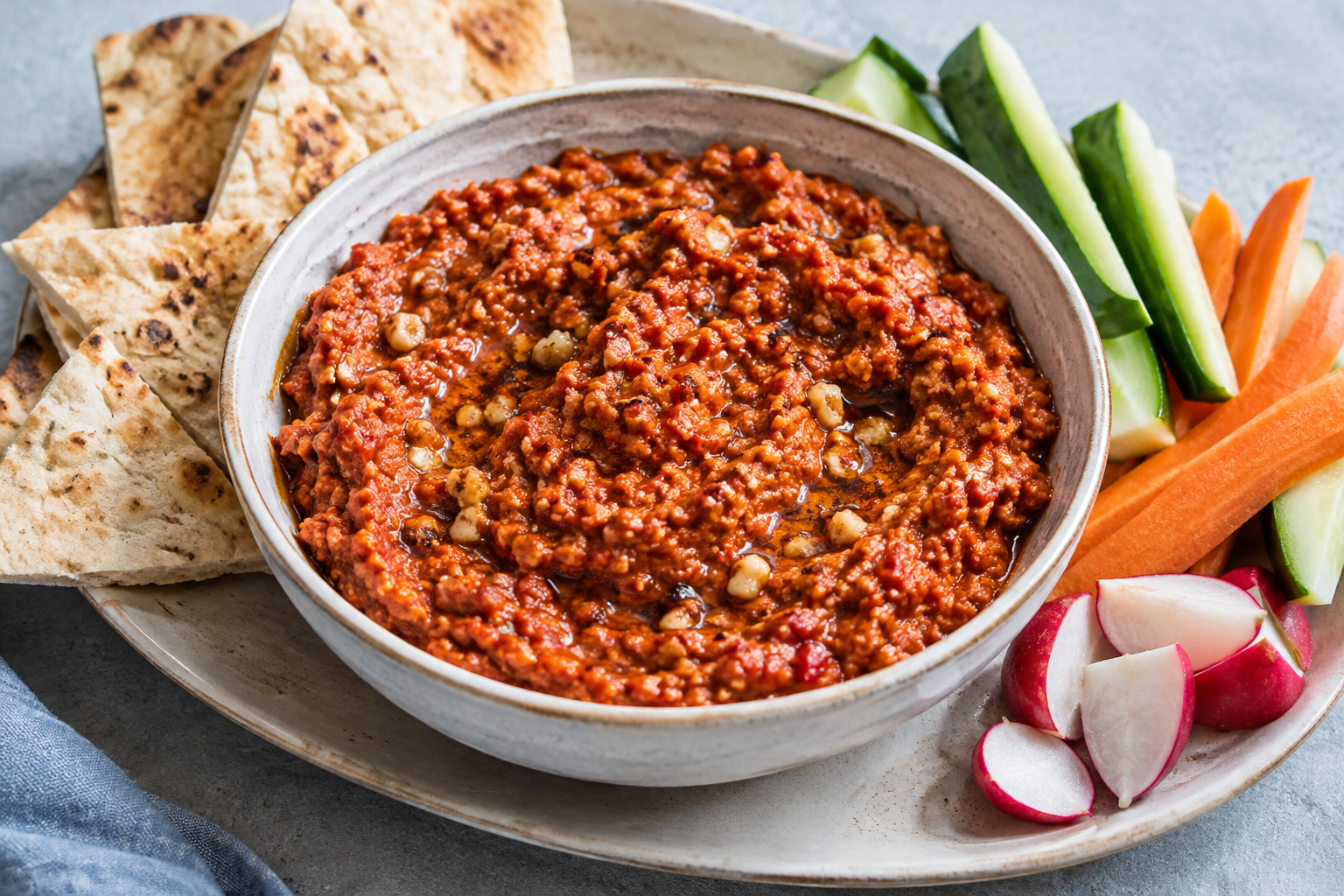
Muhammara is associated with Aleppo in Syria and is now found on mezze tables everywhere. The base is simple, but the flavour depends on the balance between sweet, roasted peppers, earthy walnuts and pleasantly tart pomegranate molasses. Cumin adds warmth; Aleppo pepper brings a mild, fruity heat. The dip shouldn’t be smooth and uniform: a coarse texture keeps the walnuts distinct and gives each bite some crunch.
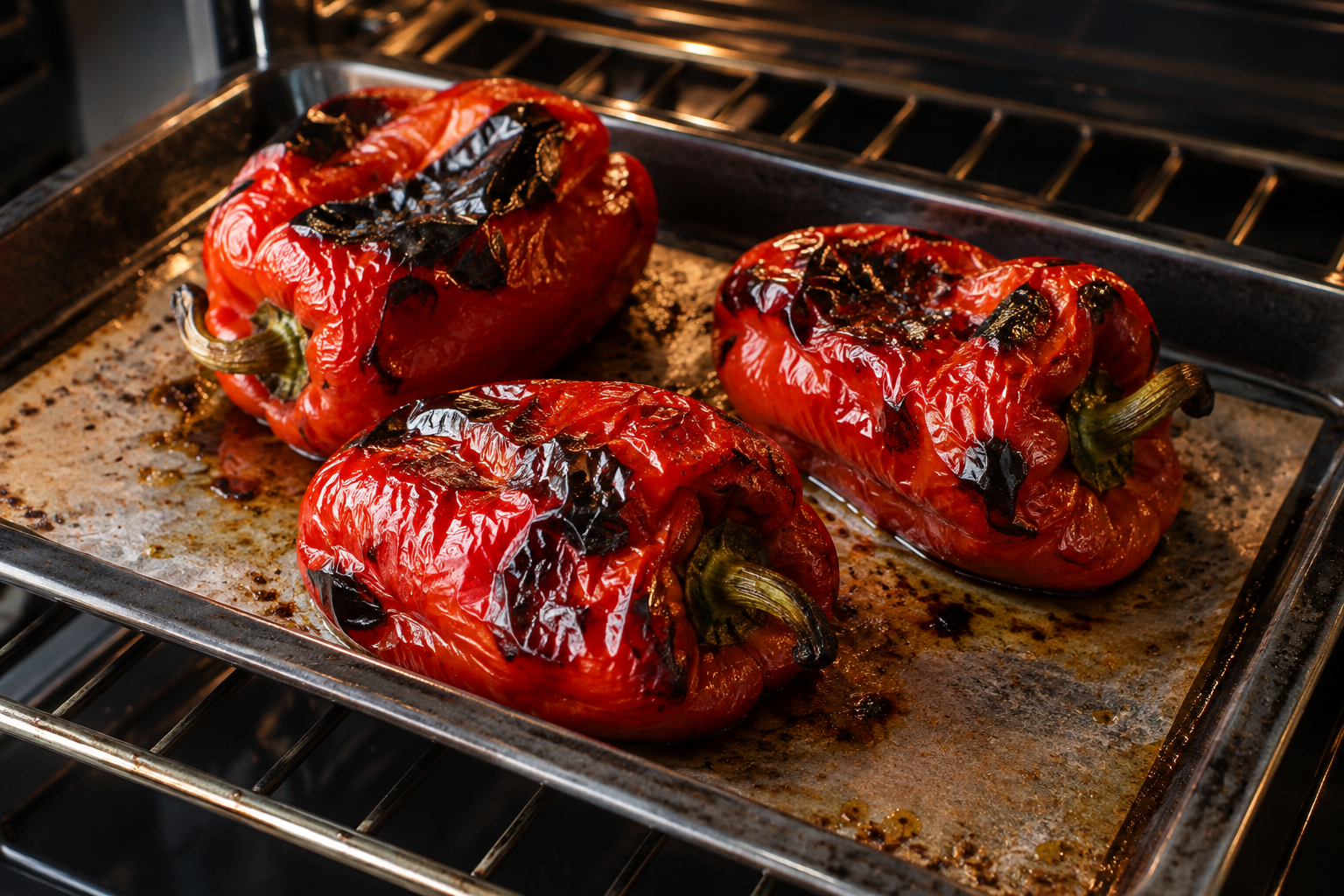
Roasting fresh red peppers is well worth the effort here. In a hot oven, the skins blister in places and the flesh turns soft and sweet. Cover the peppers after roasting and let them steam; this makes the skins easier to peel off. Remove the seeds and membranes too, then let the flesh drain briefly. This prevents a watery dip and helps the breadcrumbs absorb the oil and liquid from the peppers. Peppers are often at their best in summer, but you can make this all year round.
Use pomegranate molasses if possible, a reduced syrup with both sweetness and acidity. It’s available from shops selling Middle Eastern ingredients and increasingly from larger supermarkets. The flavour varies by brand, so taste after mixing and add more only if the peppers are very sweet or the dip needs more acidity. If you can’t find Aleppo pepper, use a small amount of mild chilli flakes. Regular hot chilli flakes can quickly overpower the other flavours.
A food processor is handy, but grind in short pulses and scrape down the sides as you go. That way, you can control the texture. Gradually mix the oil into the dip: it should be creamy and hold its shape on a spoon, not look glossy with excess oil. The breadcrumbs bind the liquid and give the dip more body; don’t add extra crumbs straight away, as they’ll absorb more liquid after mixing.
Muhammara can be made ahead. Cover and store it in the refrigerator, and serve within three days; bring the dip to room temperature before serving and stir briefly. This gives the flavours time to come together and makes the texture softer. Serve it with flatbread, cucumber, radishes or carrots. As part of a mezze meal, it goes well with olives, pickled vegetables and other small dishes.
 Main course

